The one-sentence rule
If a plaster, render, tile adhesive, or other compound is applied directly to the face of the XPS board, specify a waffled (W) or milled-and-grooved (MG) surface. If the board face contacts only a loose fill, a membrane, a screed, or the soil, a smooth surface is correct.
What the three surface types actually are
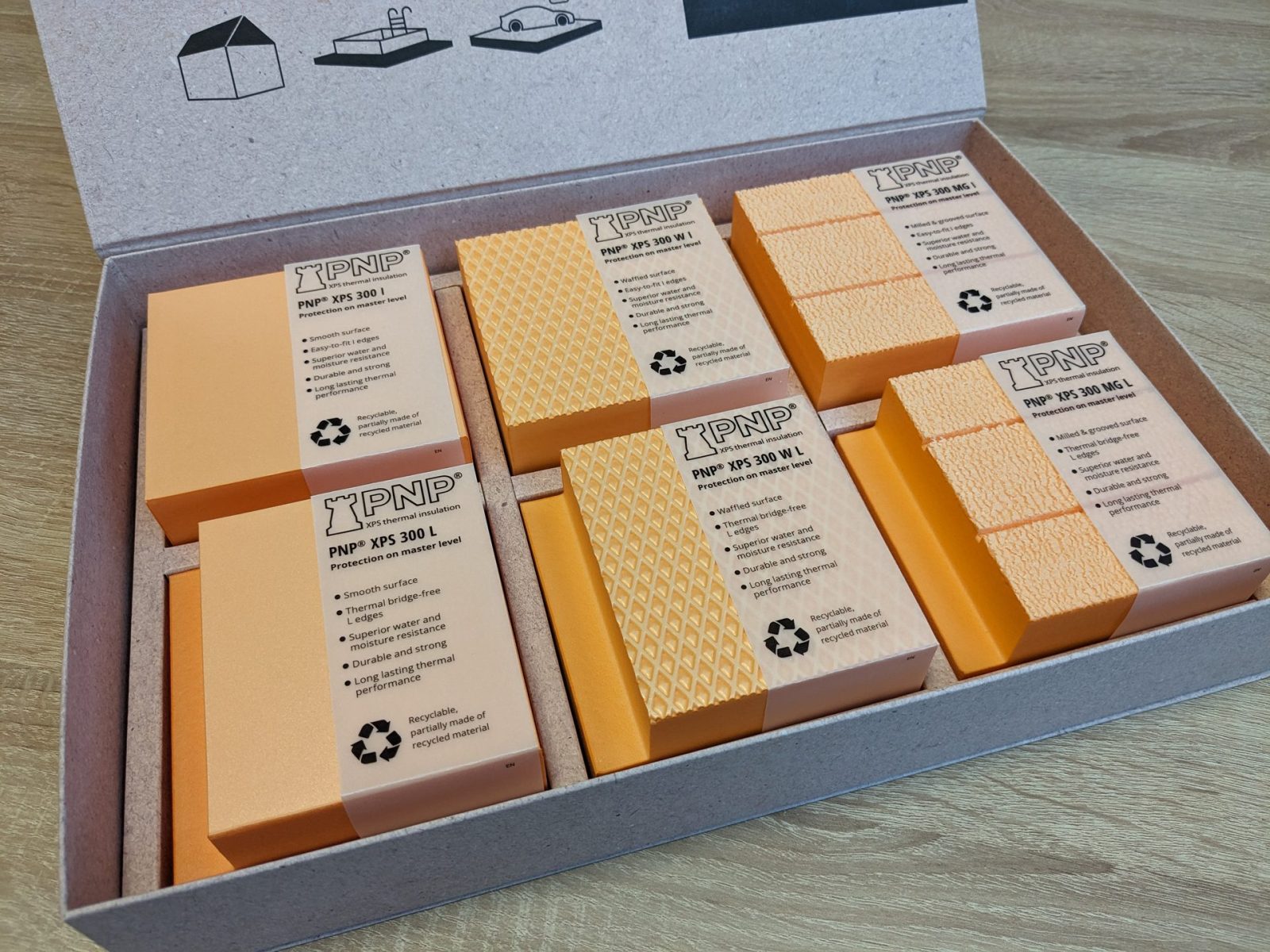
PNP XPS boards are produced with three distinct surface profiles, each described in the Declaration of Performance (DoP) and technical data sheet (TDS) for the relevant product.
Smooth — the extruded skin is left intact. The closed-cell surface has low porosity. No mechanical key is formed for adhesives or plasters.
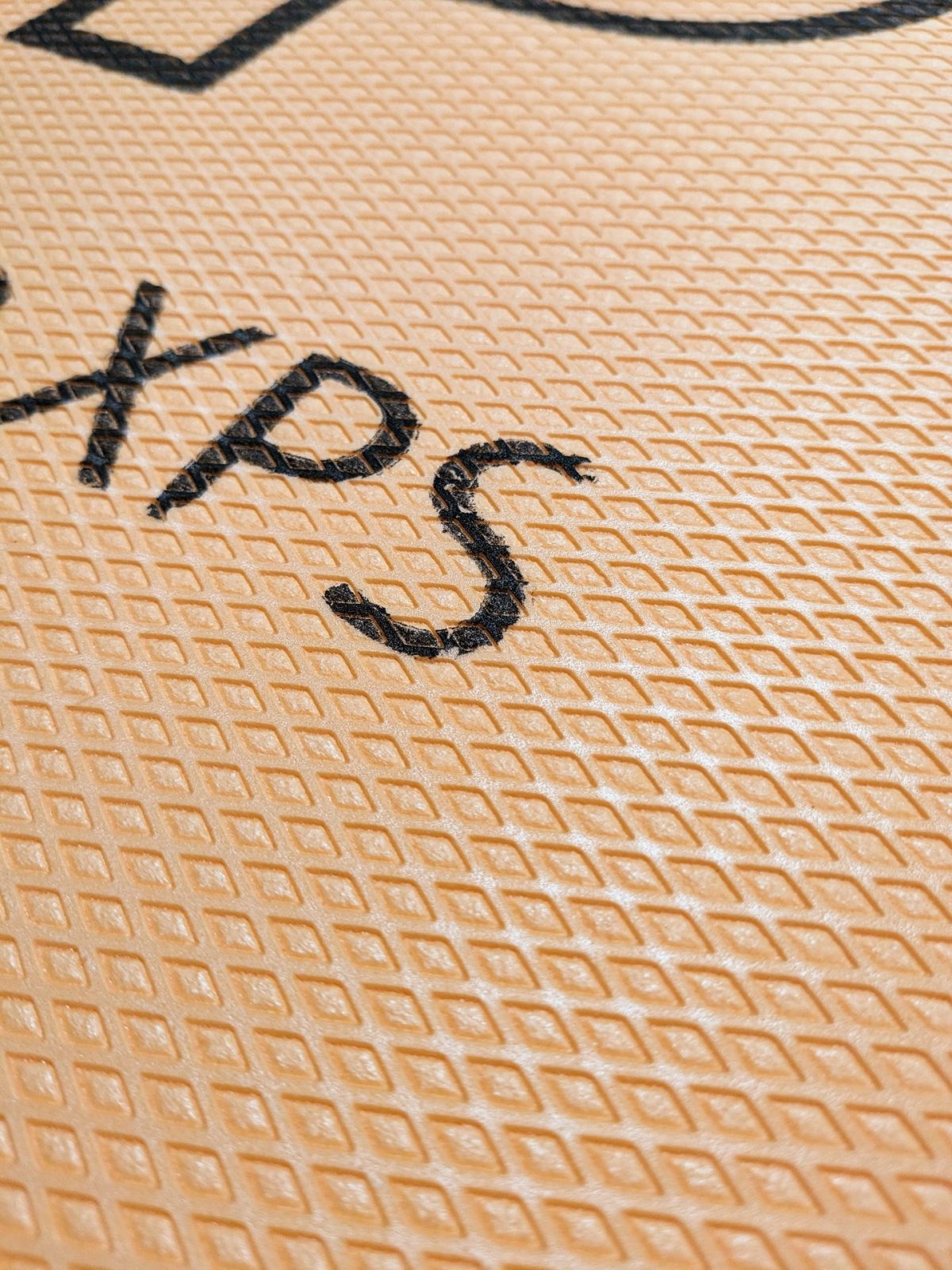
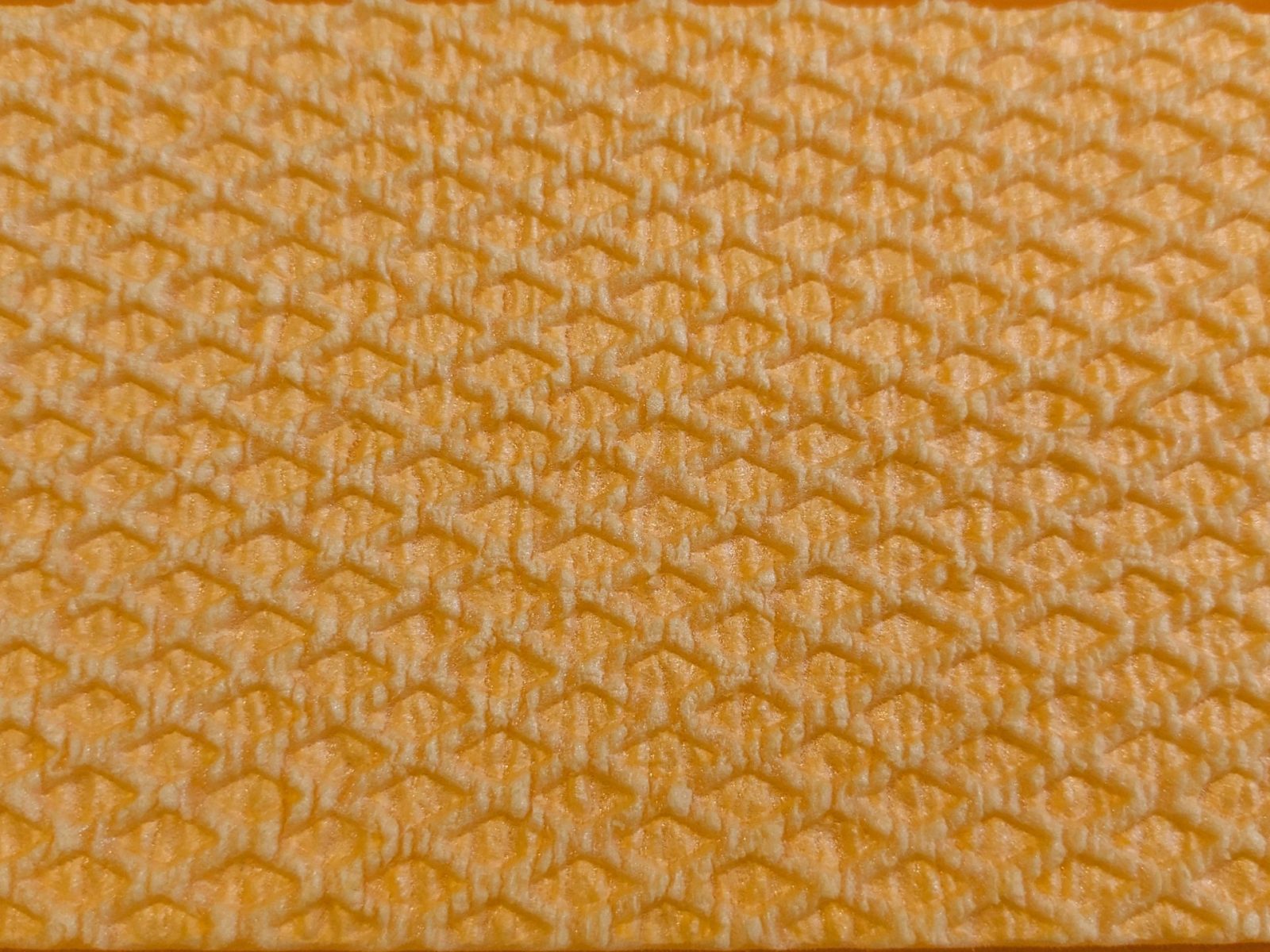
Waffled (W / X-Grip) — the face is embossed with a regular waffle pattern during production. The texture creates the mechanical interlocking that plasters and adhesive compounds need to grip. The X-Grip designation is used for XPS 150 W X-Grip, which is optimised for this purpose at 150 kPa compressive strength.
Milled and grooved (MG) — the face is mechanically milled after extrusion to produce a roughened surface with grooves. This removes the extruded skin entirely, increasing surface area for adhesion. MG boards carry a higher declared long-term water absorption (WL(T)3, ≤ 3.0 Vol.-%) compared with the WL(T)0,7 (≤ 0.7 Vol.-%) of smooth and waffled boards, because the intact skin is no longer present at the face.
Surface type versus key declared properties
SurfaceTypical productsWL(T) long-term water absorptionAdhesion to renders / adhesivesTypical applicationSmoothXPS 150, XPS 200, XPS 300, XPS 500, XPS 700≤ 0.7 Vol.-%Not suitable — no mechanical keyFoundations, floors, cavities, roofs (non-bonded), road constructionWaffled (W / X-Grip)XPS 150 W X-Grip, XPS 200 W, XPS 300 W≤ 0.7 Vol.-%Suitable — waffle pattern provides mechanical keyETICS facades, plinth insulation with render, floor/roof assemblies needing bonded layersMilled and grooved (MG)XPS 150 MG, XPS 200 MG, XPS 300 MG≤ 3.0 Vol.-%Suitable — milled surface and grooves maximise mechanical keyETICS facades, tile-adhesive systems, plinths with applied finish coat
All three surface types share the same declared thermal conductivity (λD 0.034–0.035 W/(m·K) depending on thickness) and comply with EN 13164:2012+A1:2015.
When to use smooth boards
Smooth boards are the standard choice wherever the XPS face is not bonded to a finish layer:
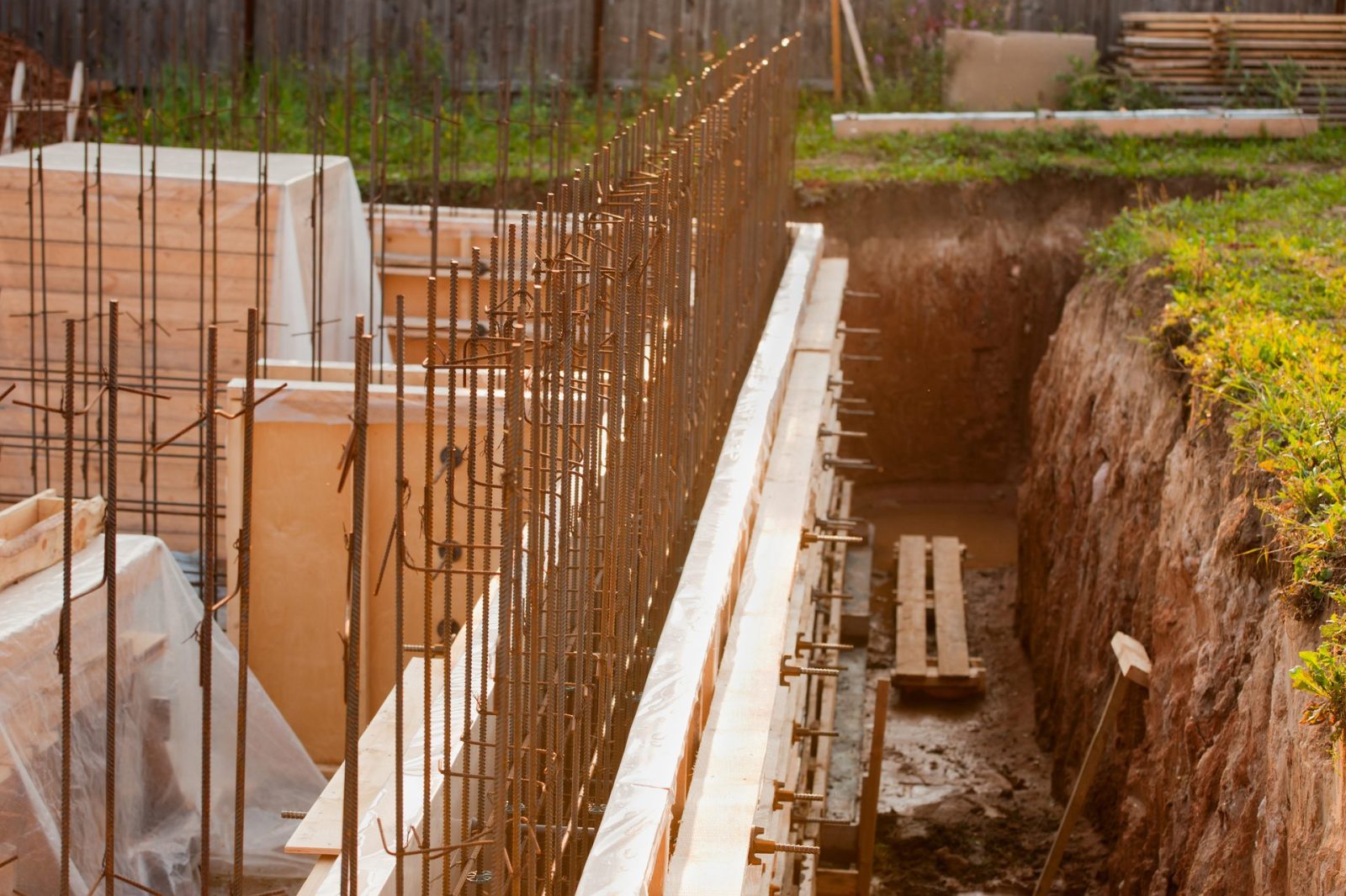
Foundations and buried structures — the board sits against soil, drainage membrane, or waterproofing. Products: XPS 300, XPS 500, XPS 700.
Floor slabs and slab-on-grade — a polyethylene film or screed sits on top; no bonded adhesive layer contacts the XPS face.
Inverted roofs — the board is ballasted or covered with a drainage layer, not bonded.
Road and infrastructure construction — XPS 700 (700 kPa) and XPS 500 (500 kPa) for extreme and heavy loads respectively.
Cavity wall insulation and non-load-bearing partitions — no render applied directly to the board.
Expansion joints — boards act as compressible fillers between structural sections.
Smooth boards retain the intact extruded skin, which is why their long-term water absorption is WL(T)0,7 (≤ 0.7 Vol.-%).
When to use waffled or MG boards
Both waffled and MG surfaces are specified for bonded finish systems. The solutions catalogue confirms this for ETICS plaster systems and facade clinker tile systems, which call specifically for "XPS boards with waffled or milled and grooved surface".
ETICS / external insulation composite systems — render or base coat applied directly to the board: use waffled W boards (XPS 150 W X-Grip, XPS 300 W) or MG boards (XPS 150 MG, XPS 300 MG).
Facade tile and clinker systems — tile adhesive applied direct to board face: waffled or MG.
Plinth insulation with applied finish coat — exposed plinths below damp-proof course level where a render is applied.
Window and door reveals with finishing plaster — the solutions catalogue lists XPS with a finishing plaster layer at bays and openings.
The practical difference between waffled and MG: MG boards have a higher declared water absorption (WL(T)3 vs WL(T)0,7) because the extruded skin is removed. In permanently wet or below-grade locations, this distinction matters. Consult the TDS and DoP for each product, and seek guidance from a qualified designer for the specific exposure class.
Compressive strength is independent of surface type
Surface texture does not determine load capacity. PNP XPS is offered in the same compressive strength classes across surface types. For example, a 300 kPa rating (CS(10\Y)300) is available as smooth (XPS 300), waffled (XPS 300 W), and milled-and-grooved (XPS 300 MG). Select the strength class based on the structural load; select the surface type based on whether a bonded finish is applied. Where a load calculation is required, refer to the TDS/DoP and engage a structural engineer.
See also: What Does '300 kPa' Compressive Strength Mean? and XPS 300 vs XPS 500 — When Is 300 kPa Enough?
Quick selection summary
If you are unsure which product fits your assembly, the article Which PNP XPS Should I Choose? Application Guide covers the full product range. For a direct smooth-vs-waffled comparison at the 300 kPa level, see XPS 300 vs XPS 300 W — Smooth or Waffled Surface? Contact the PNP XPS technical team at sales@pnpinsulation.com for project-specific advice.
Sources
XPS 150 W X-Grip technical data sheet (EN): pnp_xpsX-Grip_X-GripTB_600x1250_techcard_en (updated 2026-07-22)
XPS 150 W technical data sheet (EN): pnp_xps150W-150WTB_600x1250_techcard_en (updated 2026-07-22)
XPS 300 technical data sheet (EN): pnp_xps300-300TB_600x1250_techcard_en (updated 2026-07-22)
XPS 300 W technical data sheet (EN): pnp_xps300W-300WTB_600x1250_techcard_en (updated 2026-07-22)
XPS 150 MG technical data sheet (EN): pnp_xps150MG_600x1250_techcard_en (updated 2025-03-17)
XPS 200 MG technical data sheet (EN): pnp_xps200MG_600x1250_techcard_en (updated 2025-03-17)
XPS 300 MG technical data sheet (EN): pnp_xps300MG_600x1250_techcard_en (updated 2025-03-17)
XPS 200 W technical data sheet (EN): pnp_xps200W-200WTB_600x1250_techcard_en (updated 2026-07-22)
DoP PNP XPS X-Grip_en (U) (updated 2026-06-24)
DoP PNP XPS 150W_en (U) (updated 2025-10-14)
DoP PNP XPS 300 W EMI_en (U) (updated 2025-10-13)
DoP PNP XPS 300 EMI_en (U) (updated 2025-10-14)
DoP PNP XPS 150 MG (30–150 mm)_eng (updated 2025-03-17)
DoP PNP XPS 200 MG_eng (updated 2025-03-17)
DoP PNP XPS 300 MG_eng (updated 2025-03-17)
PNP XPS Solutions Catalogue (ETICS plaster systems, facade clinker tile system entries)
EN 13164:2012+A1:2015 — Thermal insulation products for buildings — Factory made products of extruded polystyrene foam (XPS)