 Magyar
 Română
 Lietuviškai
 Latviešu valoda
 Eesti
Eesti Polski
 Slovenčina
 Slovenščina
 Italiano
 Čeština
 Deutsch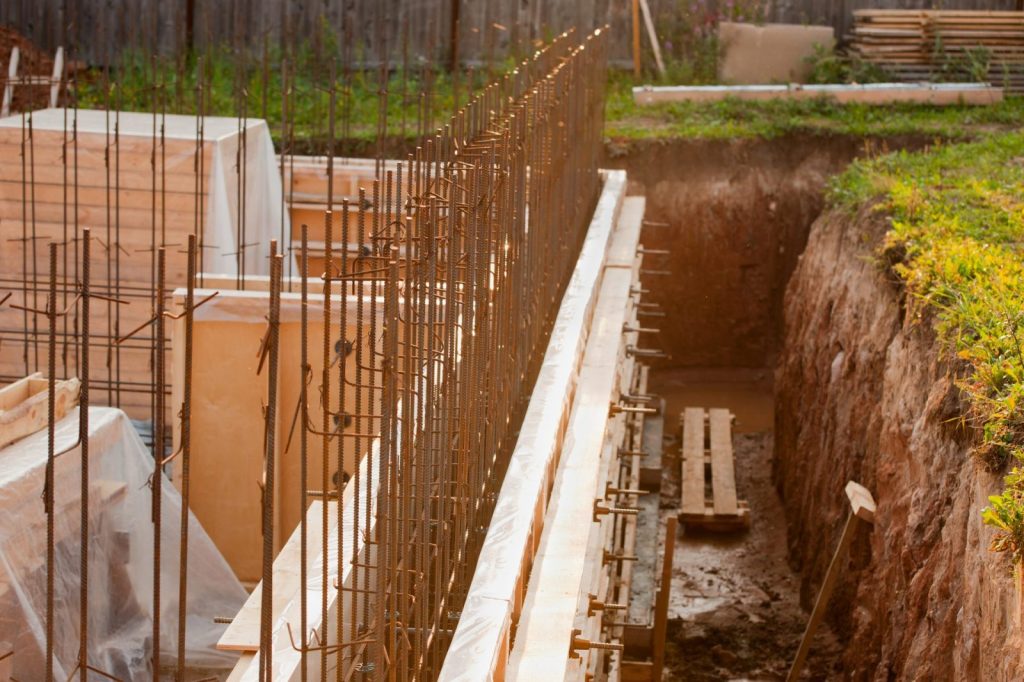
Why the Comparison Matters
Architects and structural engineers routinely choose between extruded polystyrene (XPS) and expanded polystyrene (EPS) for below-grade walls, floor slabs, foundation perimeters, and trafficked roofs. Both are rigid, closed-cell or semi-closed-cell polymer boards, and both reduce thermal losses effectively in dry conditions. The differences emerge when the insulation is exposed to sustained moisture, freeze–thaw cycling, or structural loads — precisely the conditions found in ground-contact and high-load assemblies.
This page compares the declared performance of PNP XPS boards (manufactured in Várpalota, Hungary; certified to EN 13164:2012+A1:2015) against the typical declared values for EPS boards (EN 13163). The comparison focuses on the properties that differ most in practice.
Important: Thickness design, load verification, dew-point analysis, and compliance with national building codes require a qualified designer. Always consult the current TDS and DoP for the specific product before specifying.
How XPS and EPS Are Made — and Why It Matters
XPS is produced by continuously extruding molten polystyrene with a blowing agent, forming a board with a homogeneous closed-cell structure and a dense skin on both faces. The result is a product with very low water permeability and high stiffness throughout its cross-section.
EPS is produced by expanding polystyrene beads in a mould. The beads fuse together but leave a partially open bead-boundary network. Water vapour and liquid water can enter through these boundaries over time, which progressively increases thermal conductivity and reduces mechanical performance.
These structural differences directly drive the divergence in declared values shown in the table below.
Declared-Value Comparison Table
| Property | PNP XPS 300 (>30 mm, EN 13164) | Typical EPS 100 (EN 13163) |
|---|---|---|
| Declared thermal conductivity λD | 0.034–0.035 W/(m·K) | see the current TDS (typically 0.036–0.040 W/(m·K)) |
| Compressive strength CS(10\Y) | 300 kPa | 100 kPa |
| Long-term water absorption — immersion WL(T) | ≤ 0.7 Vol.-% | see the current TDS (typically 1–5 Vol.-%) |
| Water absorption by diffusion WD(V) | ≤ 3.0 Vol.-% | not typically declared for EPS |
| Freeze–thaw resistance FTCD | FTCD 1 (≤ 1 Vol.-%) | not always declared |
| Compressive creep CC(2/1.5/50) | 130 kPa (XPS 300 >30 mm) | not typically declared at equivalent level |
| Tensile strength perpendicular to faces TR | TR 400 | see the current TDS |
| Dimensional stability DS(70,90) | DS(70,90) | DS(70,90) where declared |
| Euroclass reaction to fire | E | E or F (product-dependent) |
| Operating temperature range | −70 … +75 °C | see the current TDS |
| Standard | EN 13164:2012+A1:2015 | EN 13163:2012+A1:2015 |
EPS values shown are indicative typical values for context only; always verify against the specific EPS manufacturer's DoP. PNP XPS values are taken from the XPS 300 DoP and TDS.
Compressive Strength: The Load-Bearing Difference
PNP XPS boards are available in compressive strength classes from 150 kPa up to 700 kPa:
XPS 300 — 300 kPa (>30 mm): foundations, floor slabs, accessible roofs
XPS 400 — 400 kPa: industrial floors, cold stores, car parks
XPS 500 — 500 kPa: heavily loaded industrial floors, road construction
XPS 700 — 700 kPa: civil engineering, extreme-load infrastructure
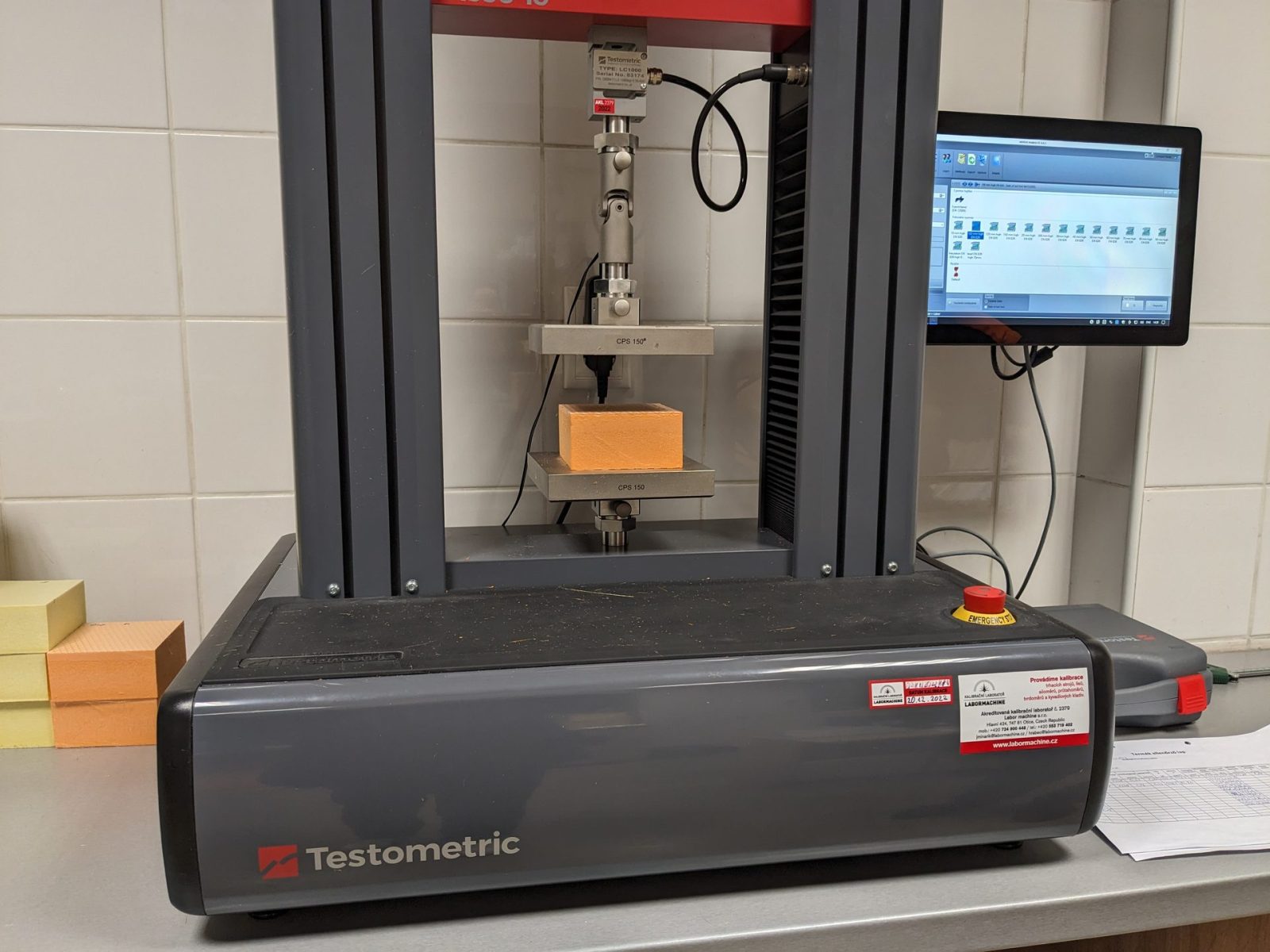
EPS boards in the EN 13163 range typically reach 100–200 kPa at 10% deformation. That gap matters under a loaded foundation slab or a trafficked roof deck, where insulation deformation under sustained load (creep) can cause screed or waterproofing failure. PNP XPS 300 declares a creep value of CC(2/1.5/50)130, meaning ≤ 130 kPa is the long-term compressive stress limit under 50-year service at 2% deformation and 1.5% per decade — a figure not routinely declared for standard EPS.
For guidance on choosing the right compressive class, see What Does '300 kPa' Compressive Strength Mean? and XPS 300 vs XPS 500 — When Is 300 kPa Enough?
Water Absorption: The Ground-Contact Difference
Moisture is the primary performance risk for insulation in ground contact. Water replacing air in the insulation matrix raises thermal conductivity and reduces mechanical stiffness.
PNP XPS 300 (smooth skin) declares WL(T) ≤ 0.7 Vol.-% by long-term immersion and WD(V) ≤ 3.0 Vol.-% by diffusion. These are low values that the test showed the product achieves under EN 13164 test protocols. The homogeneous closed-cell structure of XPS is responsible: water cannot travel through cell boundaries because there are virtually none.
EPS, by contrast, relies on fused bead junctions. Moisture ingress over years in a perimeter-wall or slab-on-grade application is higher, and the resulting thermal conductivity penalty is correspondingly greater. This alone does not prove EPS fails in every ground-contact use, but it does support the specification of XPS wherever prolonged moisture exposure is anticipated.
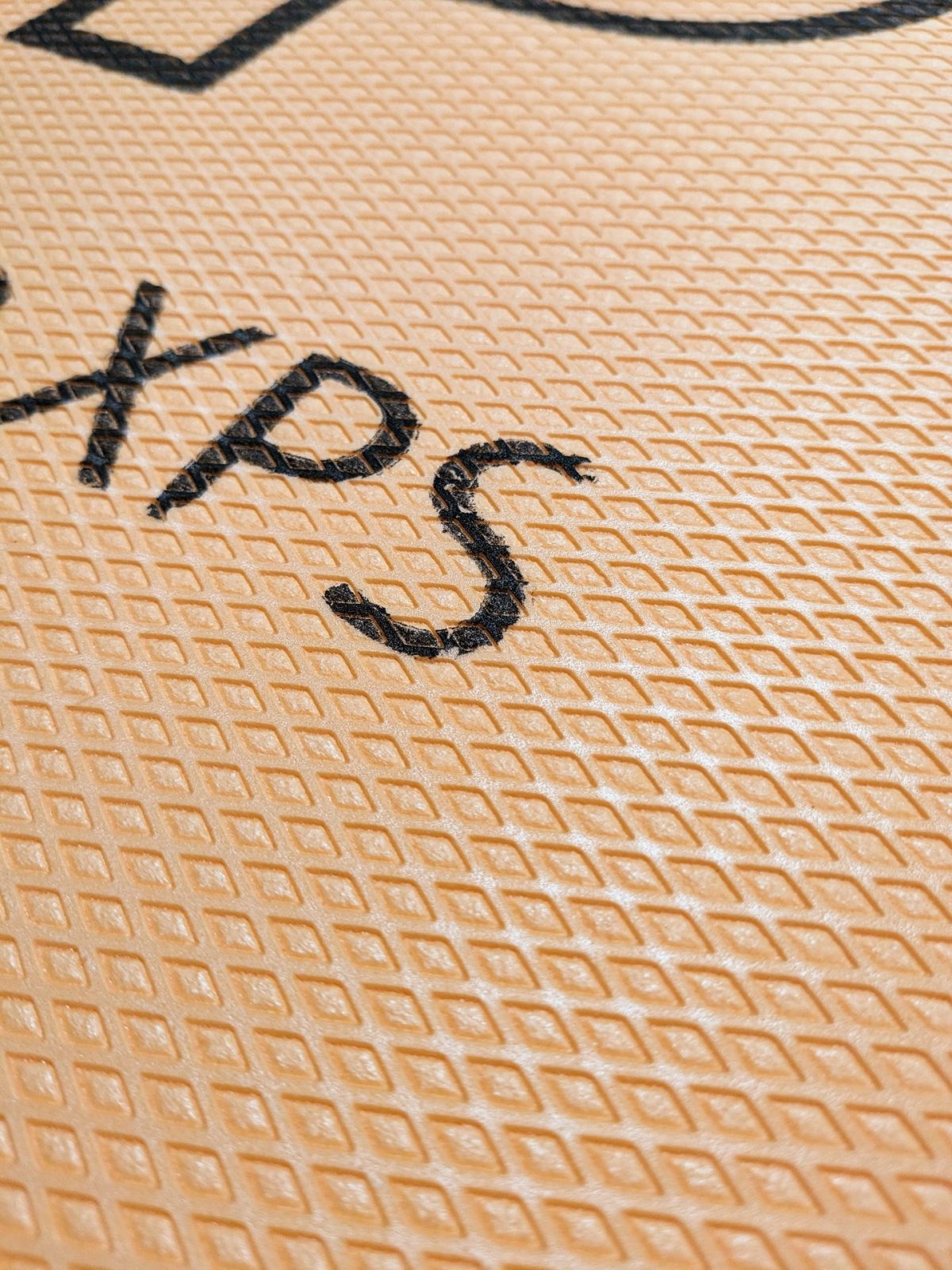
Note: surface-milled XPS boards (MG series) and some waffled variants declare higher WL(T) values (up to 3.0 Vol.-%) because the skin is partially removed. For buried or immersed applications, smooth-skin or waffled (W) boards with WL(T) 0.7 are preferable — confirm with the TDS.
Freeze–Thaw Resistance
Ground-contact insulation in Central and Eastern Europe regularly cycles through freeze–thaw conditions, particularly in the frost-penetration zone near the surface. PNP XPS 300, XPS 500, and XPS 700 all declare FTCD 1 (≤ 1 Vol.-% volume change after freeze–thaw cycling following diffusion water absorption). This confirms that the XPS boards retain their dimensions and mechanical properties after repeated freeze–thaw exposure.
Freeze–thaw resistance is not universally declared for EPS boards under EN 13163. Where it is not declared, the designer cannot rely on it — this should be a specification requirement, not an assumption.
Thermal Conductivity: Closer Than Often Assumed
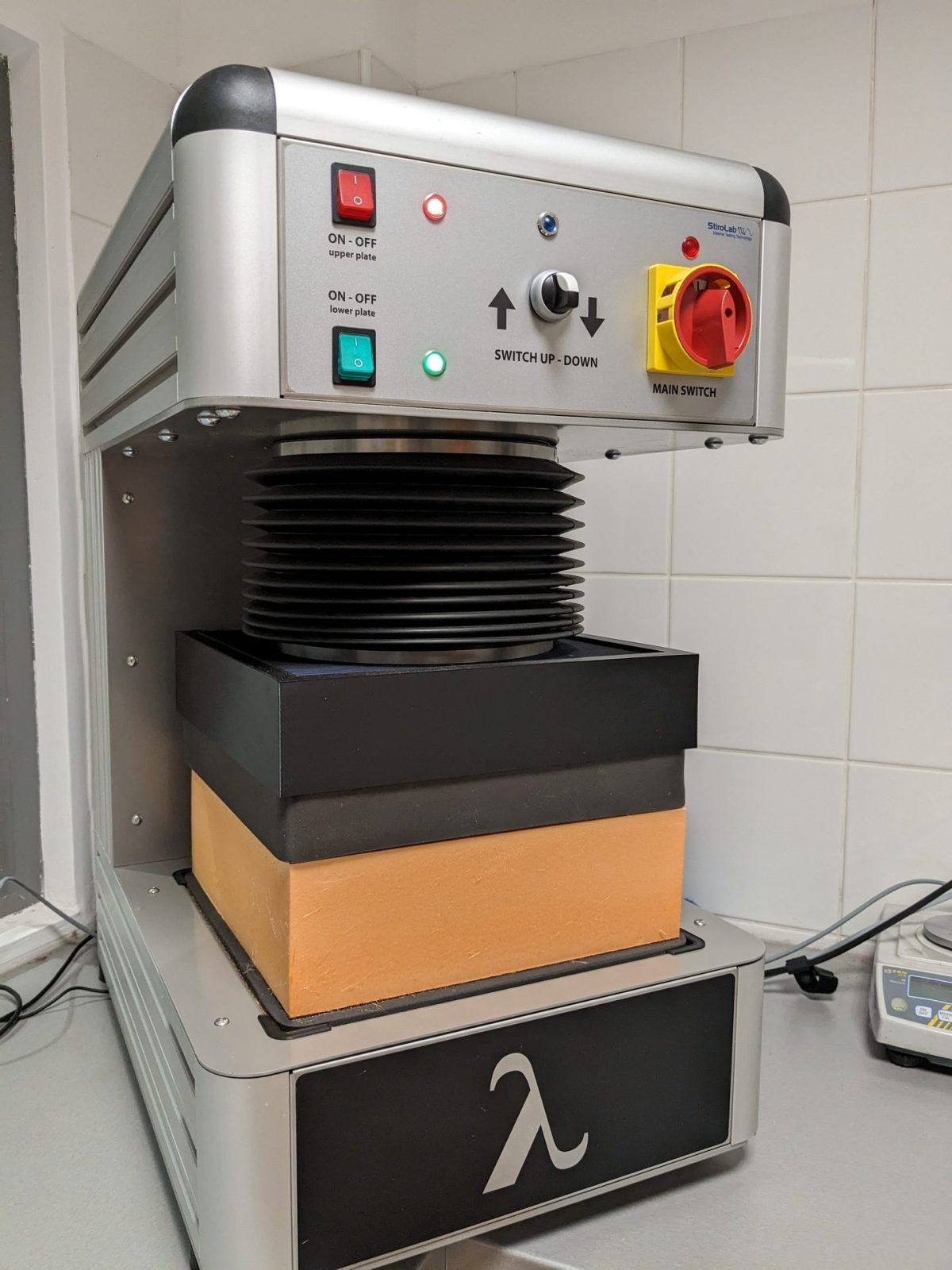
PNP XPS boards declare λD = 0.034 W/(m·K) for thicknesses of 20–100 mm and 0.035 W/(m·K) for 120–150 mm. Modern EPS grades can reach similar values in dry laboratory conditions, but the effective in-situ conductivity of EPS rises with moisture content over time. XPS maintains its declared conductivity because moisture uptake is negligible by comparison.
Designers should use the declared λD values from each product's DoP when calculating RD (thermal resistance) for the build-up. Do not use unlabelled generic values for either material.
Reaction to Fire
PNP XPS 300, XPS 500, and XPS 700 are classified Euroclass E. XPS 150 boards are classified Euroclass F. Fire performance requirements for the assembly are set by the national building regulation of the country of use and by the position of the insulation in the construction (buried, exposed, within a facade system, etc.). This page cannot confirm compliance for a specific project — consult a fire engineer and the applicable national standard.
Application Guidance: When to Choose XPS Over EPS
The following ground-contact and high-load applications are where XPS is technically indicated over standard EPS:
Foundation slabs and slab-on-grade floors — sustained compressive loads require CS(10\Y) ≥ 300 kPa and declared creep values; use XPS 300 or higher.
Perimeter and buried basement walls — permanently wet soil conditions require WL(T) ≤ 0.7 Vol.-% and FTCD 1; use smooth-skin XPS 300 or XPS 500.
Inverted (upside-down) roofs — insulation sits above the waterproofing membrane and is continuously wetted; XPS is the standard industry choice for this detail.
Industrial floors and car parks — point loads and dynamic loads require CS(10\Y) ≥ 400–700 kPa; use XPS 400, XPS 500, or XPS 700.
Road and civil engineering sub-base — frost-heave mitigation on heaving soils; XPS 500 or XPS 700 with declared FTCD 1.
Cold-store floors — sustained low temperatures and high loads; see XPS 500.
EPS may be appropriate for dry, warm-side, lightly loaded applications such as internal wall linings or pitched-roof sarking where moisture and load demands are low. A structural and thermal design check is required regardless of material choice.
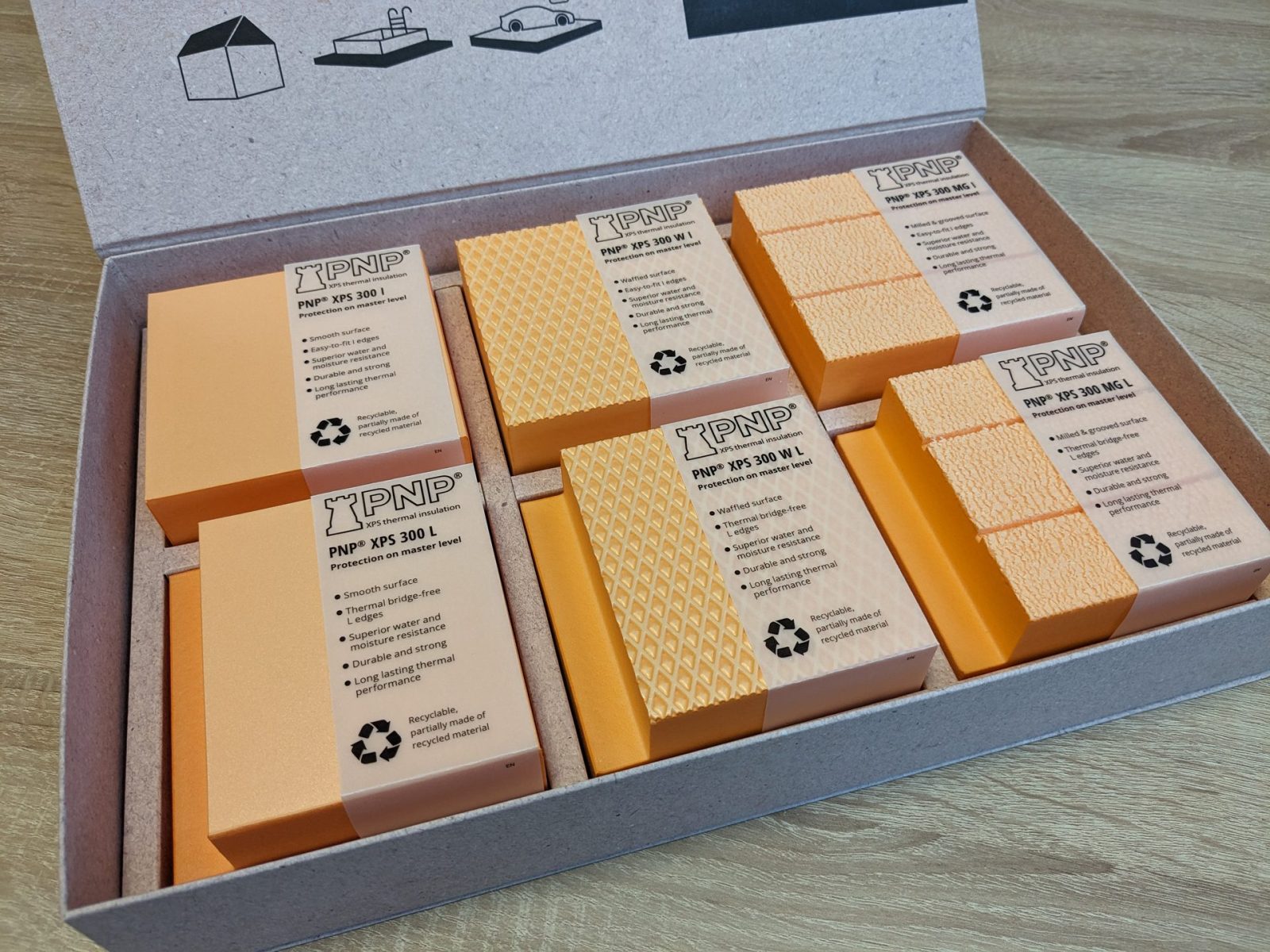
For surface-bonded applications (ETICS, renders, tile adhesive) where adhesion is the primary criterion alongside compressive strength, consider waffled or milled-and-grooved variants: see XPS 150 W X-Grip vs XPS 300 W and Which PNP XPS Should I Choose?
Full product range: PNP XPS Products Catalogue. Technical documentation and DoPs: Documentation. Project enquiries: Contact PNP XPS.
Sources
EN 13164:2012+A1:2015 — Factory-made products of extruded polystyrene foam (XPS)
EN 13163:2012+A1:2015 — Factory-made products of expanded polystyrene foam (EPS)
TDS pnp_xps300-300TB_600x1250_techcard_en(20.07.2026).pdf (updated 2026-07-22)
DoP PNP XPS 300 EMI_en (U).pdf (updated 2025-10-14)
TDS pnp_xps500-500TB_600x1250_techcard_en(20.07.2026).pdf (updated 2026-07-22)
DoP PNP XPS 500_en (U).pdf (updated 2025-07-22)
TDS pnp_xps700_600x1250_techcard_en (21.07.2023).pdf (updated 2025-03-17)
DoP PNP XPS 700_eng.pdf (updated 2025-03-17)
TDS pnp_xps400-400TB_600x1250_techcard_en(20.07.2026).pdf (updated 2026-07-22)
DoP PNP XPS 400_en (U).pdf (updated 2026-04-10)
TDS pnp_xps200-200TB_600x1250_techcard_en(20.07.2026).pdf (updated 2026-07-22)
DoP PNP XPS 200_en (U).pdf (updated 2025-08-14)
EPD — PNP XPS (Várpalota plant), updated 2025-03-19