The direct answer
CS(10\Y)300 is the compressive strength class defined in EN 13164 and measured by EN 826. It means the board sustains a compressive stress of at least 300 kPa at whichever limit comes first: 10 % deformation of its original thickness, or the material yield point. The "Y" indicates that yield, if it occurs before 10 % deformation, governs the declared value. 300 kPa is equivalent to 0.30 N/mm².
This is a declared minimum, not a mean. The value is published on the product's Declaration of Performance (DoP) and verified under EN 13164:2012+A1:2015. A qualified structural engineer or designer must assess whether this value is adequate for any specific application.
What the test actually measures
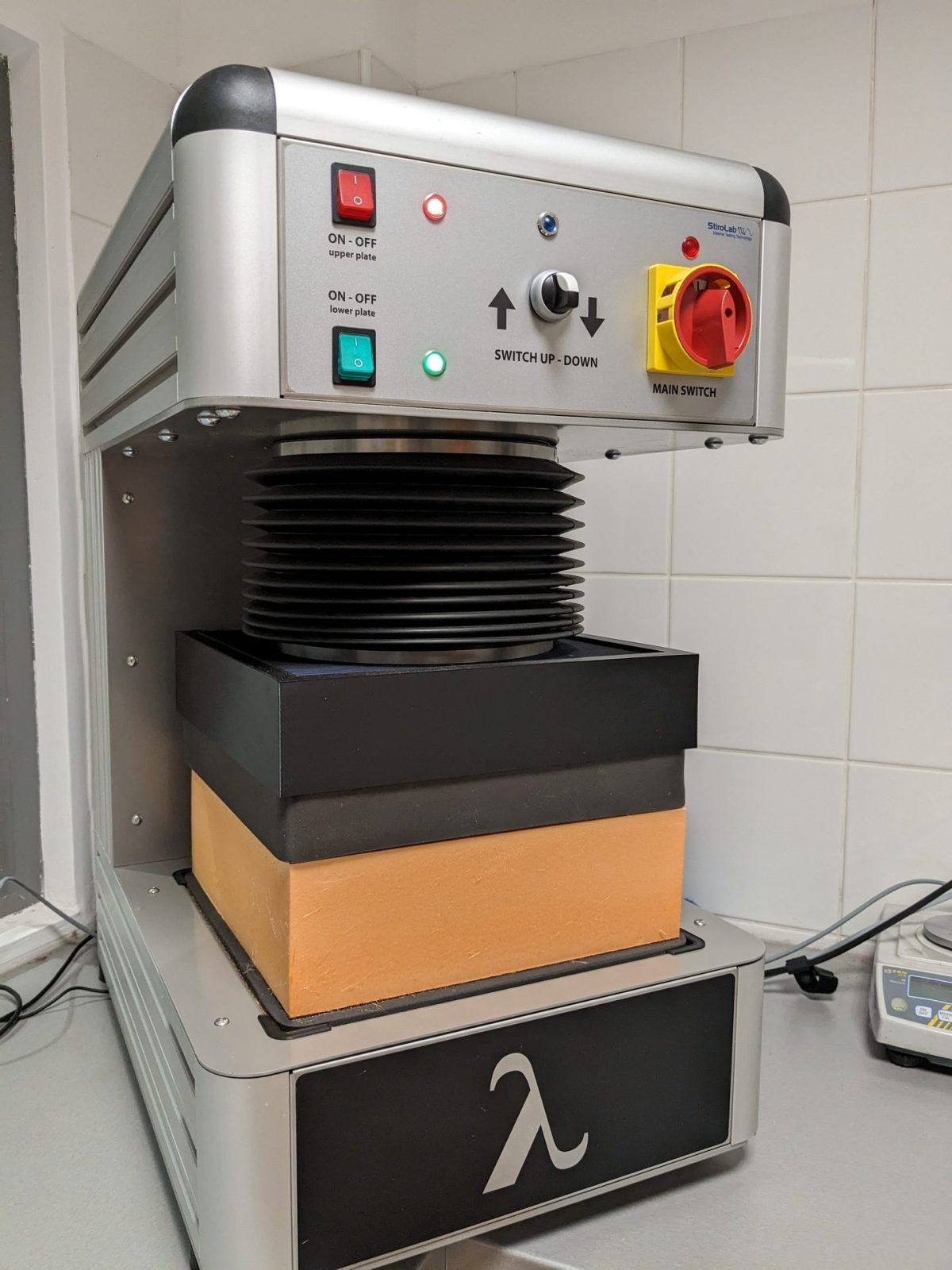
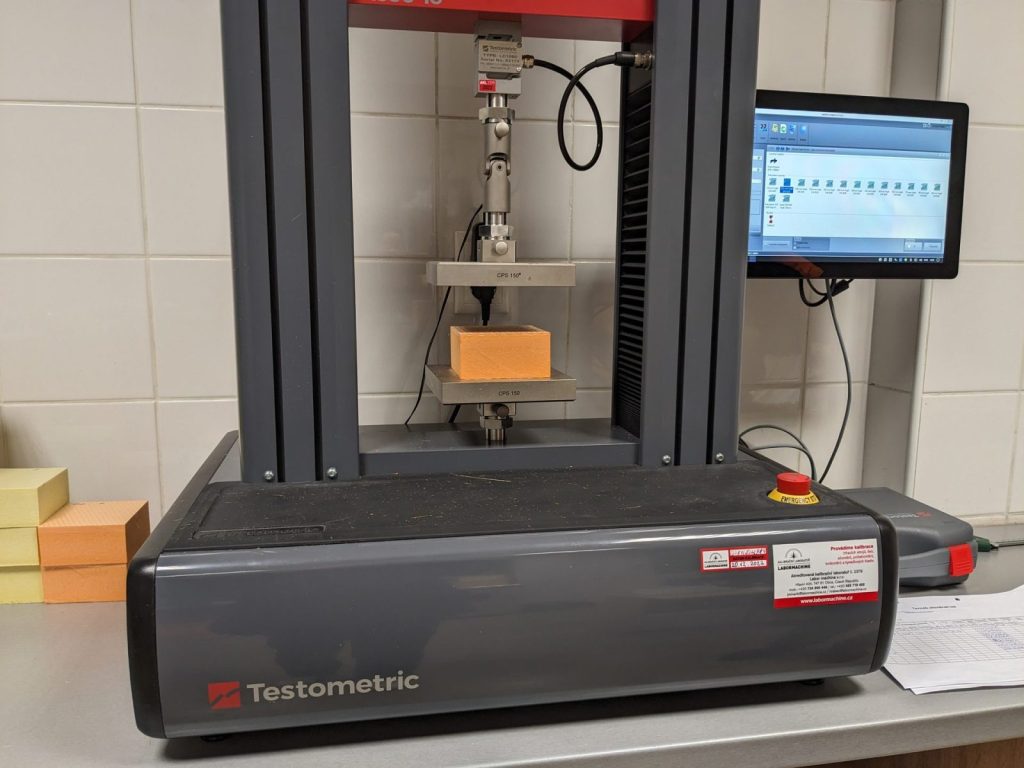
The test method is EN 826 (compression behaviour of thermal insulating products). A specimen is compressed at a controlled rate between two parallel plates. The stress at 10 % compression — or at the earlier yield point — is recorded. For XPS 300, the test showed a result at or above 300 kPa, which is then declared as the class value on the DoP.
Key points about the test:
The loading is perpendicular to the board face — the same direction as dead loads on a floor or roof.
The result is given in kilopascals (kPa). 1 kPa = 0.001 N/mm².
A 300 kPa class means the board resists at least 300 N over every 1 000 mm² (10 cm × 10 cm) of face area.
The "(10\Y)" suffix is mandatory notation: tests that reach yield before 10 % deformation use the yield stress; tests that do not reach yield use the 10 % deformation stress.
Why compressive strength class matters in practice
Insulation under a floor slab, beneath a foundation, or on an accessible roof carries permanent and variable loads. If the board compresses excessively under those loads, two problems arise: the screed or slab above can crack, and the effective insulation thickness — and therefore thermal resistance — is permanently reduced.
CS(10\Y)300 is widely specified for:
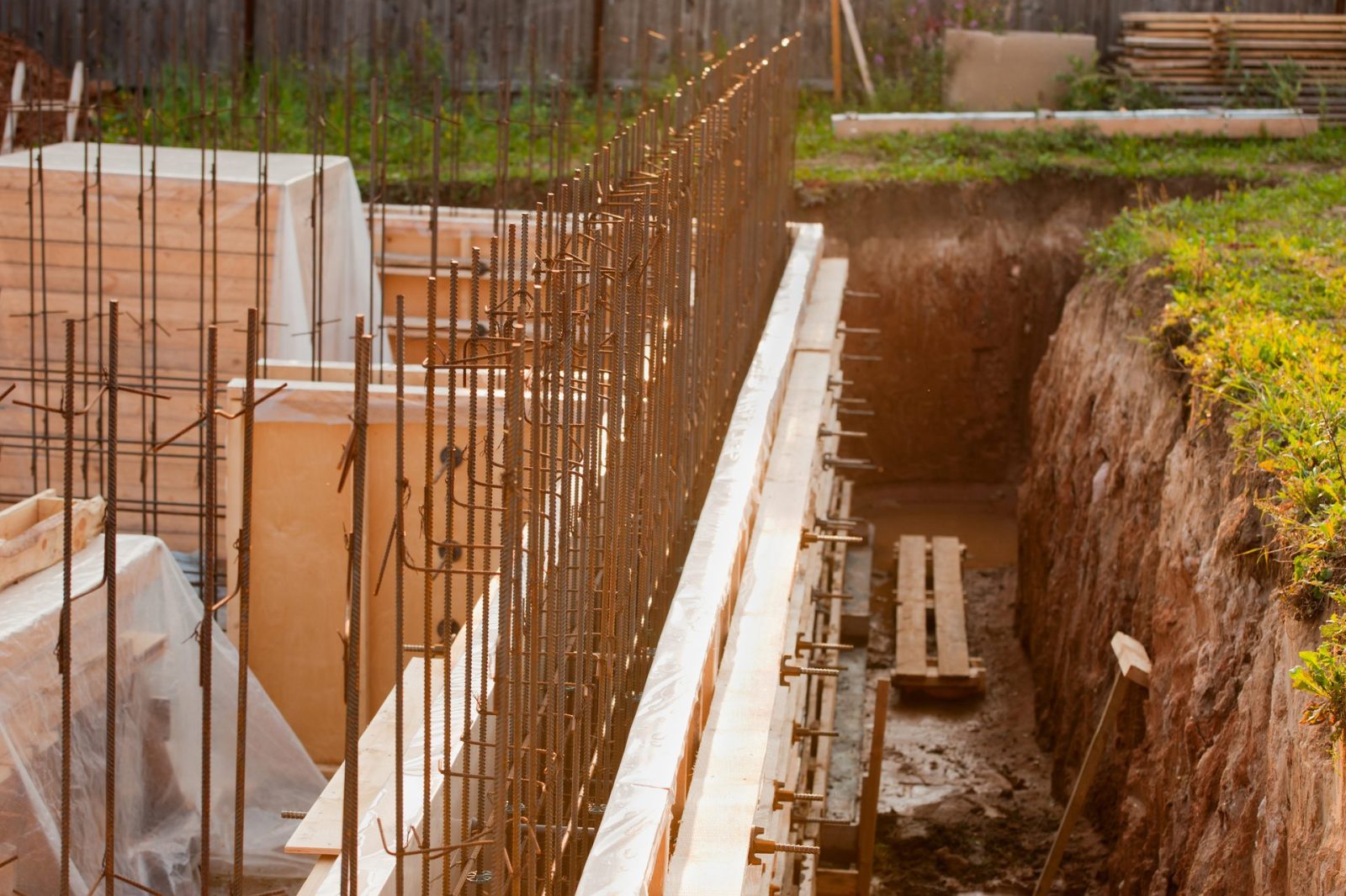
Foundation slabs and perimeter insulation under building loads
Floor insulation beneath cement-sand screeds in residential and light commercial construction
Accessible roofs and podium decks
Paving systems and landscaping details
Applications with higher loads — industrial floors, parking decks, road construction — may require CS(10\Y)400, CS(10\Y)500 or CS(10\Y)700. A structural engineer must size the board grade to the actual design loads; the compressive strength class alone does not constitute a design approval.
Compressive strength across the PNP XPS product range
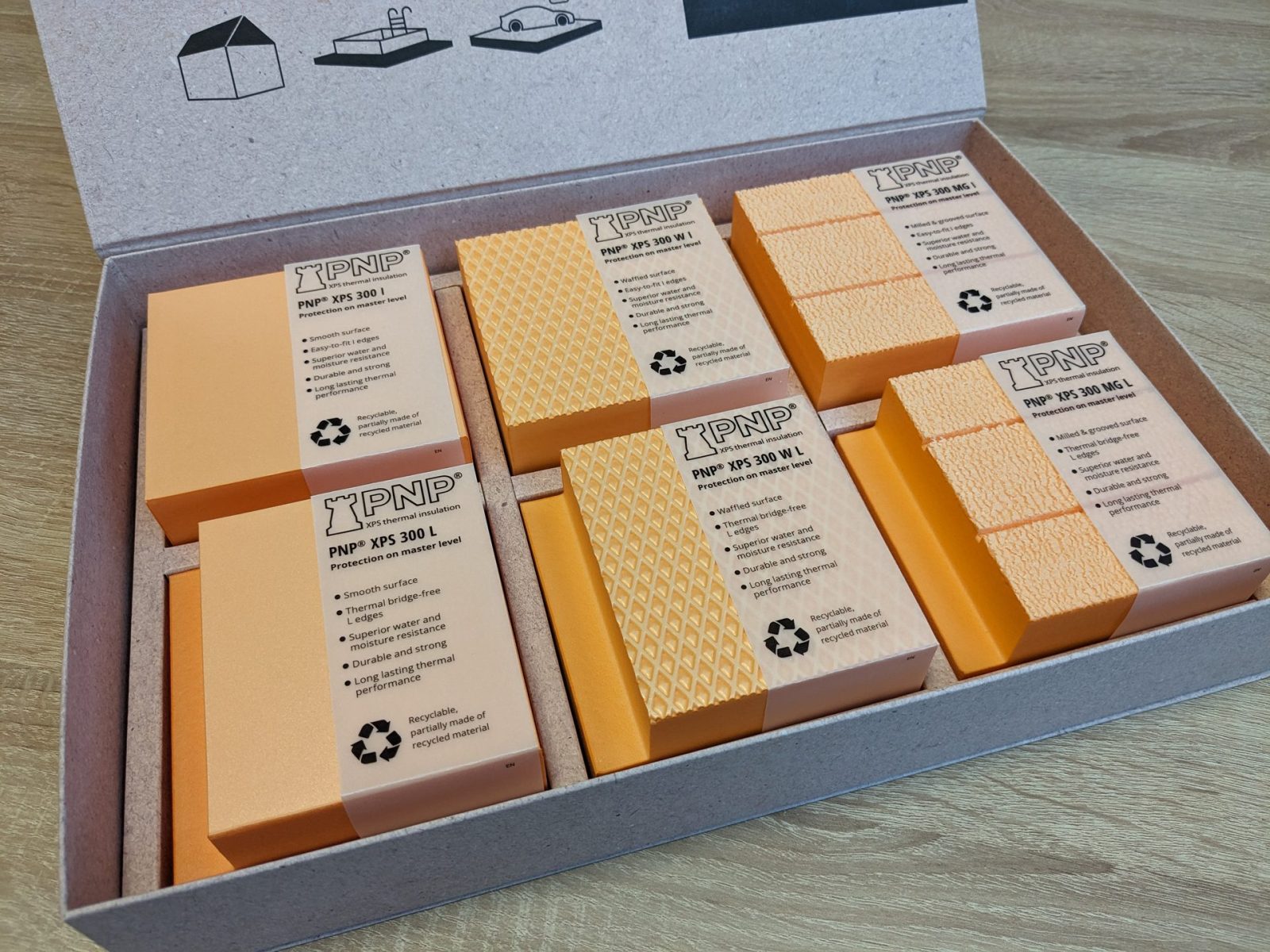
The table below shows the declared compressive strength class for published PNP XPS boards. Values are taken from the respective Declarations of Performance and technical data sheets.
ProductCompressive strength classDeclared valueThickness noteXPS 150 W X-GripCS(10\Y)150≥ 150 kPa30–150 mm; 100 kPa at 20 mmXPS 300CS(10\Y)300≥ 300 kPa> 30 mm; 200 kPa at 20–30 mmXPS 300 WCS(10\Y)300≥ 300 kPa> 30 mm; 200 kPa at 20–30 mmXPS 300 SLOPECS(10\Y)300≥ 300 kPaSee current TDSXPS 400CS(10\Y)400≥ 400 kPa40–100 mmXPS 500CS(10\Y)500≥ 500 kPa40–120 mmXPS 700CS(10\Y)700≥ 700 kPa20–150 mm
Note that thinner boards in the XPS 300 and XPS 300 W range (20–30 mm) are classified CS(10\Y)200. Always verify thickness-specific values in the current DoP before specifying.
Compressive strength and compressive creep are different properties
CS(10\Y)300 is a short-term test result measured over minutes in the laboratory. In real buildings, insulation under a slab carries loads for decades. That long-term behaviour is described by the compressive creep class, designated CC(2/1.5/50).
For XPS 300 boards above 30 mm, the declared creep class is CC(2/1.5/50)130. This means the board experiences no more than 2 % additional deformation after 1.5 % initial strain, over a 50-year period, at a sustained stress of 130 kPa. The allowable long-term design stress is therefore lower than the short-term 300 kPa class value. A qualified designer must use the creep class — not the compressive strength class — when calculating long-term deflection and verifying serviceability.
Where to find the declared values
All declared compressive strength values for PNP XPS products are published in the product Declarations of Performance (DoP) available at pnpinsulation.com/documentation. Technical data sheets (TDS) provide additional guidance on thickness-dependent values, tolerances and application recommendations.
For project-specific selection, contact the PNP XPS technical team at pnpinsulation.com/contact or by email at sales@pnpinsulation.com.
Sources
EN 13164:2012+A1:2015 — Factory-made products of extruded polystyrene foam (XPS) — Specification
EN 826 — Thermal insulating products for building applications — Determination of compression behaviour
DoP PNP XPS 300 EMI_en (U).pdf (updated 2025-10-14)
DoP PNP XPS 300 W EMI_en (U).pdf (updated 2025-10-13)
DoP PNP 300 SLOPE A1-B1_en.pdf (updated 2025-03-17)
DoP PNP 300 SLOPE A2-B2_en.pdf (updated 2025-03-17)
DoP PNP XPS 400_en (U).pdf (updated 2026-04-10)
DoP PNP XPS 500_en (U).pdf (updated 2025-07-22)
DoP PNP XPS 700_eng.pdf (updated 2025-03-17)
TDS pnp_xps300-300TB_600x1250_techcard_en(20.07.2026).pdf (updated 2026-07-22)
TDS pnp_xps300W-300WTB_600x1250_techcard_en(20.07.2026).pdf (updated 2026-07-22)
TDS pnp_xps400-400TB_600x1250_techcard_en(20.07.2026).pdf (updated 2026-07-22)
TDS pnp_xps500-500TB_600x1250_techcard_en(20.07.2026).pdf (updated 2026-07-22)
TDS pnp_xps700_600x1250_techcard_en (21.07.2023).pdf (updated 2025-03-17)