What both boards share
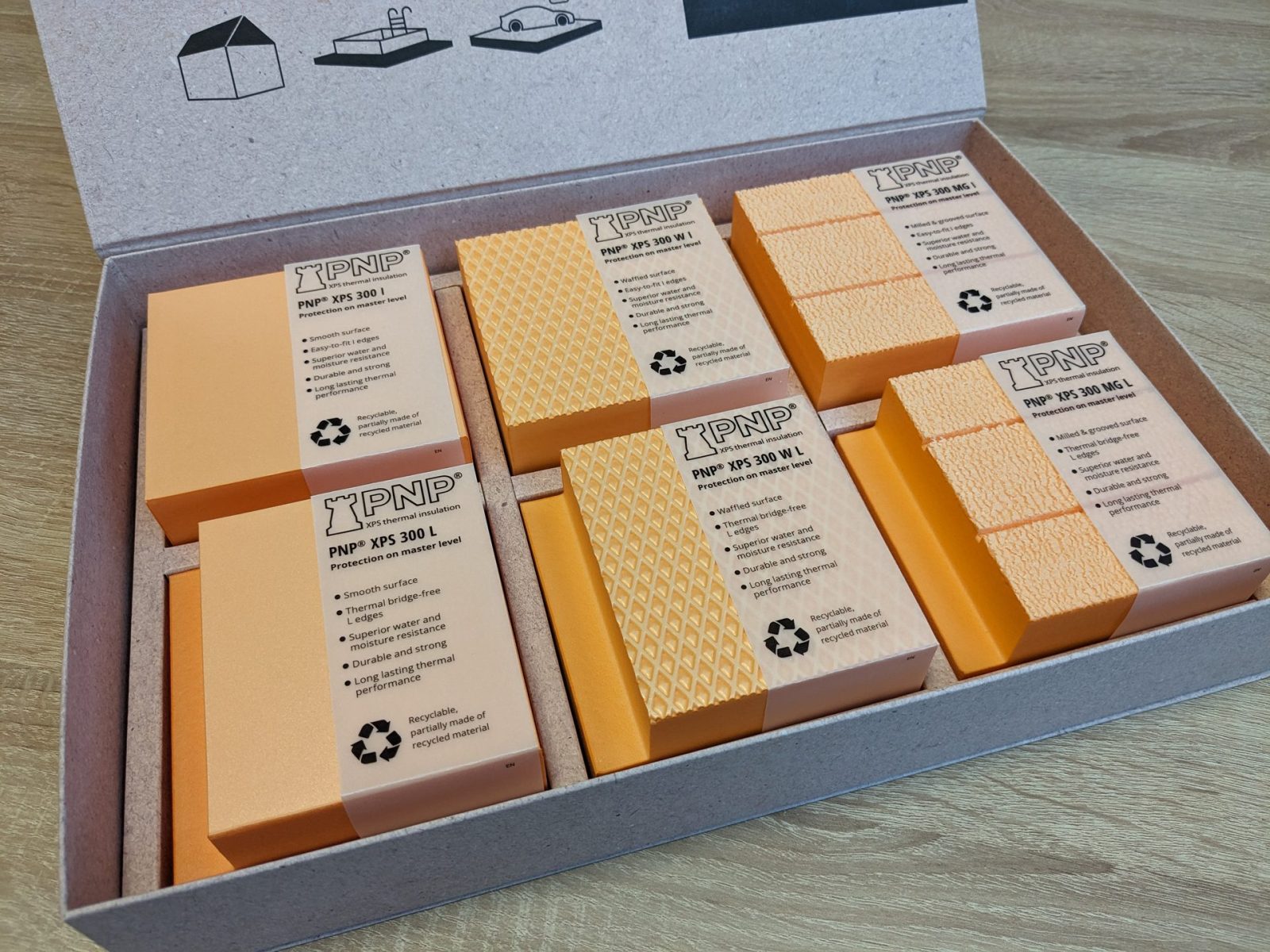
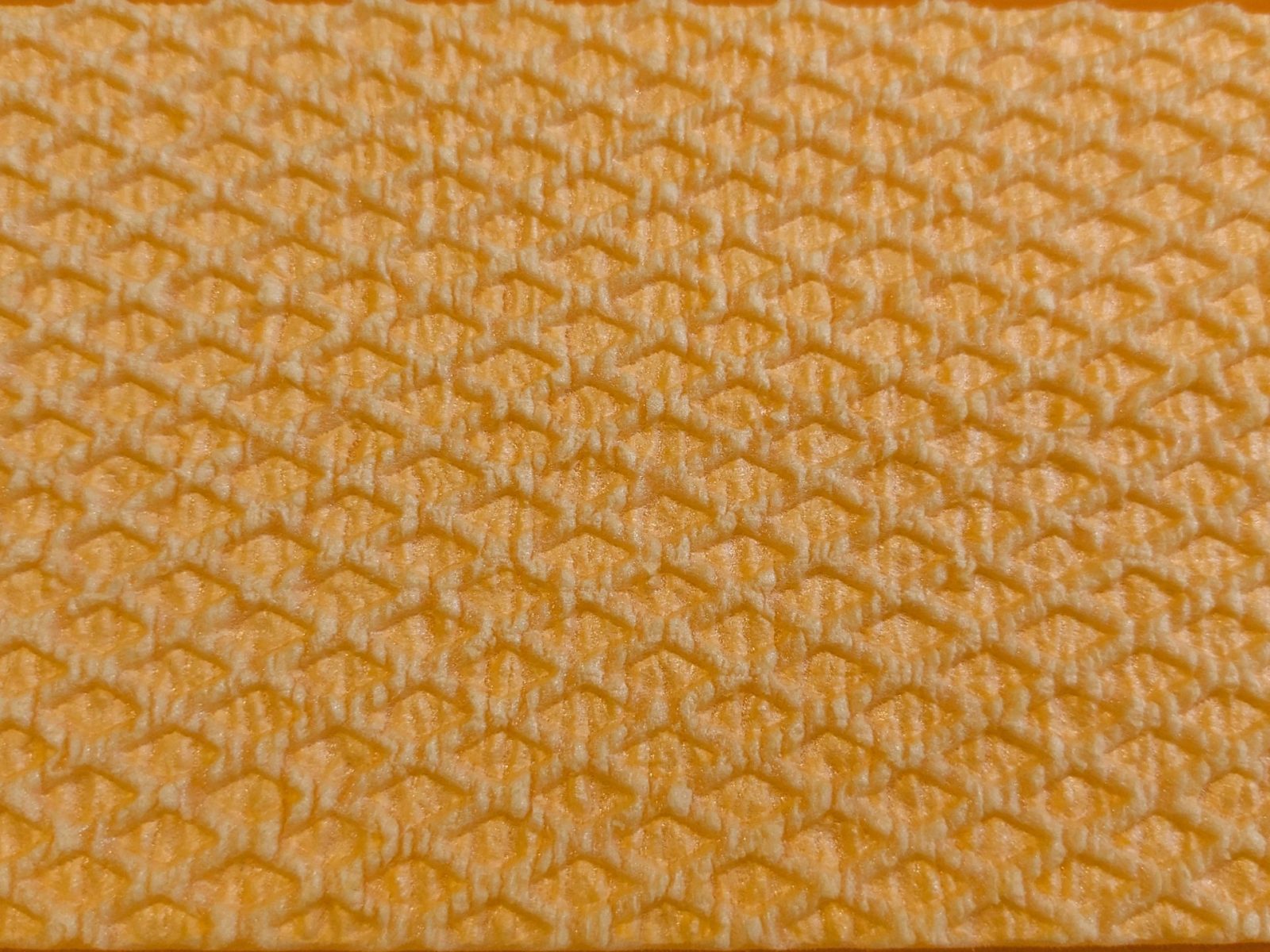
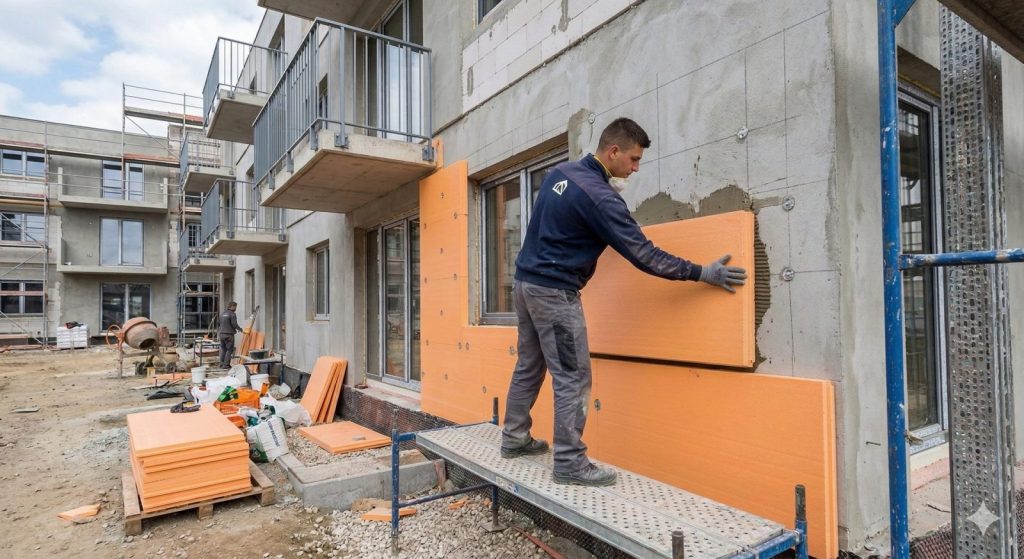
XPS 150 W X-Grip and XPS 300 W are both waffled-surface extruded polystyrene boards manufactured by PNP Orange Kft. in Várpalota, Hungary, conforming to EN 13164:2012+A1:2015. Their waffled (W) surface provides the mechanical key required for reliable adhesion of plaster, tile adhesives, and other compound-based systems — making both suitable for ETICS facades, floor screeds, and horizontal elements where a bonded finish is applied directly to the board face.
The following declared values are identical across both products:
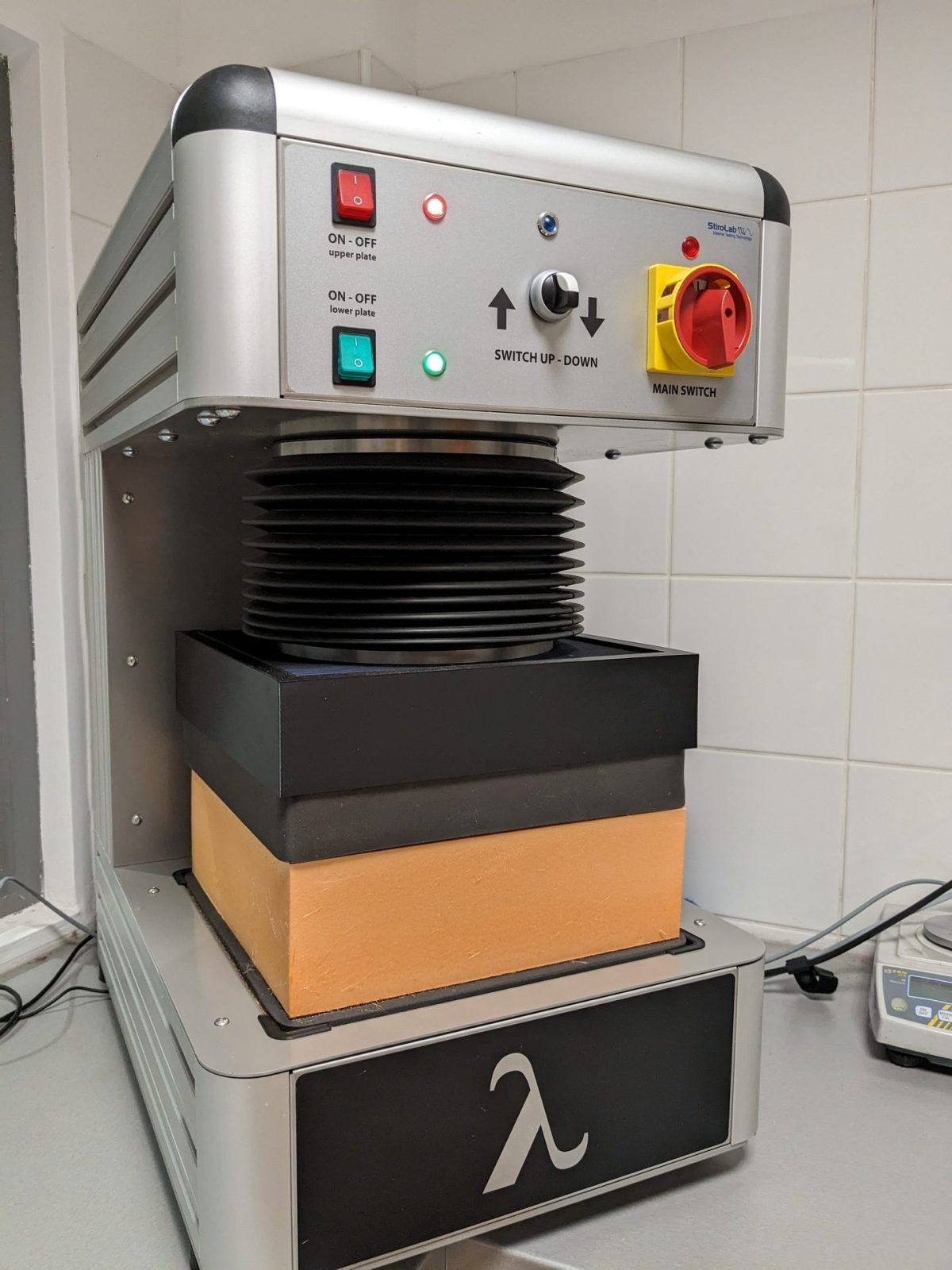
λD: 0.034 W/(m·K) for thicknesses 20–100 mm; 0.035 W/(m·K) for 120–150 mm
Board format: 1250 × 600 mm nominal; L-edge, transport size 615 × 1265 mm
Thickness range: 20, 30, 40, 50, 60, 80, 100, 120, 150 mm (standard); TB formats available
Long-term water absorption (immersion): WL(T)0,7 (≤ 0.7 Vol.-%)
Dimensional stability: DS(70,90)
Thickness tolerance: T1
Operating temperature: −70 … +75 °C
REACH status: compliant, no HBCDD or substances of very high concern
Declared values that differ — comparison table
Property XPS 150 W X-Grip XPS 300 W Compressive strength — 20 mm CS(10\Y)100 (≥ 100 kPa) CS(10\Y)200 (≥ 200 kPa) Compressive strength — 30 mm CS(10\Y)150 (≥ 150 kPa) CS(10\Y)200 (≥ 200 kPa) Compressive strength — >30 mm CS(10\Y)150 (≥ 150 kPa) CS(10\Y)300 (≥ 300 kPa) Tensile strength (TR) TR 200 TR 400 Compressive creep — >30 mm Not declared in TDS CC(2/1,5/50)130 Deformation under load Not declared in TDS DLT(2)5 Water absorption by diffusion WD(V) Not declared in TDS WD(V)3 (≤ 3.0 Vol.-%) Freeze–thaw FTCD Not declared in TDS FTCD1 (≤ 1 Vol.-%) Board density / weight Approx. 20 % lighter than XPS 300 W Reference (heavier) Raw material consumption Lower (less polystyrene per board) Higher CO₂ footprint (embodied) Smaller (proportional to lower density) Larger
Declared values taken from the current Declarations of Performance and technical data sheets. Where a property is listed as "Not declared in TDS", consult the current DoP/TDS before specifying.
Weight, raw material use, and CO₂ footprint
XPS 150 W X-Grip is approximately 20 % lighter than XPS 300 W at the same board dimensions. Because extruded polystyrene boards are manufactured by expanding polystyrene with a blowing agent, a lower-density board contains less raw polymer per unit volume.
This has two practical consequences for specifiers:
Handling and logistics: lighter boards reduce manual-handling loads on site, which is relevant for large facade projects where installers carry boards up scaffolding.
Embodied carbon: less raw polystyrene per board means a smaller CO₂ footprint over the product lifecycle. This supports specifying XPS 150 W X-Grip in applications where its mechanical performance is sufficient, as a straightforward way to reduce the embodied carbon of the insulation layer without changing thermal resistance.
For projects where an EPD-based environmental assessment is required, refer to the PNP documentation library for the EPD for the Várpalota plant (EN 15804, updated 2025-03-19). A qualified sustainability assessor should apply the EPD data to the specific project quantities.
Compressive strength — the primary selection criterion
For most bonded-system applications the critical question is how much load the insulation layer must resist, both during construction and in service.
XPS 150 W X-Grip (CS(10\Y)150, ≥ 150 kPa for 30–150 mm) is appropriate where the board carries only light loads — for example, lightweight render systems on residential facades, internal wall linings, and non-trafficked horizontal elements such as balcony or loggia soffits.
XPS 300 W (CS(10\Y)300, ≥ 300 kPa for >30 mm) is the correct choice where sustained structural loads are present — including accessible roofs, floor assemblies under screeds, podium decks, and facade applications where heavy tile finishes or multiple render coats are specified.
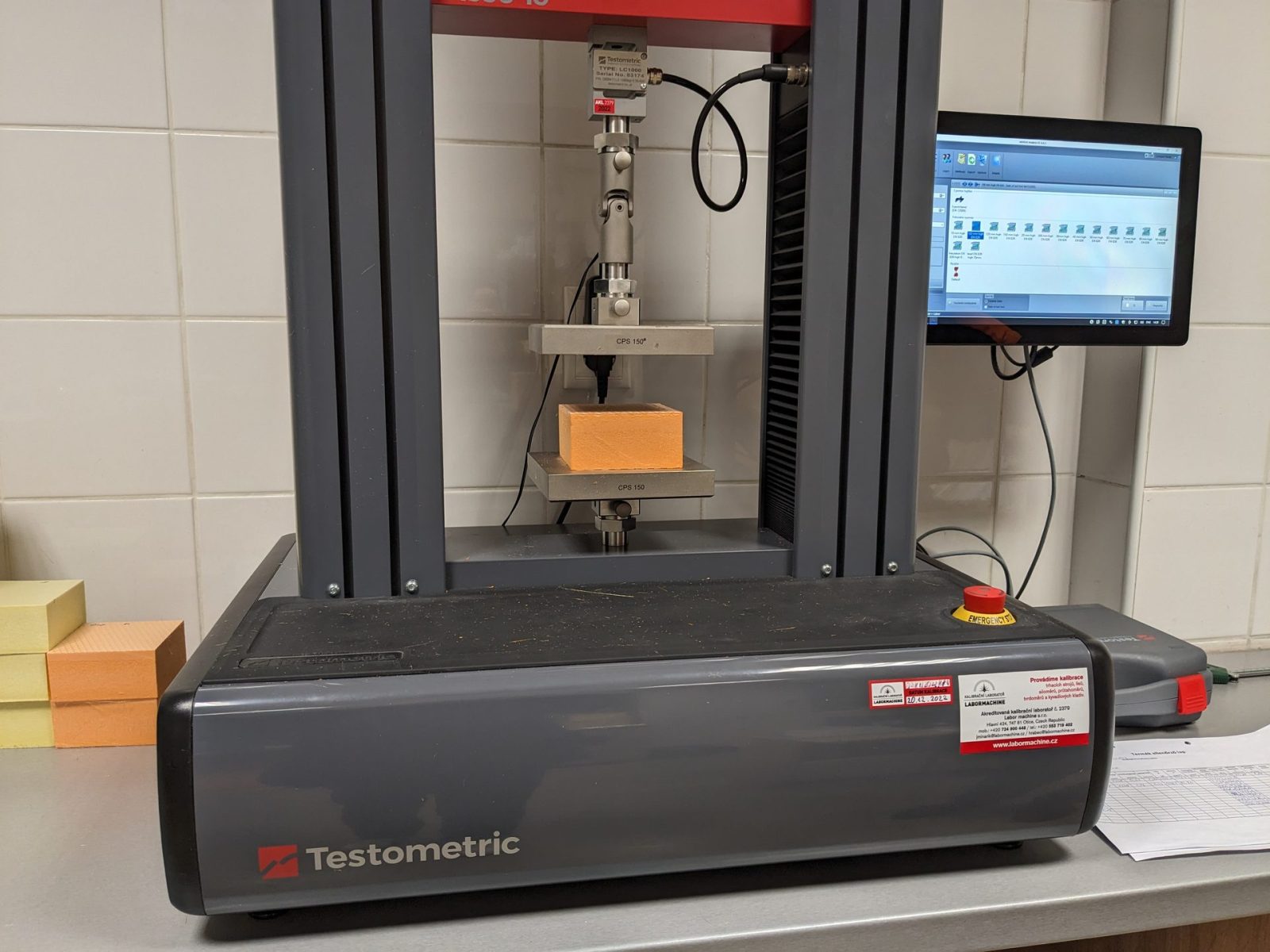
The test showed that XPS 300 W also carries a declared compressive creep class CC(2/1,5/50)130 for thicknesses above 30 mm, and a deformation class DLT(2)5 — properties relevant to long-term loaded assemblies. These are not declared for XPS 150 W X-Grip in the available data; this alone does not prove XPS 150 W X-Grip is unsuitable for any given loading scenario, but a qualified structural designer should be consulted before specifying either board in a load-bearing assembly.
For background on what compressive strength classes mean in practice, see What Does '300 kPa' Compressive Strength Mean?
Tensile strength and its relevance to bonded systems
Tensile strength perpendicular to the board face (TR) matters wherever the adhesive or render system generates pull-out forces — for example, in ETICS with mechanical fasteners, or in tile-adhesive systems subject to thermal cycling.
XPS 150 W X-Grip: TR 200 (declared)
XPS 300 W: TR 400 (declared)
The higher TR 400 of XPS 300 W supports greater resistance to pull-out forces in demanding adhesive systems. A qualified designer should assess the pull-out requirement of the specific system and verify compatibility with the system manufacturer's data.
Water absorption and durability declarations
Both boards share WL(T)0,7 (≤ 0.7 Vol.-%) long-term water absorption by immersion — the closed-cell structure that keeps moisture uptake low in both wet and buried conditions.
XPS 300 W additionally declares WD(V)3 (≤ 3.0 Vol.-%) water absorption by diffusion and FTCD1 (≤ 1 Vol.-%) freeze–thaw resistance after diffusion. These properties are not present in the XPS 150 W X-Grip data available at publication; see the current TDS for confirmation. This supports selecting XPS 300 W for exposed or permanently damp conditions where diffusion-route water uptake and freeze–thaw cycling are design considerations.
Typical application matching
The scenarios below summarise typical bonded-system uses and the preferred board. Engineering judgment and the current TDS/DoP must be applied to every real project.
Lightweight render ETICS on a residential facade (low-rise) — XPS 150 W X-Grip is typically adequate; it also offers a reduced CO₂ footprint and lower on-site handling weight. Verify with the ETICS system approval.
Heavy tile or clinker finish on a facade — XPS 300 W, for the higher TR 400 and compressive strength.
Floor insulation under a bonded screed or adhesive-fixed stone tile — XPS 300 W, for CS(10\Y)300 and CC(2/1,5/50)130 creep class.
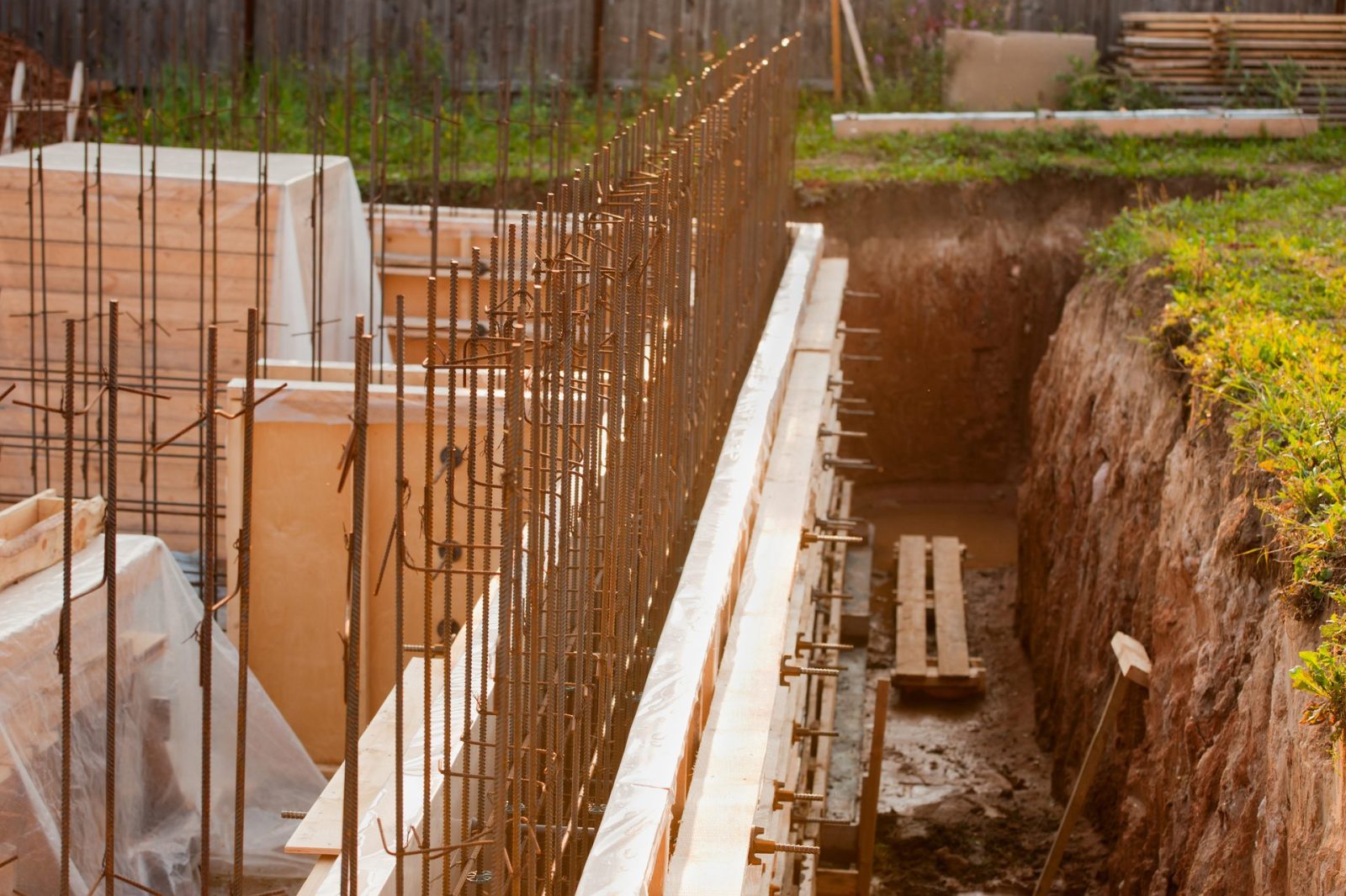
Accessible roof deck, podium, or loggia floor — XPS 300 W, for load-bearing performance.
Internal wall lining, non-load-bearing, with lightweight render — XPS 150 W X-Grip is appropriate; the lower weight simplifies installation and reduces embodied carbon.
Balcony or loggia soffit — render system — XPS 150 W X-Grip; verify load with the designer.
For projects with specific compressive requirements, consult a qualified engineer and refer to the XPS 150 W X-Grip product page, the XPS 300 W product page, and the PNP XPS application guide. Contact PNP technical sales for project-specific advice.
Documentation and compliance
Each product is supported by a Declaration of Performance (DoP) under CPR 305/2011 and a technical data sheet (TDS):
XPS 150 W X-Grip: DoP PNP XPS X-Grip_en (U) (updated 2026-06-24); DoP PNP XPS 150W_en (U) (updated 2025-10-14); TDS pnp_xpsX-Grip_X-GripTB_600x1250_techcard_en (updated 2026-07-22); TDS pnp_xps150W-150WTB_600x1250_techcard_en (updated 2026-07-22).
XPS 300 W: DoP PNP XPS 300 W EMI_en (U) (updated 2025-10-13); TDS pnp_xps300W-300WTB_600x1250_techcard_en (updated 2026-07-22).
BIM objects and EPD data for the Várpalota plant are available via the PNP documentation library.
Sources
XPS 150 W X-Grip product data (PNP XPS DATA block, accessed 2026-09-19)
XPS 300 W product data (PNP XPS DATA block, accessed 2026-09-19)
TDS pnp_xpsX-Grip_X-GripTB_600x1250_techcard_en (updated 2026-07-22)
TDS pnp_xps150W-150WTB_600x1250_techcard_en (updated 2026-07-22)
TDS pnp_xps300W-300WTB_600x1250_techcard_en (updated 2026-07-22)
DoP PNP XPS X-Grip_en (U) (updated 2026-06-24)
DoP PNP XPS 150W_en (U) (updated 2025-10-14)
DoP PNP XPS 300 W EMI_en (U) (updated 2025-10-13)
EPD — PNP XPS (Várpalota plant), EN 15804 (updated 2025-03-19)
EN 13164:2012+A1:2015