Available Thickness Ranges by Product
Every PNP XPS product has a defined standard thickness range. The table below lists the packaged thicknesses confirmed in the product data. Where a TB (thick-board) variant is referenced in the product descriptions, it extends coverage to 200 mm; thicknesses beyond 200 mm are available on request. Consult the current TDS for TB-specific λD values before specifying.
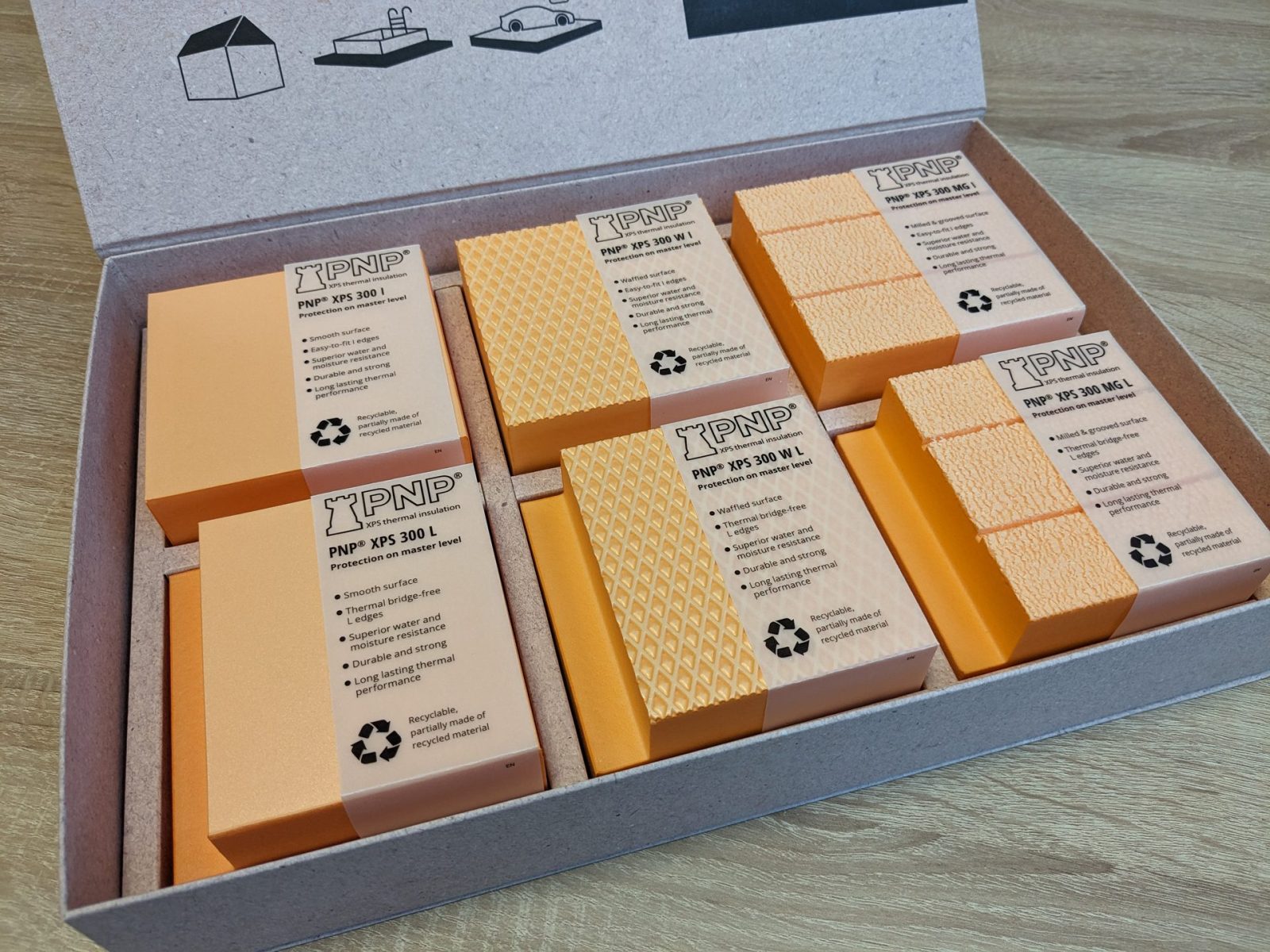
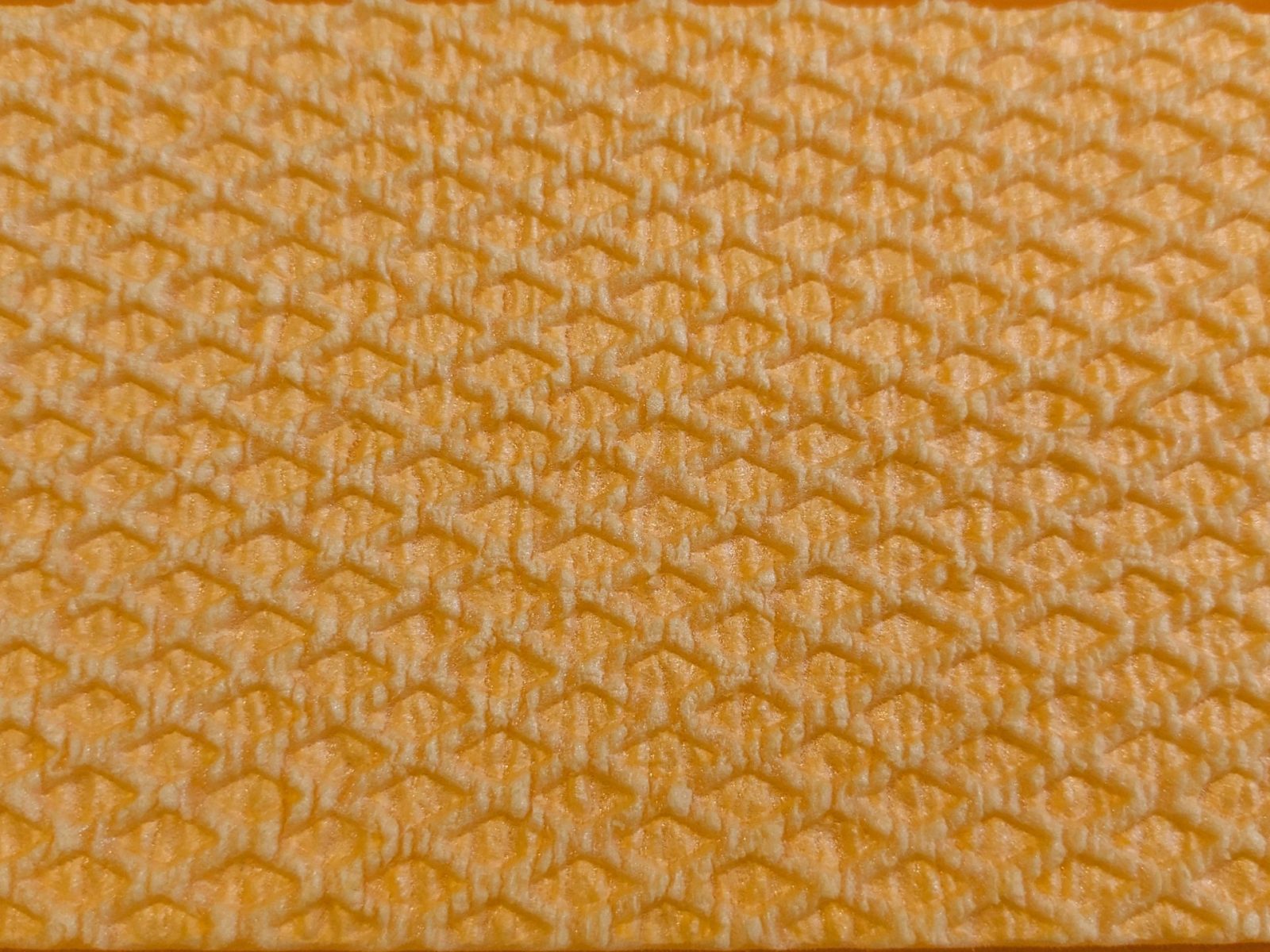
Product Compressive strength Standard packaged thicknesses (mm) TB / on request Surface XPS 150 150 kPa 20, 30, 40, 50, 60, 80, 100, 120, 150 Up to 200 mm (TB); beyond on request Smooth XPS 150 MG 100–150 kPa 20, 30, 40, 50, 60, 80, 100, 120, 150 See current TDS Milled & grooved XPS 150 W X-Grip 100–150 kPa 20, 30, 40, 50, 60, 80, 100, 120, 150 Up to 200 mm (TB); beyond on request Waffled XPS 200 200 kPa 40, 50, 60, 80, 100, 120, 150 Up to 200 mm (TB); beyond on request Smooth XPS 200 MG 200 kPa 20, 30, 40, 50, 60, 80, 100, 120, 150 See current TDS Milled & grooved XPS 200 W 200 kPa 40, 50, 60, 80, 100, 120, 150 Up to 200 mm (TB) Waffled XPS 300 200–300 kPa 20, 30, 40, 50, 60, 80, 100, 120, 150 Up to 200 mm (TB); beyond on request Smooth XPS 300 MG 300 kPa 20, 30, 40, 50, 60, 80, 100, 120, 150 See current TDS Milled & grooved XPS 300 W 200–300 kPa 20, 30, 40, 50, 60, 80, 100, 120, 150 Up to 200 mm (TB) Waffled XPS 400 400 kPa 40, 50, 60, 80, 100 Up to 200 mm (TB); beyond on request Smooth XPS 500 500 kPa 40, 50, 60, 80, 100, 120 Up to 200 mm (TB); beyond on request Smooth XPS 700 700 kPa 20, 30, 40, 50, 60, 80, 100, 120, 150 See current TDS Smooth XPS 300 SLOPE 300 kPa Factory-tapered — see current TDS See current TDS Smooth (tapered) XPS 150 SLOPE 150 kPa Factory-tapered — see current TDS See current TDS Smooth (tapered)
Note: XPS 300 and XPS 300 W are rated CS(10\Y) 200 (≥ 200 kPa) at 20–30 mm and CS(10\Y) 300 (≥ 300 kPa) above 30 mm. XPS 150 MG and XPS 150 W X-Grip are rated CS(10\Y) 100 (≥ 100 kPa) at 20 mm only. Always verify the thickness-specific compressive strength class in the DoP before structural design.
How Thickness Affects Thermal Resistance
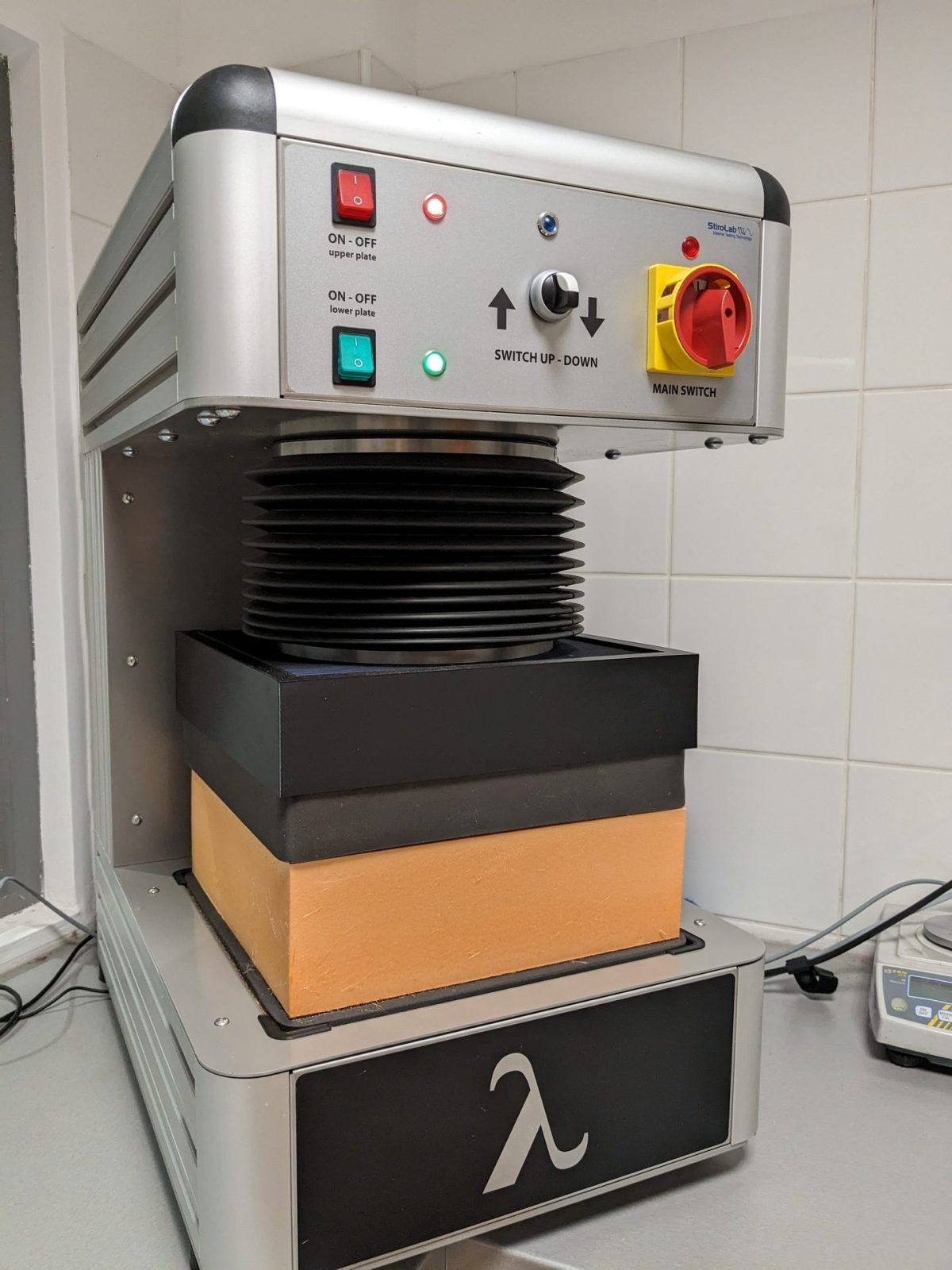
All PNP XPS products share a declared thermal conductivity (λD) of 0.034 W/(m·K) for thicknesses up to 100 mm and 0.035 W/(m·K) for 120–150 mm (standard range). The TB variant of XPS 500 maintains 0.034 W/(m·K) from 100–200 mm; see the current TDS for TB-specific λD values of other grades.
The declared thermal resistance RD = thickness (m) ÷ λD. Two examples using the standard range:
100 mm at λD 0.034 → RD = 2.94 m²·K/W
150 mm at λD 0.035 → RD = 4.29 m²·K/W
A qualified designer must calculate the thickness required to meet the U-value target specified by the applicable national energy regulation for the country of use. PNP XPS is supplied to markets including HU, RO, DE, CZ, SK, PL, HR, BG and others — each with its own requirements. This article cannot substitute that calculation.
Three-Step Selection Logic
Use the following sequence to narrow down the correct product and thickness:
Identify the application and structural load. Non-load-bearing cavity or facade: XPS 150 or XPS 150 W X-Grip. Floors and foundations with moderate loads: XPS 300. Industrial floors, parking decks, road construction: XPS 400, XPS 500 or XPS 700. Flat-roof drainage without a separate screed: XPS 150 SLOPE or XPS 300 SLOPE.
Determine the required RD (or U-value). Calculate the minimum board thickness from the national energy code and the λD value of the chosen product grade. A qualified designer or energy assessor must perform this step.
Match to a stocked thickness step. Select the nearest equal or greater packaged thickness from the table above. If the required thickness falls above 150 mm in the standard range, specify the TB variant or request a custom thickness via sales@pnpinsulation.com.
For surface-type selection (smooth vs. waffled W vs. milled-and-grooved MG), see Which PNP XPS Should I Choose? Application Guide and XPS 300 vs XPS 300 W — Smooth or Waffled Surface?.
Compressive Strength and Minimum Thickness
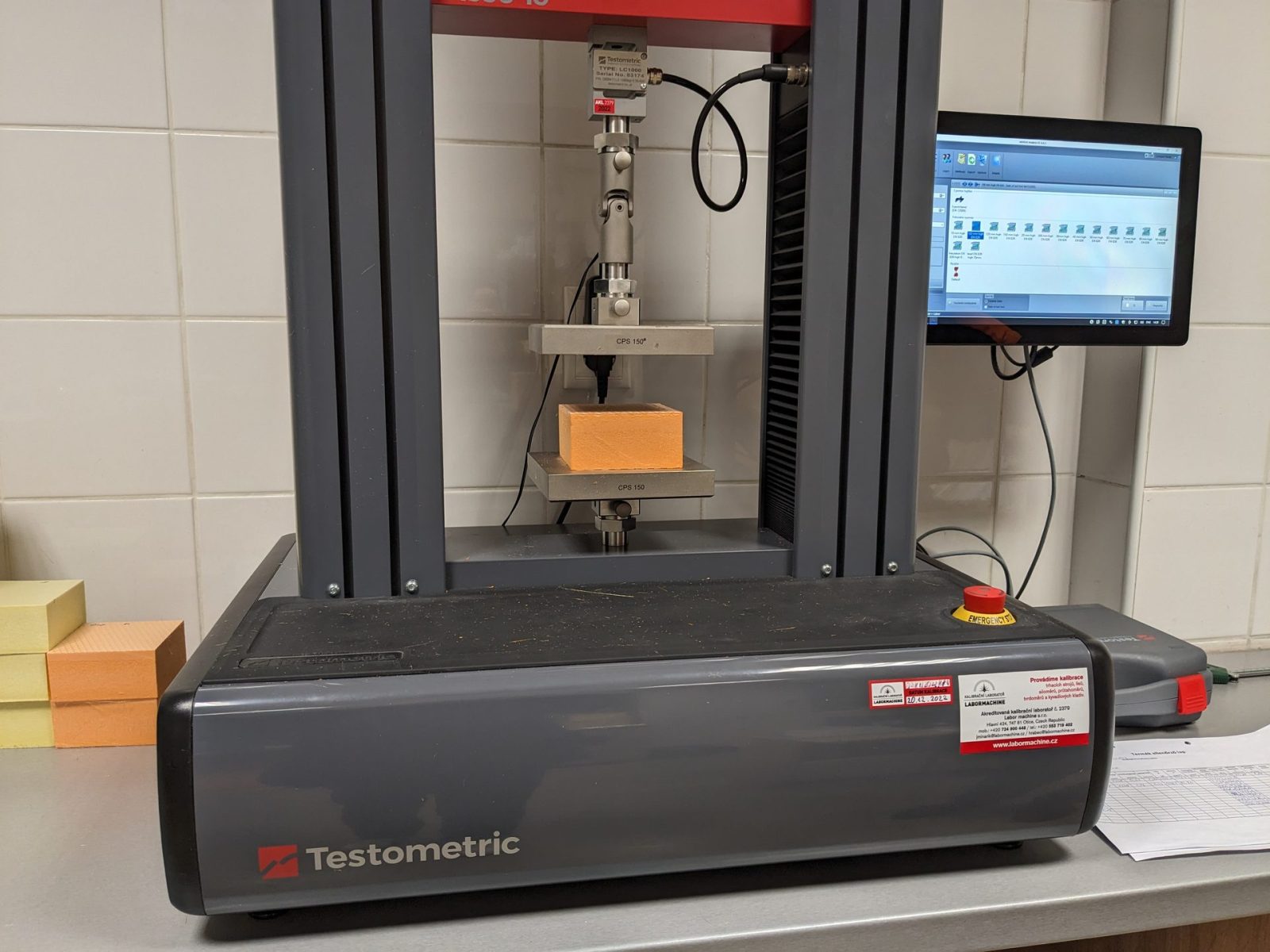
Compressive strength class can vary with thickness within the same product. Key examples from the data:
XPS 300 / XPS 300 W at 20–30 mm: CS(10\Y) 200 (≥ 200 kPa). Above 30 mm: CS(10\Y) 300 (≥ 300 kPa).
XPS 150 W X-Grip and XPS 150 MG at 20 mm: CS(10\Y) 100 (≥ 100 kPa). At 30–150 mm: CS(10\Y) 150 (≥ 150 kPa).
XPS 400, XPS 500, XPS 700: Constant class across the standard range.
This supports specifying thicker boards not only for thermal performance but also to unlock the higher compressive strength class. A structural engineer must confirm that the chosen thickness and strength class are adequate for the design load. See also What Does '300 kPa' Compressive Strength Mean?
Tapered (SLOPE) Boards
XPS 150 SLOPE and XPS 300 SLOPE are factory-tapered boards that create a drainage fall on flat roofs, terraces and inverted roofs in a single insulation layer — eliminating a separate slope screed. Because the board thickness varies along its length, the effective thermal resistance also varies across the roof surface. A qualified roof designer must account for this when calculating compliance with energy codes. Specific taper dimensions and minimum/maximum thicknesses are not published in this article; refer to the current TDS and DoP for each SLOPE product.
Sources
XPS 150 technical data sheet (EN): pnp_xps150-150TB_600x1250_techcard_en (updated 2026-07-22)
XPS 150 Declaration of Performance: DoP PNP XPS 150_en (U) (updated 2025-10-14)
XPS 150 MG technical data sheet (EN): pnp_xps150MG_600x1250_techcard_en (updated 2025-03-17)
XPS 150 MG DoP 20 mm: DoP PNP XPS 150 MG 20 mm_eng (updated 2025-03-17)
XPS 150 MG DoP 30–150 mm: DoP PNP XPS 150 MG (30-150 mm)_eng (updated 2025-03-17)
XPS 150 W X-Grip technical data sheet (EN): pnp_xpsX-Grip_X-GripTB_600x1250_techcard_en (updated 2026-07-22)
XPS 150 W X-Grip DoP: DoP PNP XPS X-Grip_en (U) (updated 2026-06-24)
XPS 200 technical data sheet (EN): pnp_xps200-200TB_600x1250_techcard_en (updated 2026-07-22)
XPS 200 DoP: DoP PNP XPS 200_en (U) (updated 2025-08-14)
XPS 200 MG technical data sheet (EN): pnp_xps200MG_600x1250_techcard_en (updated 2025-03-17)
XPS 200 MG DoP: DoP PNP XPS 200 MG_eng (updated 2025-03-17)
XPS 200 W technical data sheet (EN): pnp_xps200W-200WTB_600x1250_techcard_en (updated 2026-07-22)
XPS 200 W DoP: DoP PNP XPS 200 W_en (U) (updated 2025-08-14)
XPS 300 technical data sheet (EN): pnp_xps300-300TB_600x1250_techcard_en (updated 2026-07-22)
XPS 300 DoP: DoP PNP XPS 300 EMI_en (U) (updated 2025-10-14)
XPS 300 MG technical data sheet (EN): pnp_xps300MG_600x1250_techcard_en (updated 2025-03-17)
XPS 300 MG DoP: DoP PNP XPS 300 MG_eng (updated 2025-03-17)
XPS 300 W technical data sheet (EN): pnp_xps300W-300WTB_600x1250_techcard_en (updated 2026-07-22)
XPS 300 W DoP: DoP PNP XPS 300 W EMI_en (U) (updated 2025-10-13)
XPS 400 technical data sheet (EN): pnp_xps400-400TB_600x1250_techcard_en (updated 2026-07-22)
XPS 400 DoP: DoP PNP XPS 400_en (U) (updated 2026-04-10)
XPS 500 technical data sheet (EN): pnp_xps500-500TB_600x1250_techcard_en (updated 2026-07-22)
XPS 500 DoP: DoP PNP XPS 500_en (U) (updated 2025-07-22)
XPS 700 technical data sheet (EN): pnp_xps700_600x1250_techcard_en (updated 2025-03-17)
XPS 700 DoP: DoP PNP XPS 700_eng (updated 2025-03-17)
XPS 300 SLOPE DoP A2-B2: DoP PNP 300 SLOPE A2-B2_en (updated 2025-03-17)
XPS 300 SLOPE DoP A1-B1: DoP PNP 300 SLOPE A1-B1_en (updated 2025-03-17)
EN 13164:2012+A1:2015 — Thermal insulation products for buildings — Factory made products of extruded polystyrene foam (XPS)