What These Two Products Have in Common
XPS 500 and XPS 700 are both smooth-surface extruded polystyrene thermal insulation boards manufactured by PNP Orange Kft. in Várpalota, Hungary, and certified to EN 13164:2012+A1:2015. They sit at the top of the PNP XPS compressive-strength range and share the following declared values:
Declared thermal conductivity (λD): 0.034 W/(m·K) for thinner boards; 0.035 W/(m·K) for the thickest boards in each range
Euroclass reaction to fire: E
Long-term water absorption by immersion: WL(T)0.7 (≤ 0.7 Vol.-%)
Water absorption by diffusion: WD(V)3 (≤ 3.0 Vol.-%)
Dimensional stability: DS(70,90)
Freeze–thaw resistance: FTCD1 (≤ 1 Vol.-%)
Deformation under load and temperature: DLT(2)5
Thickness tolerance: T1
Operating temperature range: −70 … +75 °C
Board format: 1250 × 600 mm nominal
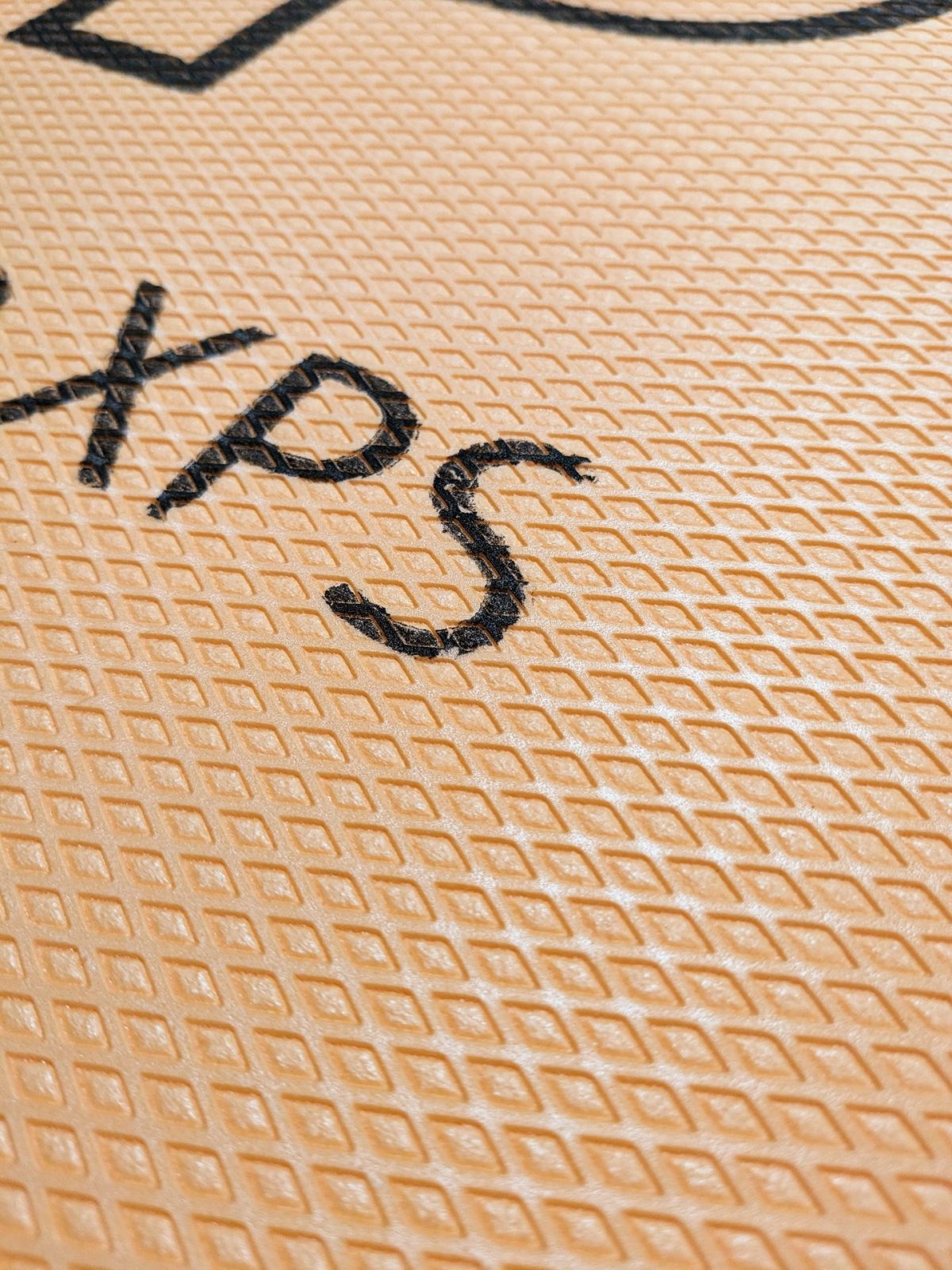
Surface: smooth
These shared properties confirm that neither product compromises thermal performance or moisture resistance in exchange for higher mechanical capacity.
Where the Two Products Diverge
The critical differences are compressive strength class, compressive creep resistance, tensile strength perpendicular to faces, and available thickness range. Each of these can be decisive in a real design situation.
Compressive Strength
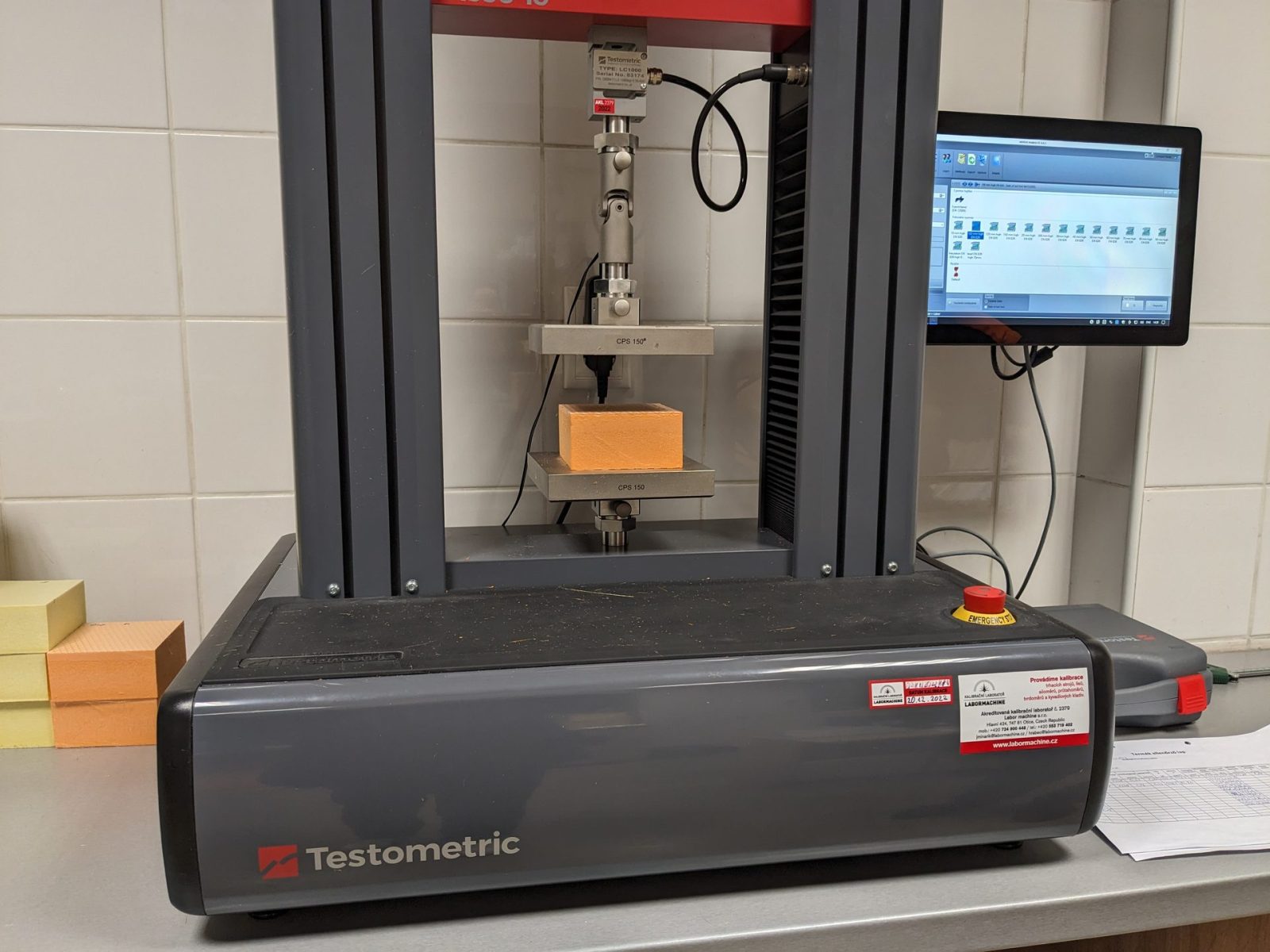
XPS 500 is rated CS(10\Y)500 (≥ 500 kPa) at 10 % deformation or yield per EN 826. XPS 700 is rated CS(10\Y)700 (≥ 700 kPa) — 40 % higher than XPS 500. The test showed these values as declared in the respective DoPs; the design value applicable to any specific project must be determined by a qualified engineer using the relevant national application standard.
Compressive Creep
Long-term creep resistance matters whenever insulation bears a sustained static load. XPS 500 carries a declared creep class of CC(2/1.5/50)150, while XPS 700 is rated CC(2/1.5/50)210. The higher figure for XPS 700 this supports its use under permanent, heavy infrastructure loads where deformation over 50 years must remain within tight limits.
Tensile Strength Perpendicular to Faces (TR)
XPS 500 is declared at TR 400, whereas XPS 700 is declared at TR 200. This means XPS 500 offers higher resistance to forces pulling the board apart perpendicular to its surface — relevant in inverted-roof and bonded assemblies. This alone does not prove that XPS 700 is unsuitable for such applications, but the difference should be evaluated by the designer.
Available Thickness Range
The standard-format XPS 500 is produced in thicknesses of 40–120 mm. XPS 700 is available in a wider standard range of 20–150 mm, including the thinner 20 mm and 30 mm boards that may be useful for thermal-bridge inserts and civil-engineering details. For thicknesses beyond the standard ranges, consult the current TDS or contact PNP XPS directly.
Declared Values — Side-by-Side Comparison
PropertyXPS 500XPS 700Compressive strength class (EN 826)CS(10\Y)500 — ≥ 500 kPaCS(10\Y)700 — ≥ 700 kPaCompressive creep classCC(2/1.5/50)150CC(2/1.5/50)210Tensile strength perpendicular to facesTR 400TR 200Standard thickness range (mm)40–12020–150λD — boards ≤ 100 mm (W/(m·K))0.0340.034λD — boards 120 mm / 120–150 mm (W/(m·K))0.0350.035Reaction to fire (Euroclass)EEWL(T) — long-term water absorptionWL(T)0.7 (≤ 0.7 Vol.-%)WL(T)0.7 (≤ 0.7 Vol.-%)WD(V) — water absorption by diffusionWD(V)3 (≤ 3.0 Vol.-%)WD(V)3 (≤ 3.0 Vol.-%)FTCD — freeze–thaw resistanceFTCD1 (≤ 1 Vol.-%)FTCD1 (≤ 1 Vol.-%)Dimensional stabilityDS(70,90)DS(70,90)Deformation under load/temperatureDLT(2)5DLT(2)5SurfaceSmoothSmoothEdge optionsL-edgeI or L edge
Typical Applications for Each Grade
XPS 500 — Typical Applications
Industrial floors and heavily loaded floor slabs
Parking decks and multi-storey car parks
Flat-roof and inverted-roof insulation under traffic or plant loads
Cold-store and refrigeration facility floors
Road and infrastructure construction requiring elevated load-bearing performance
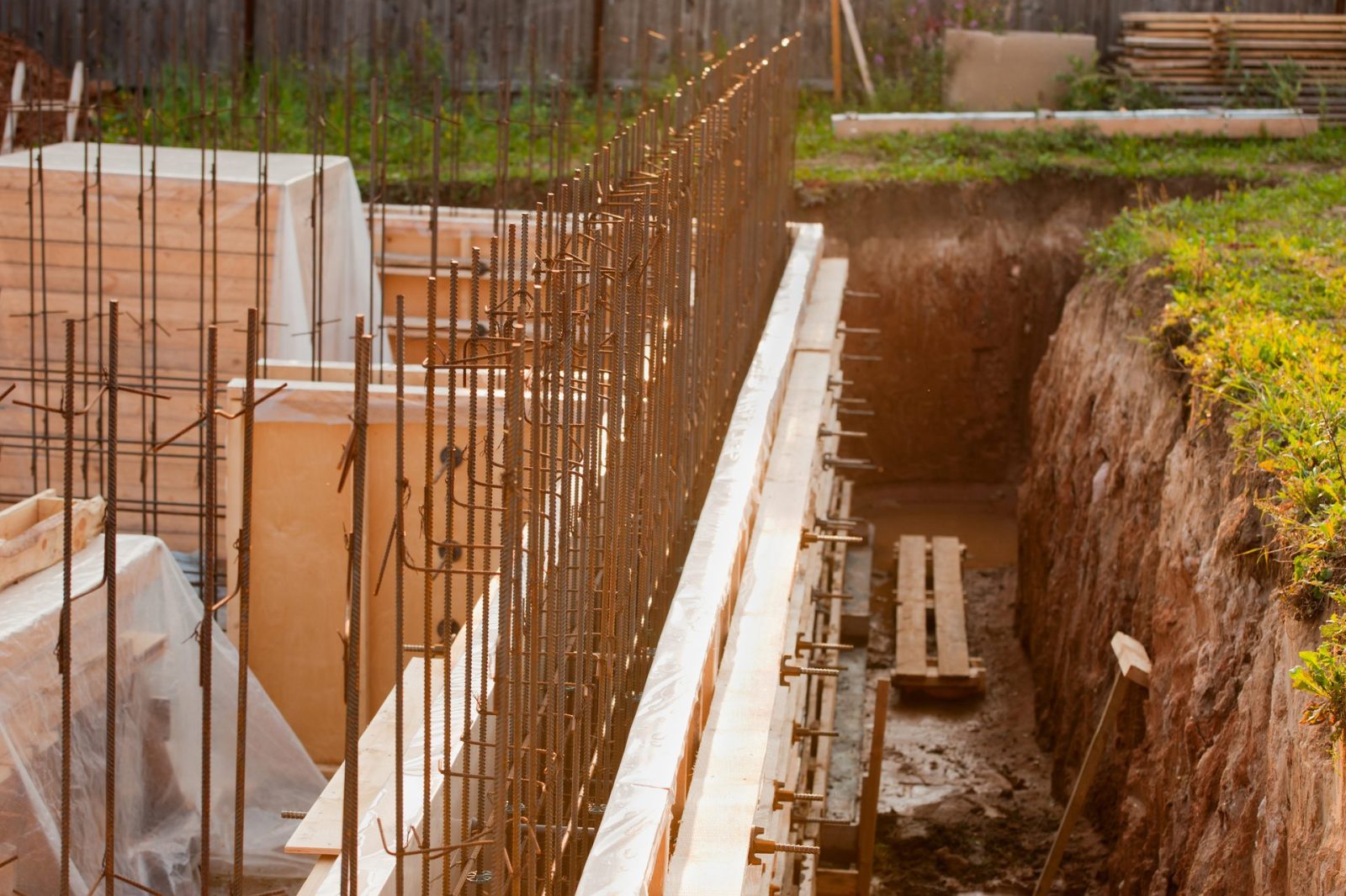
Foundation and basement perimeter insulation
XPS 700 — Typical Applications
Road construction and civil engineering structures under extreme load
Bridge decks and infrastructure elements subject to heavy traffic
Heavily loaded ground slabs and industrial pavements
Foundations and subgrade insulation under extreme load conditions
Cold-storage and freezer-room floor insulation under maximum permanent loads
The two grades overlap in some floor and cold-store applications. Where design loads are close to the 500 kPa boundary, a qualified structural engineer should verify which grade is required. Never select a compressive strength class without a verified load calculation.
A Note on Tensile Strength and Creep — What the Numbers Mean
The TR value (tensile strength perpendicular to faces, EN 1607) matters in assemblies where uplift forces or differential movement try to delaminate the board — for example, an inverted roof where differential thermal movement occurs, or a bonded system on a vertical substrate. XPS 500 (TR 400) outperforms XPS 700 (TR 200) on this measure.
The CC(2/1.5/50) creep value represents the compressive stress (in kPa) that, sustained over 50 years at the declared conditions, will not cause more than 2 % additional deformation relative to the initial 1.5 % deformation. XPS 700 at CC(2/1.5/50)210 withstands a higher sustained stress than XPS 500 at CC(2/1.5/50)150. This supports XPS 700 in permanent heavy-load civil applications. A structural or geotechnical engineer must assess whether the creep class is adequate for the specific design life and load scenario — consult the current TDS and DoP for the full declared dataset.
For guidance on what compressive strength classes mean in practice, see What Does '300 kPa' Compressive Strength Mean?
How to Choose — A Decision Framework
Use the following questions to guide initial product selection. Final specification must be confirmed by a qualified designer using the TDS, DoP, and applicable national standards.
What is the verified design compressive load? If it exceeds 500 kPa under 10 % deformation or yield, XPS 700 is required. If it is at or below 500 kPa, XPS 500 may be adequate.
Is creep under sustained load critical? Road embankments, bridge abutments, and permanent foundation loads typically require a higher creep class — this supports XPS 700 with CC(2/1.5/50)210.
Is tensile strength perpendicular to faces significant? Inverted roofs, bonded assemblies, or applications with uplift forces favour XPS 500 (TR 400) over XPS 700 (TR 200).
What thickness is needed? XPS 700 starts at 20 mm and reaches 150 mm in the standard range; XPS 500 starts at 40 mm and reaches 120 mm. For very thin inserts or thicker standard boards in the 121–150 mm range, XPS 700 may be the only standard-format option. For thicknesses beyond either standard range, see the current TDS or contact PNP XPS sales.
For a broader product-selection guide, see Which PNP XPS Should I Choose? Application Guide.
Documentation and Further Resources
Both products are supported by a Declaration of Performance (DoP) under CPR 305/2011 and a technical data sheet (TDS). Always use the current version of these documents for specification purposes.
XPS 500 product page — TDS and DoP download links
XPS 700 product page — TDS and DoP download links
Full documentation library — all DoPs, EPD, BIM objects
Contact PNP XPS — technical and sales enquiries: sales@pnpinsulation.com
Sources
XPS 500 technical data sheet: pnp_xps500-500TB_600x1250_techcard_en(20.07.2026).pdf (updated 2026-07-22)
XPS 500 Declaration of Performance: DoP PNP XPS 500_en (U).pdf (updated 2025-07-22)
XPS 700 technical data sheet: pnp_xps700_600x1250_techcard_en (21.07.2023).pdf (updated 2025-03-17)
XPS 700 Declaration of Performance: DoP PNP XPS 700_eng.pdf (updated 2025-03-17)
EN 13164:2012+A1:2015 — Factory made products of extruded polystyrene foam (XPS) — Specification
EN 826 — Thermal insulating products for building applications — Determination of compression behaviour
EN 1607 — Thermal insulating products for building applications — Determination of tensile strength perpendicular to faces