 Magyar
 Română
 Lietuviškai
 Latviešu valoda
 Eesti
Eesti Polski
 Slovenčina
 Slovenščina
 Italiano
 Čeština
 Deutsch
The Direct Answer
In an inverted roof, the insulation layer sits above the waterproofing membrane and is therefore permanently exposed to rainwater, snowmelt, and the moisture that drains through the ballast or paving layer above it. XPS (extruded polystyrene thermal insulation board, EN 13164) is the material of choice for this assembly. PIR (polyisocyanurate) boards are not suitable: their facings absorb moisture and their thermal performance degrades irreversibly under continuous wetting.
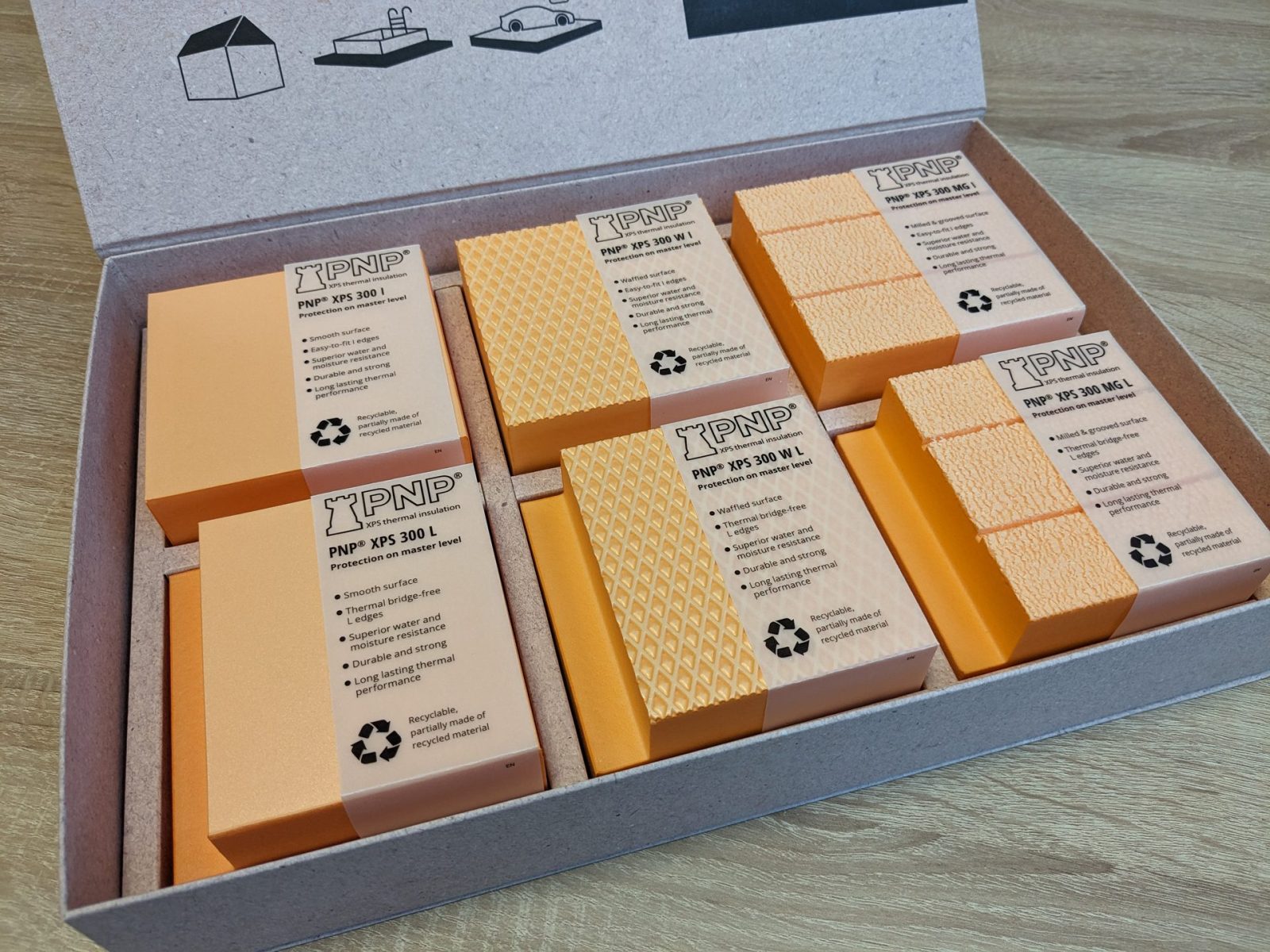
PNP XPS grades rated for inverted roofs — XPS 300, XPS 300 W, XPS 500, XPS 700, and the tapered XPS 300 SLOPE — combine negligible water absorption with compressive strengths of 300 kPa to 700 kPa, making them the technically and commercially proven solution across Central and Eastern Europe.
How an Inverted Roof Works
A conventional flat roof places the insulation below the waterproofing membrane. In an inverted roof, the order is reversed:
Reinforced concrete structural deck
Drainage/slope layer (e.g. XPS 300 SLOPE)
Waterproofing membrane — protected from UV and mechanical damage
Separation geotextile or fibreglass layer
XPS thermal insulation boards
Drainage membrane with filter
Ballast, paving, traffic course, or planted layer above
Because the insulation is above the waterproofing, it must tolerate continuous contact with cold percolating water without losing thermal performance or structural integrity. This rules out any insulation material whose core or facings absorb moisture.
Why XPS Is Suited to Inverted Roofs
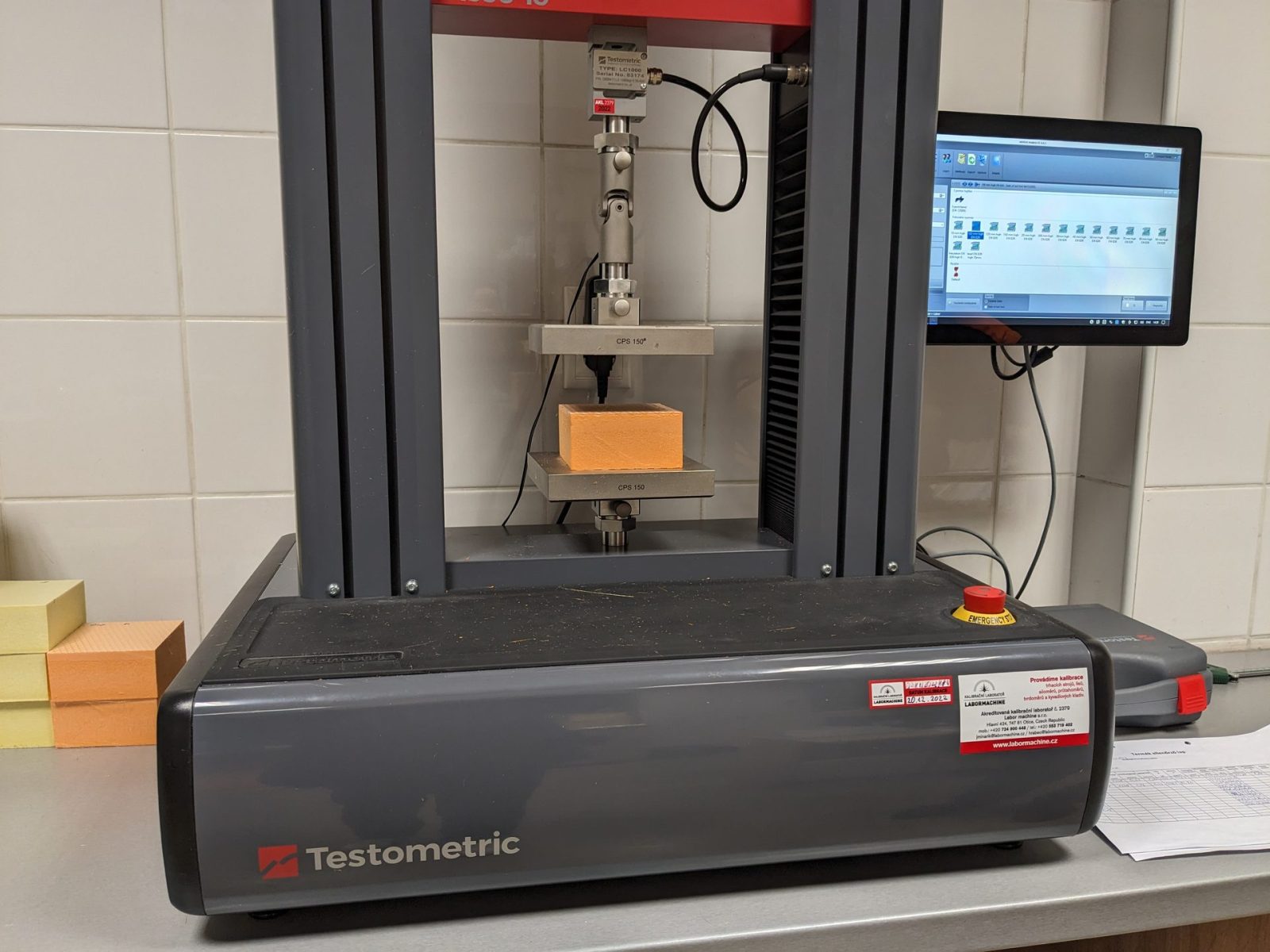
XPS boards from PNP have a homogeneous closed-cell structure. The key declared performance values relevant to inverted roofs are:
Property | XPS 300 / 300 W | XPS 500 | XPS 700 |
|---|---|---|---|
Compressive strength | 300 kPa (boards >30 mm) | 500 kPa | 700 kPa |
Long-term water absorption (immersion) WL(T) | ≤ 0.7 Vol.-% | ≤ 0.7 Vol.-% | ≤ 0.7 Vol.-% |
Water absorption by diffusion WD(V) | ≤ 3.0 Vol.-% | ≤ 3.0 Vol.-% | ≤ 3.0 Vol.-% |
Freeze–thaw resistance FTCD | ≤ 1 Vol.-% | ≤ 1 Vol.-% | ≤ 1 Vol.-% |
Compressive creep CC(2/1.5/50) | 130 kPa | 150 kPa | 210 kPa |
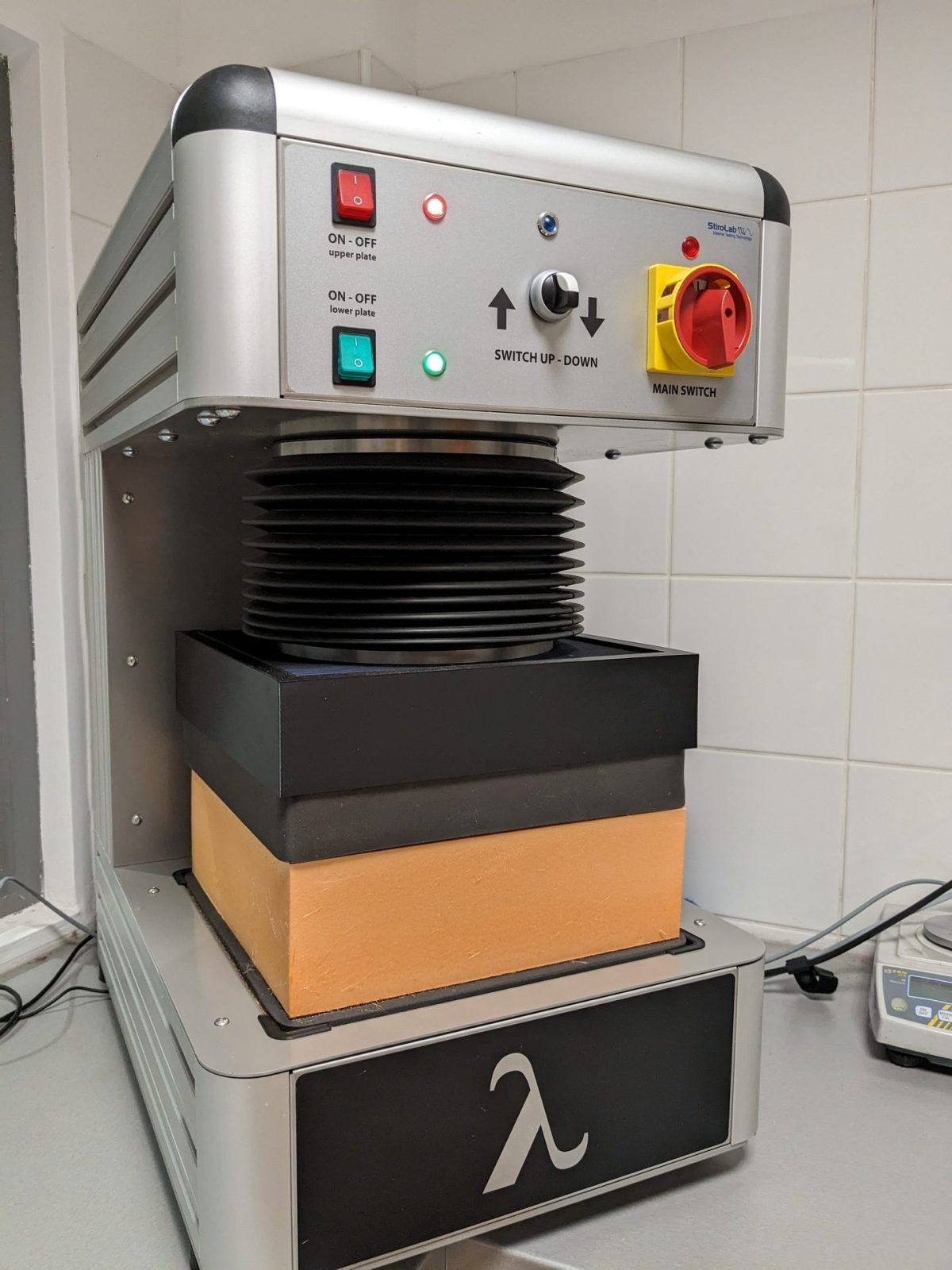
Declared thermal conductivity λD | 0.034–0.035 W/(m·K) | 0.034–0.035 W/(m·K) | 0.034–0.035 W/(m·K) |
Standard | EN 13164:2012+A1:2015 | EN 13164:2012+A1:2015 | EN 13164:2012+A1:2015 |
The WL(T)0.7 rating — long-term water absorption by total immersion ≤ 0.7 Vol.-% — means that the boards retain their insulating cross-section even after years of intermittent soaking. The freeze–thaw rating FTCD 1 (≤ 1 Vol.-%) confirms that repeated wetting and freezing cycles cause negligible volume change, which is essential in continental climates across Central and Eastern Europe where roofs experience many freeze–thaw cycles per year.
Why PIR Is Not Recommended for Inverted Roofs
PIR boards are produced with a foamed polyisocyanurate core bonded to facings (typically glass-fibre tissue or aluminium foil). This construction performs well in warm roofs where the insulation is kept dry above the deck and below the waterproofing. In an inverted assembly the situation is the opposite:
The facings of PIR boards absorb moisture and can delaminate under sustained wetting.
The blowing agents in the PIR foam migrate out over time and are replaced by air, raising thermal conductivity — a process accelerated by moisture ingress.
PIR is not standardised under EN 13164 (the XPS standard) and does not carry the WL(T) or FTCD classifications that characterise tested resistance to long-term immersion and freeze–thaw.
This alone does not prove that every PIR product fails in every inverted roof scenario, but the consensus in European flat-roof guidance is that PIR is unsuitable above the membrane in inverted assemblies. A qualified roof designer should confirm the material specification against the relevant national standard and project conditions.
Selecting the Right PNP XPS Grade for Your Inverted Roof
The compressive strength class must match the loads the roof will carry. The table below links typical inverted-roof uses to PNP XPS grades:
Application | Recommended grade | Compressive strength |
|---|---|---|
Non-accessible ballasted roof (gravel) | 300 kPa | |
Green / planted roof | 300 kPa | |
Pedestrian terrace / accessible roof | 300–500 kPa | |
Vehicle-accessed / car park deck | 500–700 kPa | |
Creating drainage fall (any of the above) | XPS 300 SLOPE as slope layer beneath the XPS insulation layer | 300 kPa |
Where a single layer must both create fall and provide thermal resistance, XPS 300 SLOPE factory-tapered boards eliminate the need for a separate screed. Exact thickness must be calculated by a qualified designer using the required thermal resistance RD and the applicable national energy regulation — see the current TDS for declared λD values. The 300 kPa compressive strength article explains how to interpret CS class ratings for structural decisions.
Inverted Roof Assembly Layers
Two PNP-documented inverted roof assemblies illustrate how the layers are ordered:
Vehicle-accessed inverted roof:
Road pavement
Base course (crushed rock)
Drainage profiled membrane with filter
XPS thermal insulation (e.g. XPS 500 or XPS 700)
Geotextile or fibreglass separation layer
Waterproofing PVC membrane
Geotextile or fibreglass separation layer
XPS 300 SLOPE layer
Reinforced concrete base
Inverted roof with landscaping / green roof:
Vegetation layer
Drainage and storage profiled membrane with filter
XPS thermal insulation (e.g. XPS 300)
Root barrier
Geotextile or fibreglass separation layer
Waterproofing PVC membrane
Geotextile or fibreglass separation layer
XPS 300 SLOPE layer
Reinforced concrete base
These assemblies represent typical documented practice. A structural and waterproofing engineer must confirm the specific layer sequence, membrane type, and drainage design for each project.
Sources
XPS 300 technical data sheet (EN): pnp_xps300-300TB_600x1250_techcard_en(20.07.2026).pdf (updated 2026-07-22)
XPS 300 Declaration of Performance: DoP PNP XPS 300 EMI_en (U).pdf (updated 2025-10-14)
XPS 300 W technical data sheet (EN): pnp_xps300W-300WTB_600x1250_techcard_en(20.07.2026).pdf (updated 2026-07-22)
XPS 300 W Declaration of Performance: DoP PNP XPS 300 W EMI_en (U).pdf (updated 2025-10-13)
XPS 500 technical data sheet (EN): pnp_xps500-500TB_600x1250_techcard_en(20.07.2026).pdf (updated 2026-07-22)
XPS 500 Declaration of Performance: DoP PNP XPS 500_en (U).pdf (updated 2025-07-22)
XPS 700 technical data sheet (EN): pnp_xps700_600x1250_techcard_en (21.07.2023).pdf (updated 2025-03-17)
XPS 700 Declaration of Performance: DoP PNP XPS 700_eng.pdf (updated 2025-03-17)
XPS 300 SLOPE Declaration of Performance: DoP PNP 300 SLOPE A2-B2_en.pdf and DoP PNP 300 SLOPE A1-B1_en.pdf (updated 2025-03-17)
EN 13164:2012+A1:2015 — Factory-made products of extruded polystyrene foam (XPS)
PNP XPS Solutions Catalogue — Roof assemblies (vehicle-accessed inverted roofing system; inverted roof insulation system with landscaping)