 Magyar
 Română
 Lietuviškai
 Latviešu valoda
 Eesti
Eesti Polski
 Slovenčina
 Slovenščina
 Italiano
 Čeština
 Deutsch
The Direct Answer
XPS is the recommended insulation material for use under a floor slab or on the ground. PNP XPS grades rated CS(10\Y)300 (≥ 300 kPa) and above are specifically engineered for foundations, floor slabs, and other load-bearing horizontal assemblies. Their homogeneous closed-cell structure resists moisture, holds its thickness under sustained load, and maintains declared thermal conductivity (λD 0.034–0.035 W/(m·K)) throughout the service life of the building.
This does not mean EPS is never used under slabs — this alone does not prove EPS is always unsuitable — but XPS addresses the two main risks in sub-slab position (moisture and load) more reliably, and a qualified structural engineer or designer should confirm the appropriate product and thickness for your specific project.
Why the Sub-Slab Environment Is Demanding
Insulation placed between the bearing layer (compacted granular fill or lean concrete) and the structural slab faces conditions that are more severe than those on an above-ground wall:
Sustained compressive load. The full dead and live load of the building acts on the insulation continuously. Creep — slow compression over years — reduces effective thickness and thermal resistance.
Ground moisture. Even with a vapour barrier, capillary moisture, seasonal groundwater fluctuation, and construction water can keep the insulation damp for extended periods.
Limited access for repair. Once the slab is cast, replacing degraded insulation is prohibitively costly.
These conditions set the baseline requirements: high compressive strength, low long-term water absorption, and dimensional stability.
How XPS Meets Those Requirements
PNP XPS boards intended for sub-slab use are tested to EN 13164:2012+A1:2015. The key declared properties of XPS 300 (the most commonly specified grade for floor slabs and foundations) are:
Property | Declared value (XPS 300, >30 mm) |
|---|---|
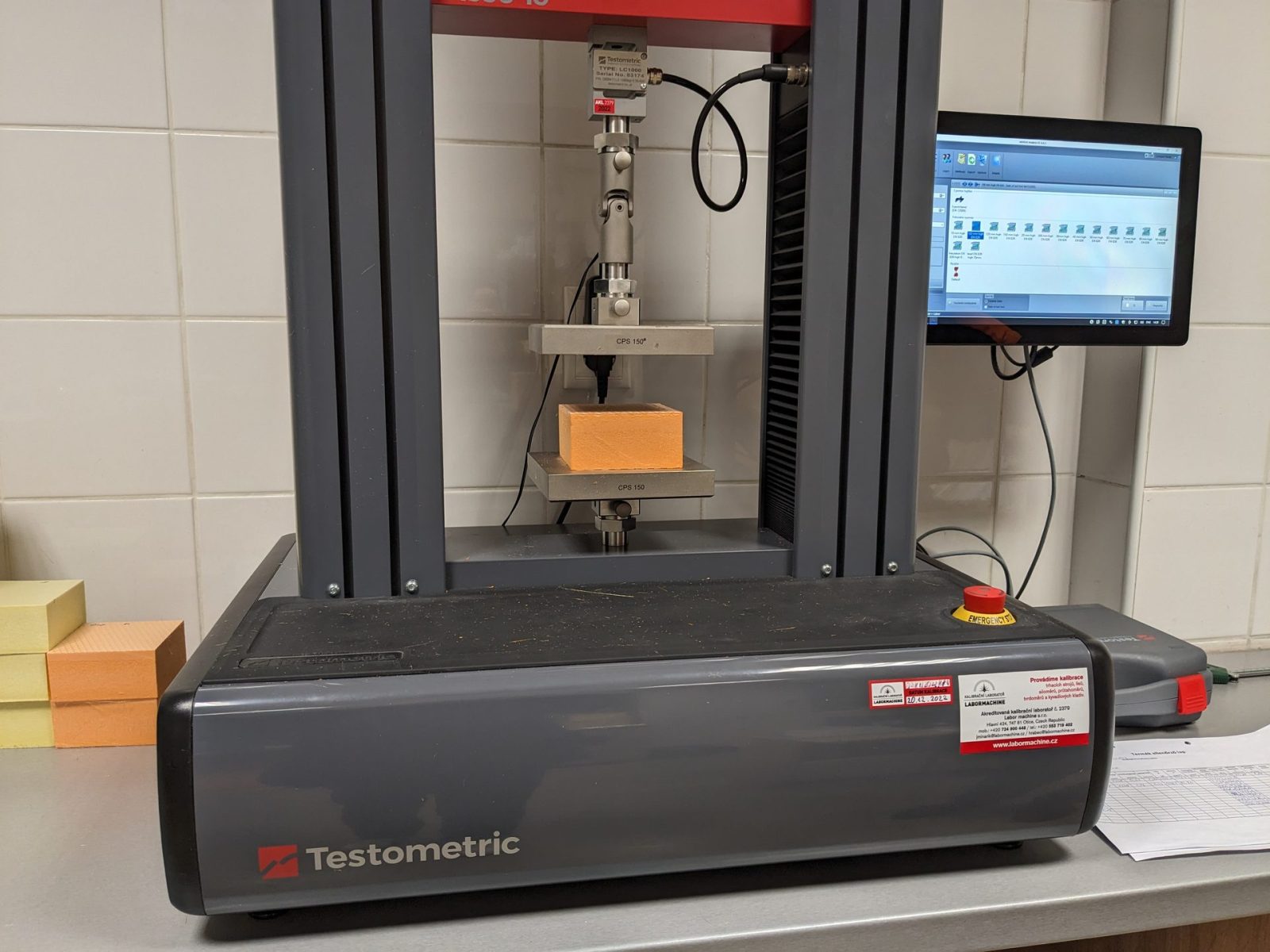
Compressive strength | CS(10\Y)300 — ≥ 300 kPa |
Compressive creep | CC(2/1,5/50)130 |
Long-term water absorption (immersion) | WL(T)0,7 — ≤ 0.7 Vol.-% |
Water absorption by diffusion | WD(V)3 — ≤ 3.0 Vol.-% |
Freeze–thaw resistance | FTCD1 — ≤ 1 Vol.-% |
Dimensional stability | DS(70,90) |
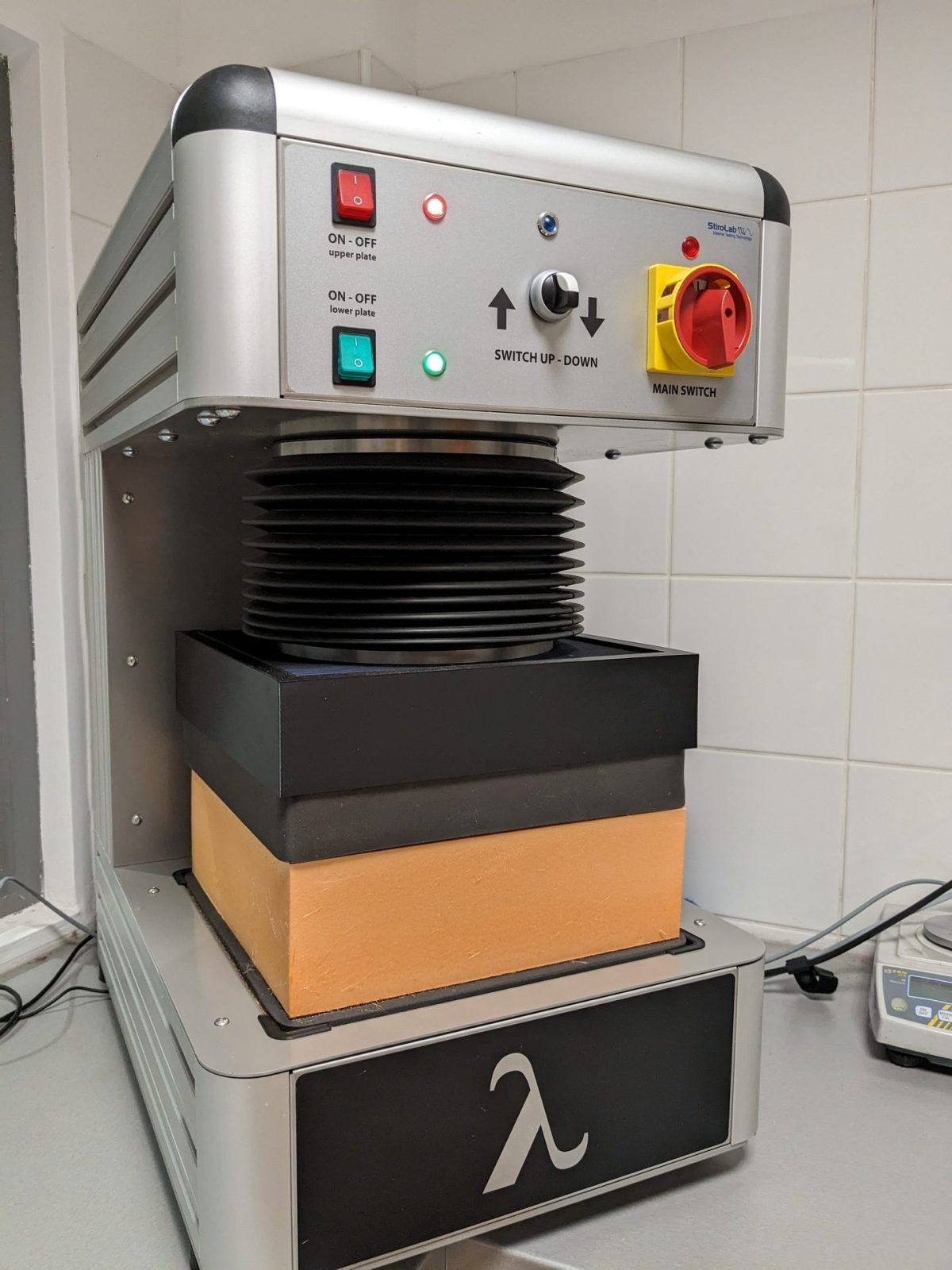
Declared thermal conductivity (λD) | 0.034 W/(m·K) for 20–100 mm; 0.035 W/(m·K) for 120–150 mm |
Tensile strength perpendicular to faces | TR 400 |
Reaction to fire | Euroclass E |
The creep class CC(2/1,5/50)130 means that under a sustained compressive stress of 130 kPa, the long-term deformation remains within the tested limits. For projects with higher sustained loads — industrial floors, cold stores, parking decks — XPS 500 (≥ 500 kPa) or XPS 700 (≥ 700 kPa) are available. A qualified structural designer should confirm the required compressive class for a specific project.
Choosing the Right XPS Grade
PNP XPS offers a range of compressive strength classes. The table below summarises the grades relevant to floor and foundation applications:
Product | Compressive strength | Typical sub-slab use case |
|---|---|---|
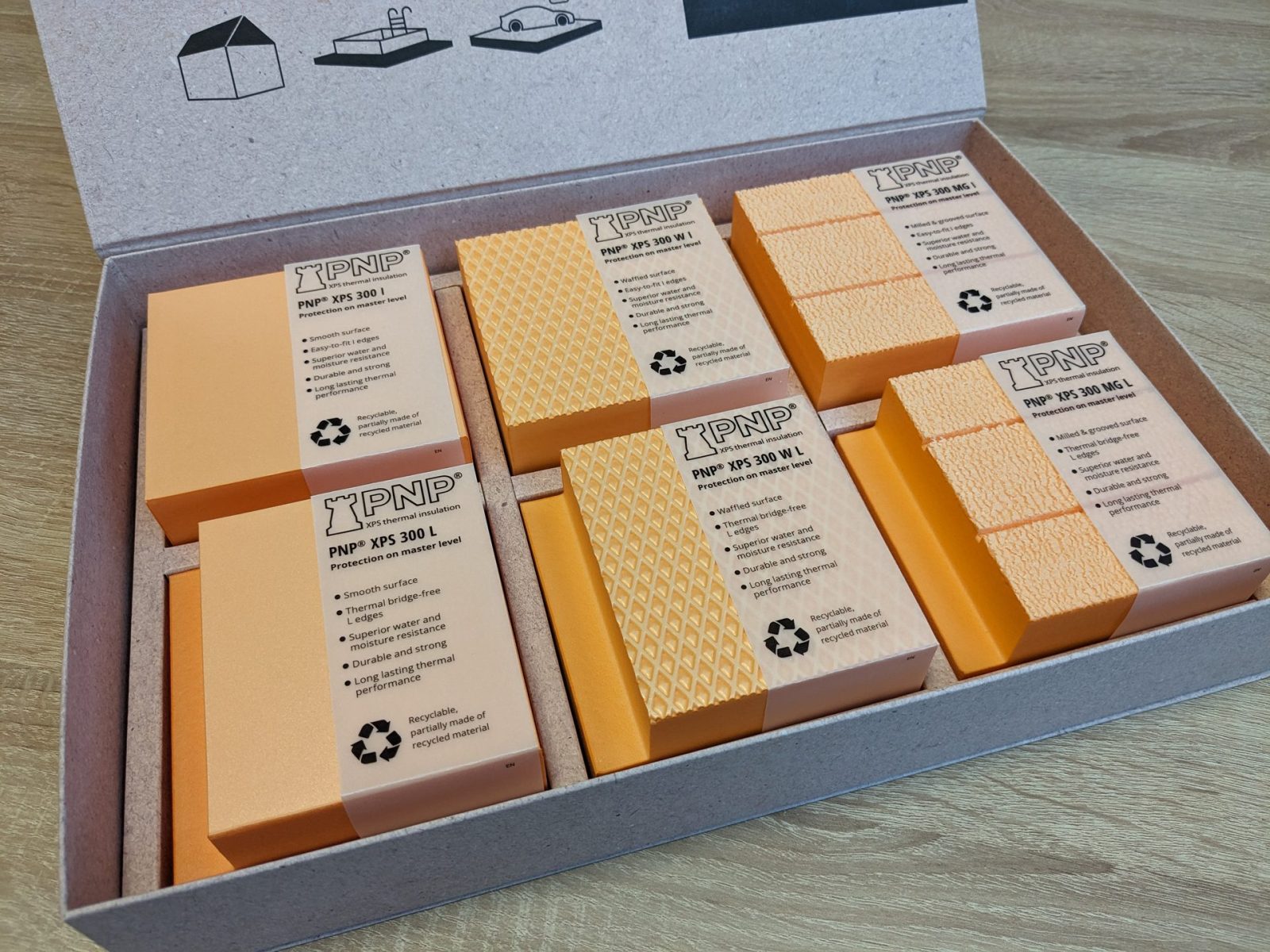
≥ 300 kPa (>30 mm) | Residential and commercial floor slabs, shallow foundations | |
≥ 400 kPa | Car parks, cold stores, heavily loaded commercial floors | |
≥ 500 kPa | Industrial floors, road construction, high-load slabs | |
≥ 700 kPa | Extreme civil engineering loads, heavy infrastructure |
Where the finished floor surface will be bonded directly to the insulation, or a screed is adhesive-bonded, the waffled-surface variants (XPS 300 W) provide improved mechanical key for the bonding layer. See also XPS 300 vs XPS 300 W — Smooth or Waffled Surface? and Which PNP XPS Should I Choose? Application Guide.
Typical Assembly: Slab-on-Grade Floor
The PNP solutions catalogue lists the following layer sequence for a slab-on-grade floor (from bottom to top):
Undisturbed soil
Geotextile separation layer
Sand and gravel coat
PNP XPS thermal insulation
Polyethylene film (vapour control)
Cement-sand screed
Floor covering
Exact layer thicknesses, vapour barrier specification, edge-insulation detailing, and waterproofing continuity must be determined by a qualified designer based on the local thermal regulations, groundwater conditions, and structural loads of the project. Consult the current TDS and DoP for the selected product before specifying.
Sources
XPS 300 technical data sheet — TDS pnp_xps300-300TB_600x1250_techcard_en(20.07.2026).pdf (updated 2026-07-22)
XPS 300 Declaration of Performance — DoP PNP XPS 300 EMI_en (U).pdf (updated 2025-10-14)
XPS 300 W technical data sheet — TDS pnp_xps300W-300WTB_600x1250_techcard_en(20.07.2026).pdf (updated 2026-07-22)
XPS 300 W Declaration of Performance — DoP PNP XPS 300 W EMI_en (U).pdf (updated 2025-10-13)
XPS 500 technical data sheet — TDS pnp_xps500-500TB_600x1250_techcard_en(20.07.2026).pdf (updated 2026-07-22)
XPS 500 Declaration of Performance — DoP PNP XPS 500_en (U).pdf (updated 2025-07-22)
XPS 700 technical data sheet — TDS pnp_xps700_600x1250_techcard_en (21.07.2023).pdf (updated 2025-03-17)
XPS 700 Declaration of Performance — DoP PNP XPS 700_eng.pdf (updated 2025-03-17)
XPS 400 technical data sheet — TDS pnp_xps400-400TB_600x1250_techcard_en(20.07.2026).pdf (updated 2026-07-22)
XPS 400 Declaration of Performance — DoP PNP XPS 400_en (U).pdf (updated 2026-04-10)
EN 13164:2012+A1:2015 — Thermal insulation products for buildings: factory-made extruded polystyrene foam (XPS) products, specification
PNP XPS solutions catalogue — Slab-on-grade floor assembly
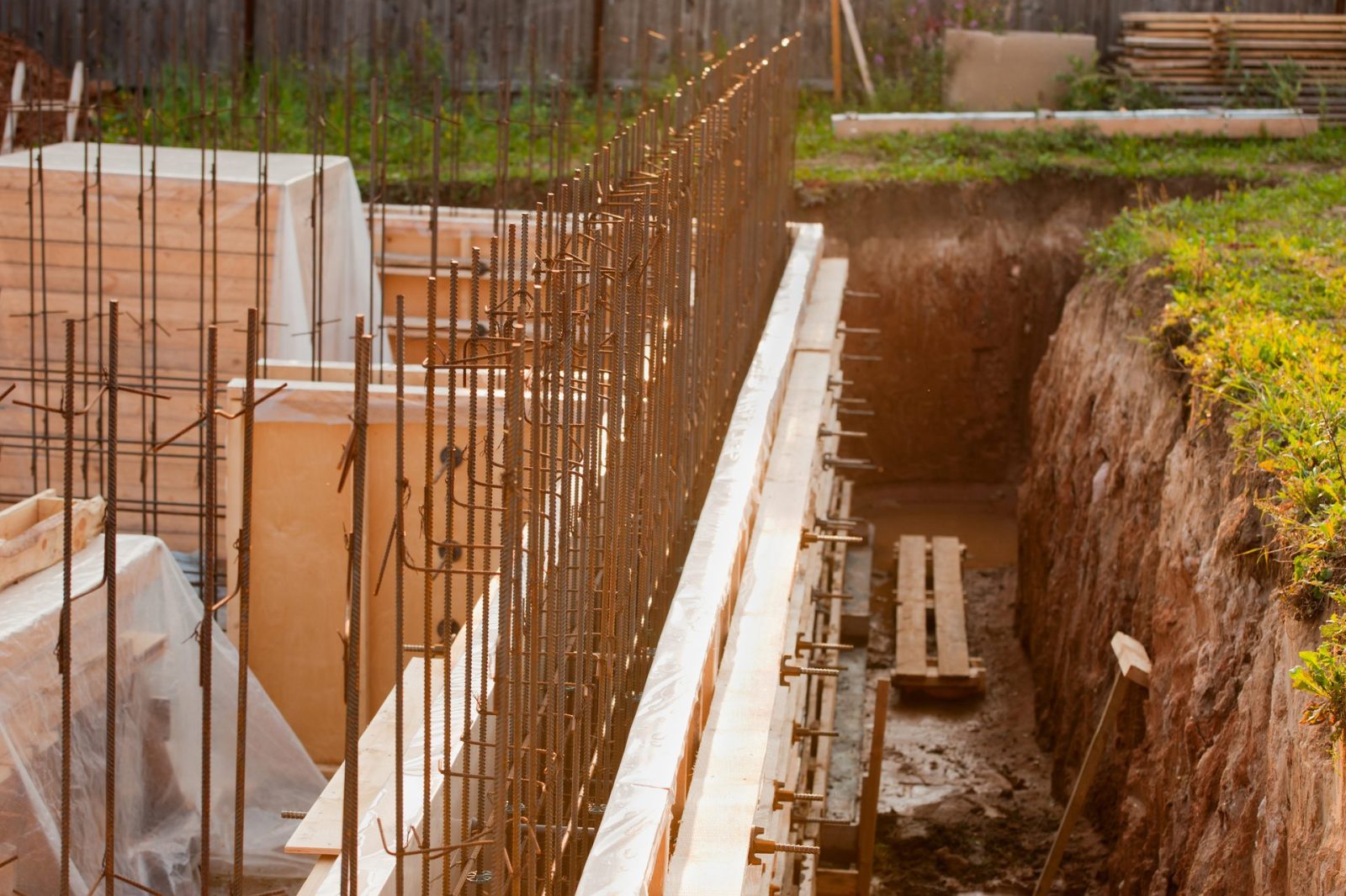
PNP XPS solutions catalogue — Foundations and buried structures