What the Two Edge Profiles Are
Every XPS board has a perimeter profile that determines how adjacent boards meet at the joint. PNP XPS boards are produced in two standard profiles, referenced in EN 13164:2012+A1:2015 and listed on each Declaration of Performance (DoP):
Straight edge (I-edge): the board sides are cut perpendicular to the face, producing a flat, square edge. Boards butt directly against each other, and the joint is a simple vertical plane through the full board thickness.
L-edge: a stepped rebate is machined along each long side. When two L-edge boards are laid side by side, the rebates overlap and interlock, creating a lapped joint that interrupts any direct path through the insulation layer at that point.
The nominal board dimensions for both profiles are 1250 × 600 mm. Because the L-edge rebate extends beyond the nominal face, transport dimensions for L-edge boards are 615 × 1265 mm — 15 mm wider and longer than the face size. This affects pallet layout and should be accounted for in logistics planning.
Why the Joint Profile Matters Thermally
A straight butt joint creates a continuous vertical plane of slightly reduced insulation at the board edge. In practice, minor gaps can open through installation tolerances, thermal movement, or compression under load. The L-edge overlap covers the joint with insulation material on both sides of the step, so even if a small gap opens at one face, the other leaf of the rebate remains in contact. This supports better continuity of the thermal layer at the joint compared with a plain butt joint, though a qualified designer should assess the specific assembly and climate conditions for any project.
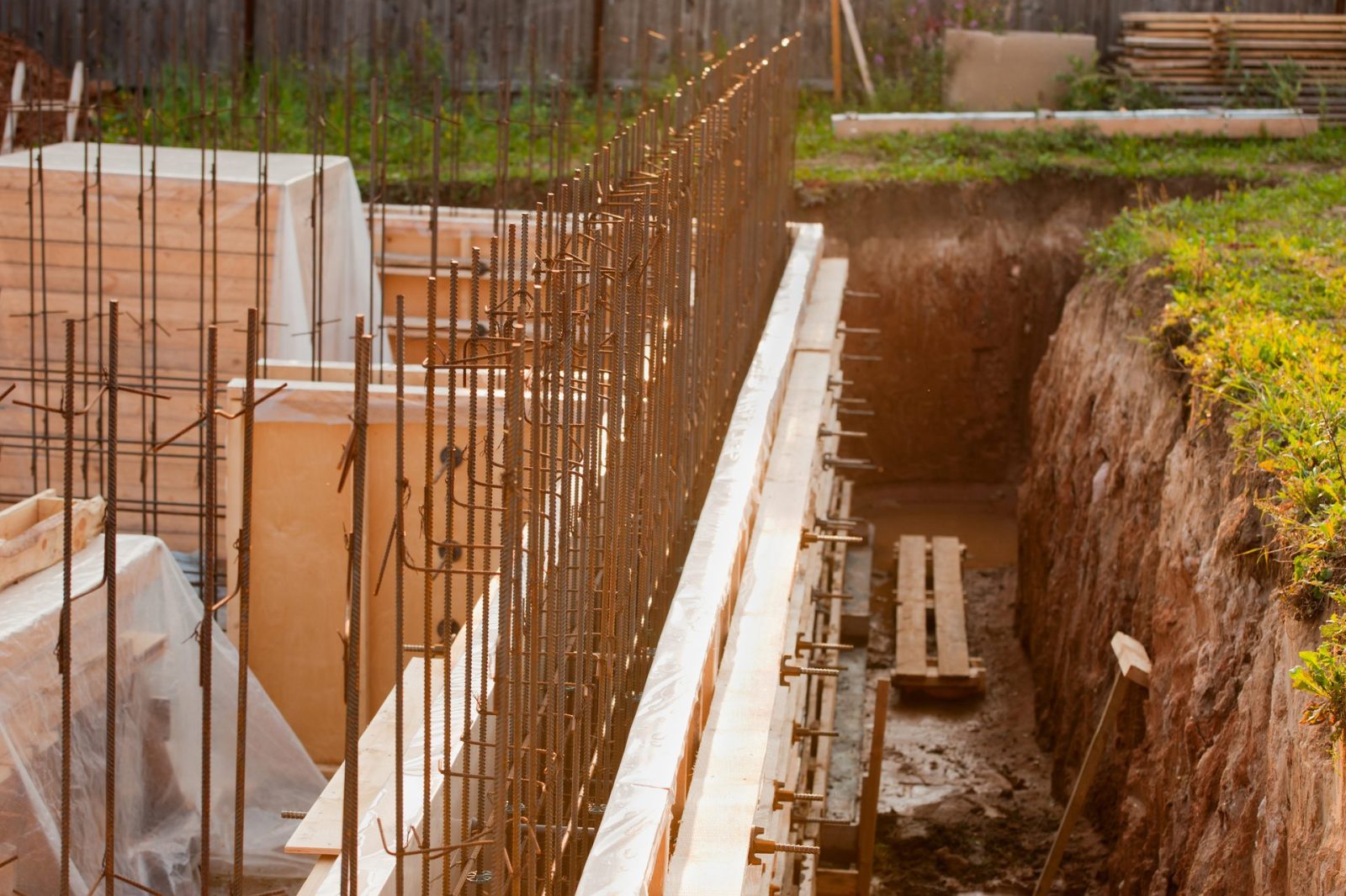
For applications where the insulation layer must perform under sustained load — foundations, floor slabs, inverted roofs — the interlocking geometry also helps maintain board alignment and resist lateral displacement during concrete pour or backfill compaction.
Which PNP XPS Products Offer Each Profile
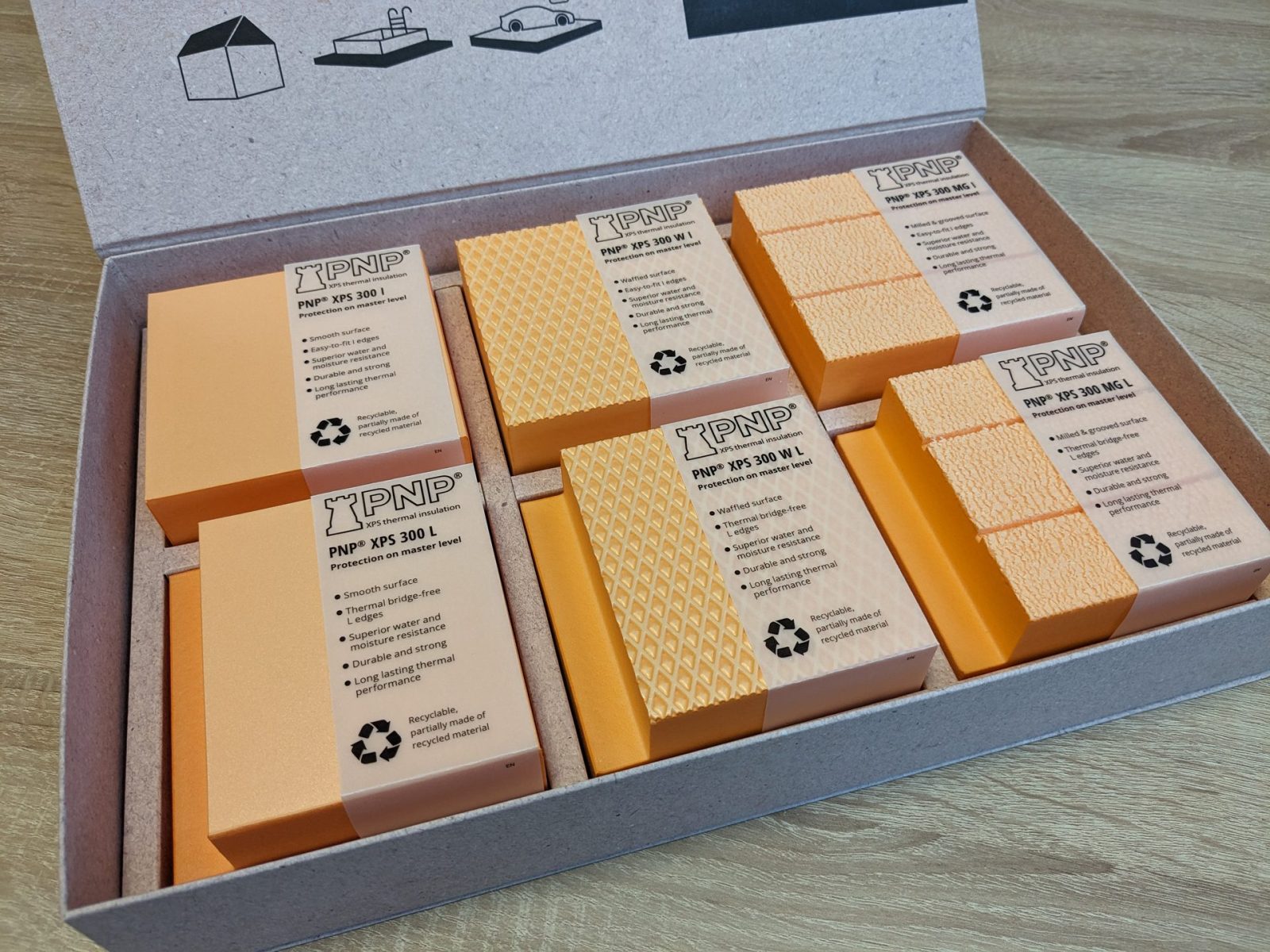
Most PNP XPS boards are supplied with the L-edge as the standard or available profile. The table below summarises the edge profiles listed in the product data for the published and documented range:
Product Edge profile(s) Transport dims (L-edge) XPS 150 Straight / L-edge 615 × 1265 mm XPS 150 MG Straight / L-edge 615 × 1265 mm XPS 150 W X-Grip L-edge 615 × 1265 mm XPS 200 L-edge 615 × 1265 mm XPS 200 MG Straight / L-edge 615 × 1265 mm XPS 200 W L-edge 615 × 1265 mm XPS 300 Straight / L-edge 615 × 1265 mm XPS 300 MG Straight / L-edge 615 × 1265 mm XPS 300 W L-edge 615 × 1265 mm XPS 400 Straight / L-edge 615 × 1265 mm XPS 500 L-edge 615 × 1265 mm XPS 700 Straight / L-edge 615 × 1265 mm
Confirm availability of a specific edge profile for your order with the current TDS or by contacting PNP XPS sales.
Practical Considerations When Specifying
Logistics and cutting: L-edge boards arrive 15 mm longer and wider than their nominal face dimensions (615 × 1265 mm vs 600 × 1250 mm). Account for this when calculating pallet counts and when cutting boards to length on site.
Multi-layer installations: where two or more layers of XPS are laid, the joints of successive layers should be staggered regardless of edge profile. L-edge boards in a single layer do not eliminate the need for layer offset in multi-layer assemblies.
Facade and render systems: for ETICS and bonded render applications (using W or MG surface boards), the edge profile is secondary to the surface texture; confirm the system specification with the render or adhesive supplier and a qualified designer.
Dimensional tolerance: all PNP XPS boards carry thickness tolerance class T1 under EN 13164:2012+A1:2015. The rebate geometry of the L-edge is part of the manufactured profile; verify fit on site before fixing.
Country-specific requirements: national building codes across the PNP XPS supply markets (HU, RO, DE, PL, CZ, SK and others) may specify minimum joint treatment or layer requirements. A qualified designer should confirm compliance for the specific project and location.
Sources
EN 13164:2012+A1:2015 — Factory-made products of extruded polystyrene foam (XPS) — Specification
XPS 150 TDS: pnp_xps150-150TB_600x1250_techcard_en (updated 2026-07-22)
XPS 150 MG TDS: pnp_xps150MG_600x1250_techcard_en (updated 2025-03-17)
XPS 150 W X-Grip TDS: pnp_xpsX-Grip_X-GripTB_600x1250_techcard_en (updated 2026-07-22)
XPS 200 TDS: pnp_xps200-200TB_600x1250_techcard_en (updated 2026-07-22)
XPS 200 MG TDS: pnp_xps200MG_600x1250_techcard_en (updated 2025-03-17)
XPS 200 W TDS: pnp_xps200W-200WTB_600x1250_techcard_en (updated 2026-07-22)
XPS 300 TDS: pnp_xps300-300TB_600x1250_techcard_en (updated 2026-07-22)
XPS 300 MG TDS: pnp_xps300MG_600x1250_techcard_en (updated 2025-03-17)
XPS 300 W TDS: pnp_xps300W-300WTB_600x1250_techcard_en (updated 2026-07-22)
XPS 400 TDS: pnp_xps400-400TB_600x1250_techcard_en (updated 2026-07-22)
XPS 500 TDS: pnp_xps500-500TB_600x1250_techcard_en (updated 2026-07-22)
XPS 700 TDS: pnp_xps700_600x1250_techcard_en (updated 2025-03-17)
DoP PNP XPS 300 EMI_en (U) (updated 2025-10-14)
DoP PNP XPS 300 W EMI_en (U) (updated 2025-10-13)
DoP PNP XPS 500_en (U) (updated 2025-07-22)
DoP PNP XPS 700_eng (updated 2025-03-17)