Direct Answer: Cutting XPS on Site
XPS boards can be cut on site with basic carpentry tools. The three most practical methods are:
Score and snap — for boards up to approximately 50 mm thick: use a steel straight edge and a sharp utility knife to score a deep groove, then snap the board cleanly over a straight edge. Works best on smooth-skin boards (XPS 150, XPS 200, XPS 300, XPS 500, XPS 700).
Hand saw or panel saw — a fine-toothed saw (typically 10–12 teeth per 25 mm) produces a clean edge on all thicknesses. Hold the board firmly against a bench stop to avoid chipping.
Hot-wire cutter — produces the cleanest, dust-free cut and is particularly useful for angled or tapered cuts (e.g. when trimming XPS 300 SLOPE boards). Keep the wire speed steady to avoid melting a wide kerf.
For all methods, mark the cut line clearly on both faces when cutting boards thicker than 80 mm to keep the cut square.
Why the Cut Edge Matters
XPS boards have a homogeneous closed-cell structure throughout their thickness. The extruded skin on the face is denser than the core, but thermal performance across the cut face is consistent with the declared λD value — no special treatment of the cut edge is required for thermal continuity.
However, joint quality affects in-service performance:
Gaps between boards create thermal bridges. Fit cut boards tightly, or fill gaps with compatible foam sealant.
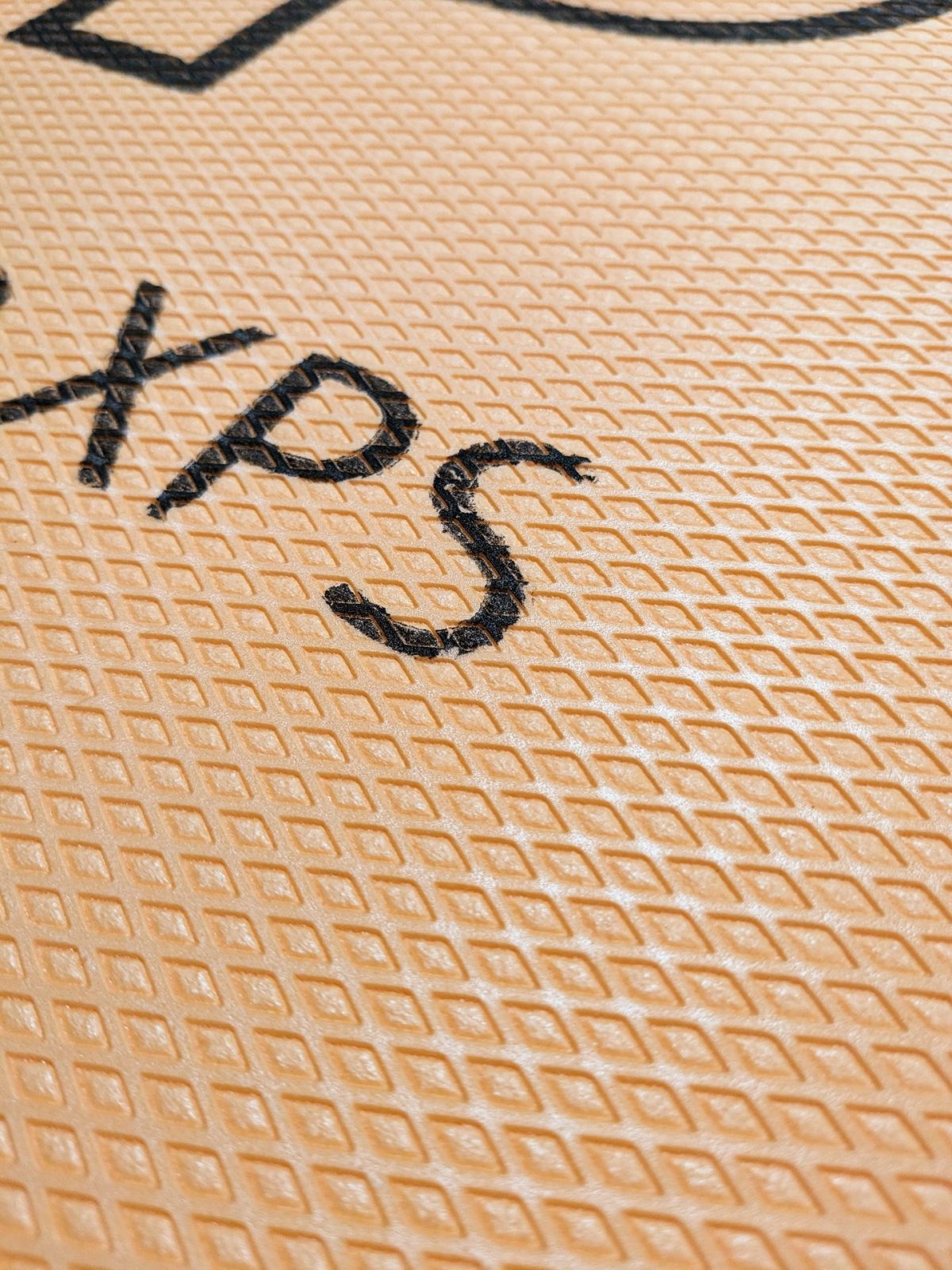
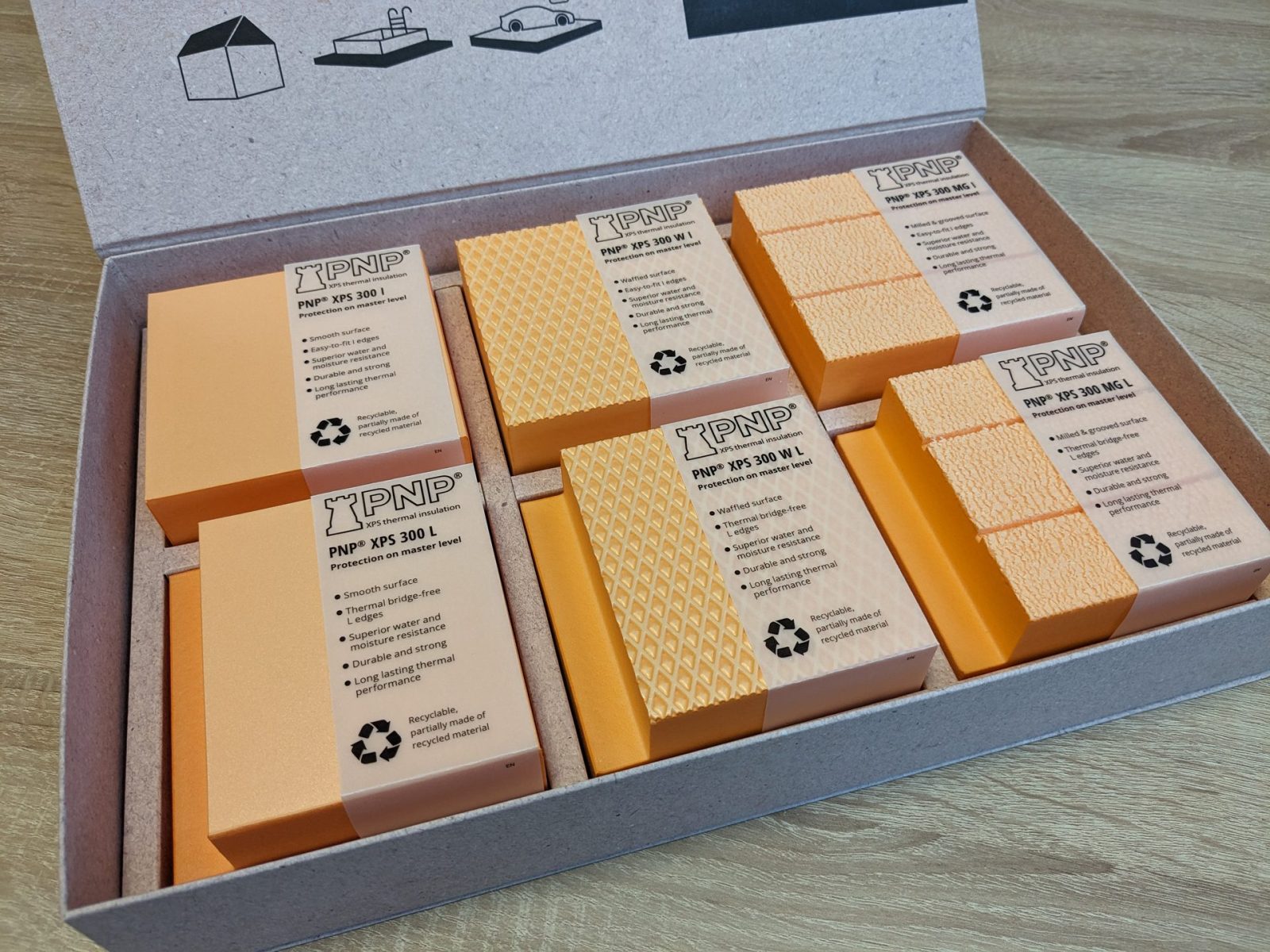
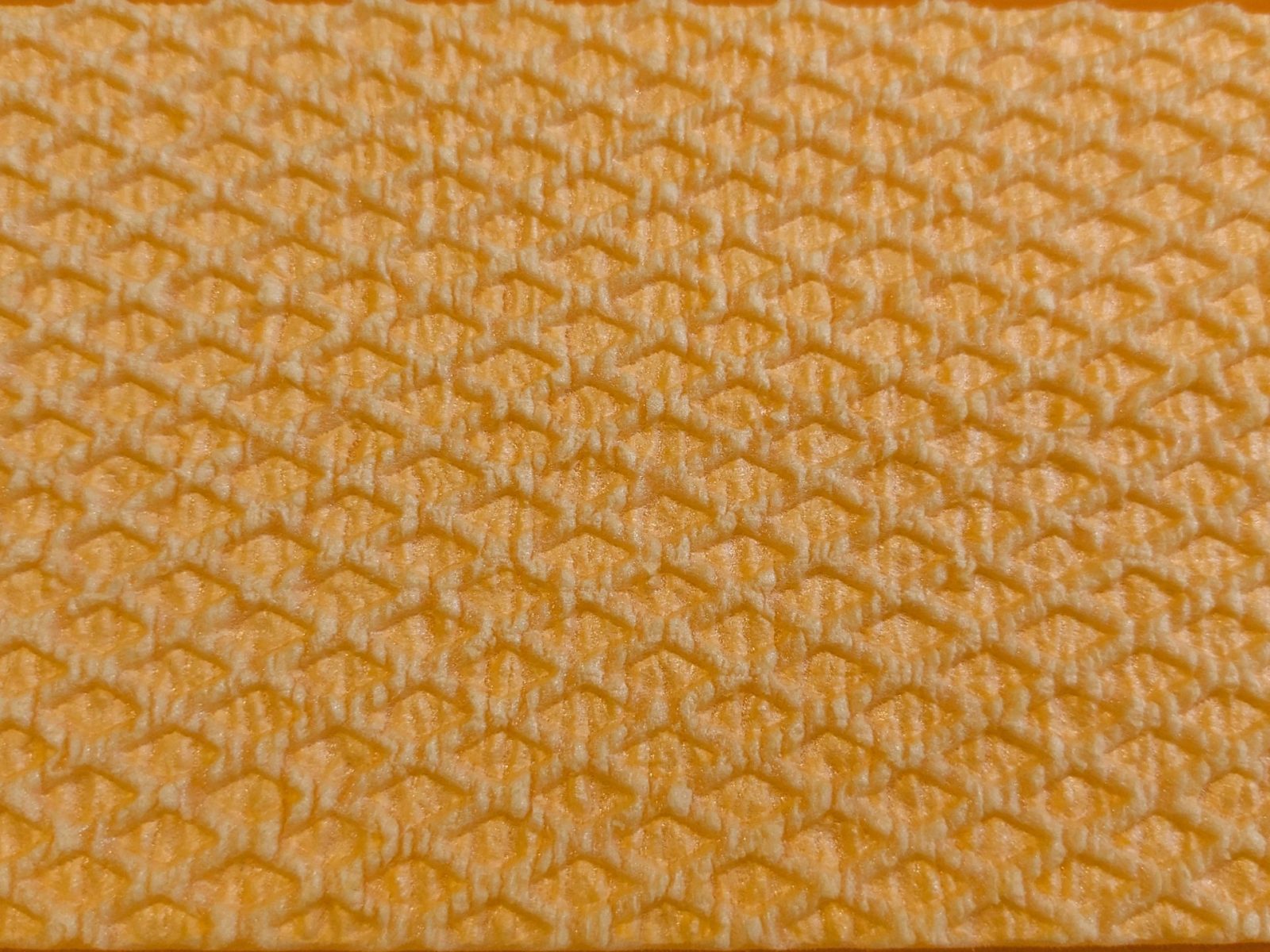
On waffled-surface boards (XPS 150 W X-Grip, XPS 300 W) and milled-and-grooved boards (XPS 150 MG, XPS 200 MG, XPS 300 MG), the profiled face aids adhesion of renders and adhesives — ensure the cut does not leave a ragged edge where an adhesive layer will be applied.
L-edge boards (standard on most PNP XPS products) allow overlapping joints; trim the L-edge rebate carefully if the cut removes it, and plan the layout to maintain board interlock.
Tool Selection by Board Type and Thickness
Thickness rangeRecommended toolNotes20–50 mmScore and snap, or fine-tooth hand sawScore at least 5 mm deep before snapping60–100 mmFine-tooth hand saw or hot-wire cutterClamping the board improves cut quality120–150 mm (and TB formats)Fine-tooth panel saw or hot-wire cutterMark both faces; check cut is perpendicularTapered / SLOPE boardsHot-wire cutter or fine-tooth saw with guideFollow the taper angle when markingWaffled or grooved surface boardsFine-tooth saw or hot-wire cutterAvoid fracturing the profiled face near adhesive zones
PNP XPS boards are manufactured in standard nominal dimensions of 1250 × 600 mm; plan your cutting layout from these dimensions to minimise offcuts.
Health, Safety and Waste
Sawing XPS produces fine polystyrene dust and particles. On site:
Work in a ventilated area or outdoors when sawing large quantities.
Wear a dust mask (FFP1 minimum) and eye protection when using mechanical saws.
Hot-wire cutting produces localised fumes; ensure adequate ventilation — do not use in enclosed spaces without forced-air extraction.
XPS offcuts are clean and inert; recycle or dispose of according to local waste regulations. PNP XPS boards are manufactured without HBCDD or other substances of very high concern (REACH-compliant), so they are not classified as hazardous waste in most jurisdictions — verify with your local authority.
All PNP XPS products carry a Euroclass E or F reaction-to-fire rating (see the product table below). Do not use open flame or angle-grinder cutting discs. XPS is combustible; keep cut material away from hot works.
Fire Class Reference by Product
ProductEuroclass (reaction to fire)XPS 150, XPS 150 W X-Grip, XPS 150 MG, XPS 200, XPS 200 W, XPS 200 MGFXPS 300, XPS 300 W, XPS 300 MG, XPS 300 SLOPE, XPS 400, XPS 500, XPS 700E
Fire class E and F boards are both combustible. Consult the relevant DoP and a qualified fire engineer for any application where reaction to fire is a regulatory requirement.
Cutting SLOPE Boards
XPS 300 SLOPE and XPS 150 SLOPE are factory-tapered boards used to create drainage falls on flat roofs without a separate screed layer. When site-cutting SLOPE boards:
Identify the taper direction before marking; cutting across the taper can produce unusable pieces.
A hot-wire cutter set to the correct bevel angle gives the most accurate result for compound cuts at roof perimeters and drainage channels.
A fine-tooth saw with a fixed-angle guide works for straight perpendicular cuts.
Consult the project roof drainage layout drawings before cutting; drainage design is a qualified-designer decision. For technical details, see the current TDS or contact PNP XPS.
Related Products and Resources
All PNP XPS boards share the same 1250 × 600 mm nominal format, simplifying site cutting calculations. Product-specific thickness ranges and edge profiles are listed in each product TDS:
XPS 300 — 20–150 mm, smooth, L-edge
XPS 300 W — 20–150 mm, waffled, L-edge
XPS 150 W X-Grip — 20–150 mm, waffled, L-edge
XPS 500 — 40–120 mm, smooth, L-edge
XPS 700 — 20–150 mm, smooth, I/L-edge
XPS 300 SLOPE — factory-tapered
XPS 150 SLOPE — factory-tapered
For the full product range see the products catalogue. For application guidance see Which PNP XPS Should I Choose?
Sources
EN 13164:2012+A1:2015 — Thermal insulation products for buildings — Factory made products of extruded polystyrene foam (XPS)
PNP XPS product data (all SKUs): board dimensions 1250 × 600 mm, thickness ranges, surface types, edge types, fire classes — as supplied in DATA block (retrieved 2026-09-18)
DoP PNP XPS 300 EMI_en (U) (updated 2025-10-14)
DoP PNP XPS 300 W EMI_en (U) (updated 2025-10-13)
DoP PNP XPS X-Grip_en (U) (updated 2026-06-24)
DoP PNP XPS 500_en (U) (updated 2025-07-22)
DoP PNP XPS 700_eng (updated 2025-03-17)
DoP PNP 300 SLOPE A1-B1_en / A2-B2_en (updated 2025-03-17)