What WL(T) Measures
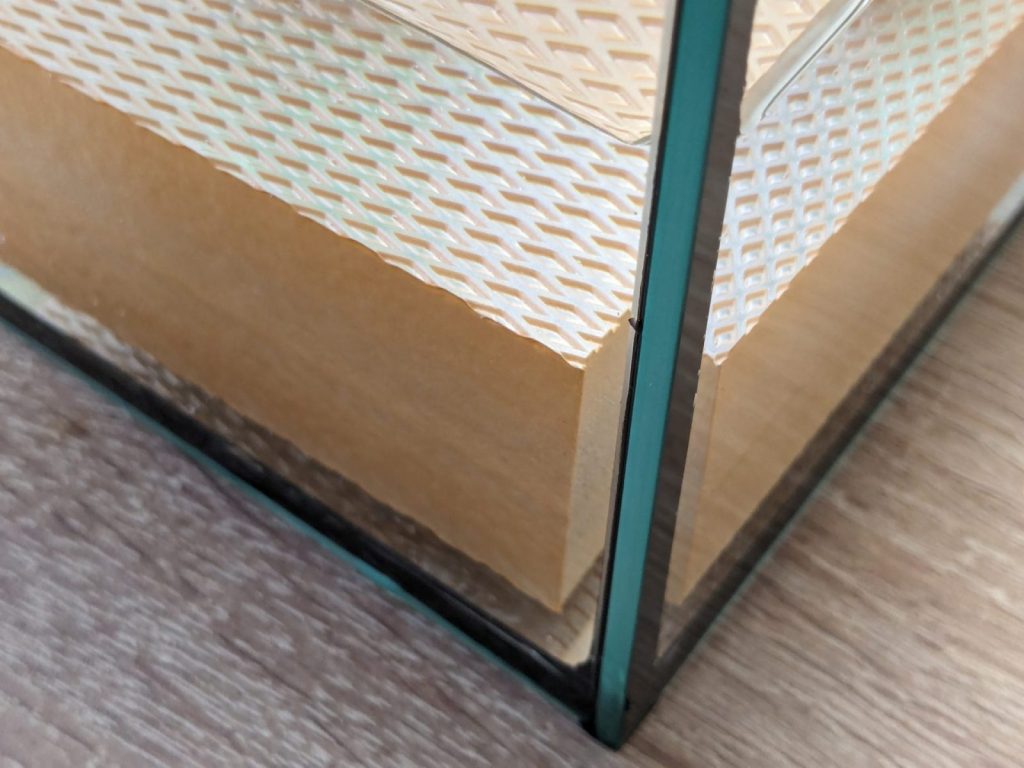
WL(T) stands for long-term water absorption by total immersion. Under EN 13164:2012+A1:2015, a board is submerged in water for an extended period and the volume of water absorbed — relative to the total board volume — is recorded as a percentage. The result is declared as a class, for example WL(T)0,7 meaning the board absorbs no more than 0.7 Vol.-% of water over the test period.
This is distinct from WD(V), which measures water absorption by diffusion through the board faces under a partial-immersion regime. The two tests reflect different exposure scenarios: WL(T) is most relevant where a board may be fully surrounded by water or saturated soil, such as in inverted roofs, foundation slabs, or below-grade perimeter insulation.
Why Low Water Absorption Matters in Practice
Water is a far better conductor of heat than air or closed-cell polymer foam. Any water that enters an insulation board displaces the insulating gas in the cells and directly raises the effective thermal conductivity of the board. A board with a high WL(T) value — absorbing several percent of its volume as water — will deliver less thermal resistance in service than its declared λD value suggests.
Beyond thermal performance, absorbed water can:
Add significant mass, increasing loads on the structure below.
Reduce the long-term compressive and tensile strength of the board.
Create conditions for freeze–thaw damage in cold climates — which is why EN 13164 also defines the FTCD (freeze–thaw after diffusion absorption) class.
For buried and submerged applications, a specifier should therefore treat WL(T) as a primary durability indicator alongside compressive strength and dimensional stability (DS(70,90)).
WL(T) Classes Across PNP XPS Products
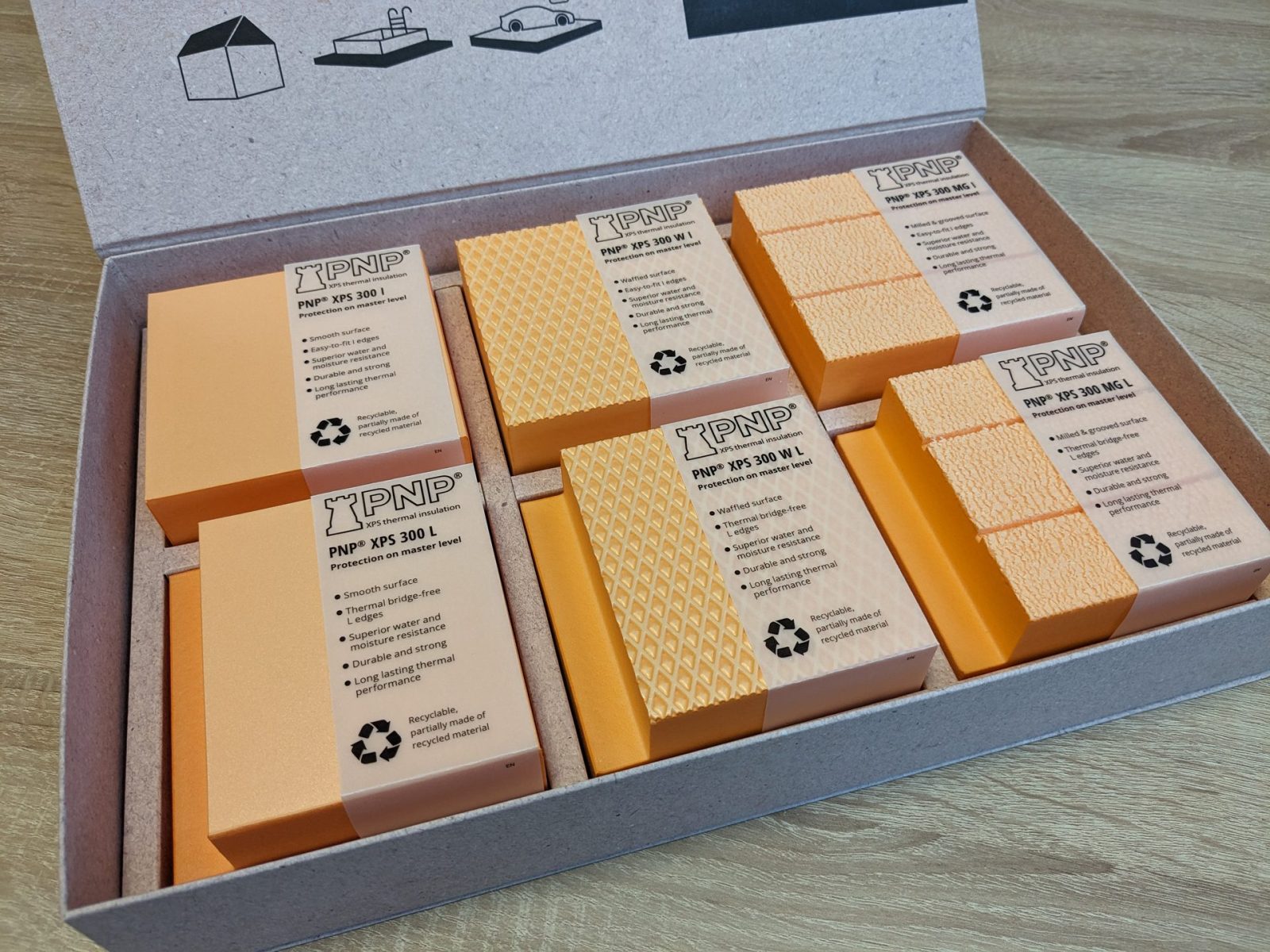
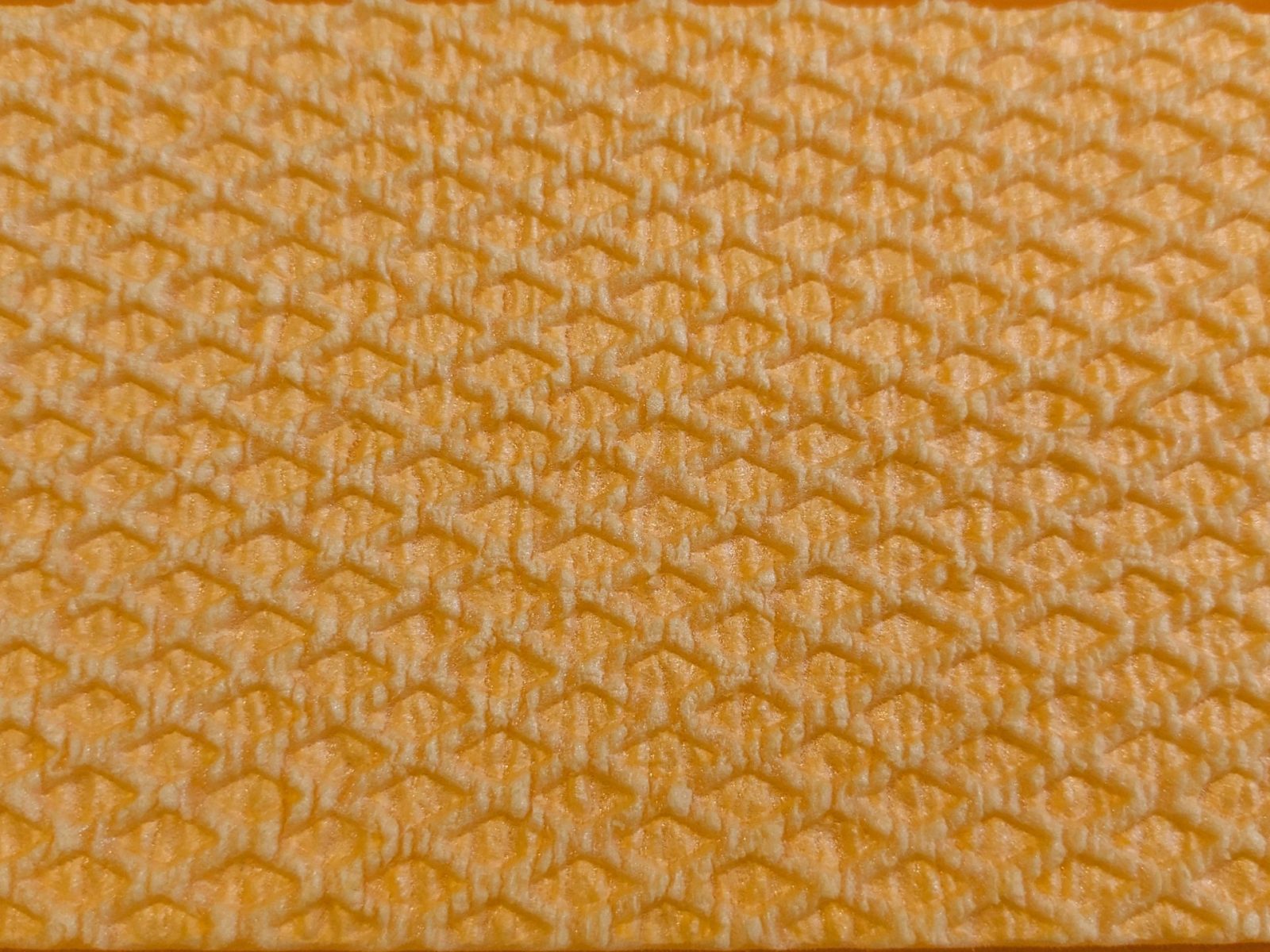
PNP XPS boards fall into two WL(T) groups depending on surface type. Smooth and waffled (W / X-Grip) boards achieve the tighter class; milled-and-grooved (MG) boards, where the surface has been mechanically opened for adhesion, are classified at the higher class.
Surface typeWL(T) classMaximum absorptionExample productsSmoothWL(T)0,7≤ 0.7 Vol.-%XPS 300, XPS 500, XPS 700Waffled (W / X-Grip)WL(T)0,7≤ 0.7 Vol.-%XPS 300 W, XPS 150 W X-GripMilled and grooved (MG)WL(T)3≤ 3.0 Vol.-%XPS 150 MG, XPS 200 MG, XPS 300 MG
The higher WL(T)3 value on MG boards is a direct consequence of the milled surface: the mechanical grooving opens the outer cell structure to provide adhesion for plasters and renders, but in doing so increases the potential uptake path for water. MG boards are therefore typically used in facade and ETICS applications where they are protected by a render coat, not in direct long-term water contact.
WL(T) and Related Hygric Performance Declarations
EN 13164:2012+A1:2015 allows manufacturers to declare additional hygric properties alongside WL(T). Several PNP XPS grades also carry the following declarations:
WD(V) — long-term water absorption by diffusion (partial immersion). Smooth and waffled boards in the 200, 300, 500 and 700 grades are declared at WD(V)3 (≤ 3.0 Vol.-%); XPS 300 MG is declared at WD(V)4 (≤ 4.0 Vol.-%).
FTCD — freeze–thaw resistance after WD(V) conditioning. Grades carrying this declaration (XPS 200, 300, 300 W, 300 MG, 500, 700 and their variants) are rated FTCD1 (≤ 1.0 Vol.-% change after freeze–thaw cycling), confirming dimensional stability is maintained after combined moisture and frost exposure.
Where a project involves frost-exposed buried or exposed edges — for example, perimeter insulation at ground level in a cold climate — specifiers should verify that the chosen grade carries both a WL(T) and an FTCD declaration. Consult the current TDS and DoP for each grade, and involve a qualified designer for the overall hygrothermal assessment.
Selecting the Right WL(T) Class for Your Application
The table below maps common applications to the WL(T) class most frequently specified. This is guidance only — the final decision requires assessment by a qualified designer using project-specific conditions.
ApplicationTypical WL(T) class neededNotesFoundation slabs, below-grade walls, perimeter insulationWL(T)0,7Board in permanent contact with saturated soil or groundwaterInverted (upside-down) flat roofsWL(T)0,7Board sits above waterproofing membrane, exposed to rainwater pondingFloor insulation under screed (dry interior)WL(T)0,7Good practice; vapour barrier still required per designETICS facades (render applied directly to board)WL(T)3 acceptableBoard protected by render; MG or W surface required for adhesionRoad and civil infrastructureWL(T)0,7Long service life, difficult to replace; smooth boards specified
Sources
EN 13164:2012+A1:2015 — Factory made products of extruded polystyrene foam (XPS)
TDS pnp_xps300-300TB_600x1250_techcard_en(20.07.2026).pdf (updated 2026-07-22)
TDS pnp_xps300W-300WTB_600x1250_techcard_en(20.07.2026).pdf (updated 2026-07-22)
TDS pnp_xpsX-Grip_X-GripTB_600x1250_techcard_en(19.06.2026).pdf (updated 2026-07-22)
TDS pnp_xps150W-150WTB_600x1250_techcard_en(20.07.2026).pdf (updated 2026-07-22)
TDS pnp_xps500-500TB_600x1250_techcard_en(20.07.2026).pdf (updated 2026-07-22)
TDS pnp_xps700_600x1250_techcard_en (21.07.2023).pdf (updated 2025-03-17)
TDS pnp_xps300MG_600x1250_techcard_en (21.07.2023).pdf (updated 2025-03-17)
TDS pnp_xps150MG_600x1250_techcard_en (21.07.2023).pdf (updated 2025-03-17)
TDS pnp_xps200MG_600x1250_techcard_en (21.07.2023).pdf (updated 2025-03-17)
DoP PNP XPS 300 EMI_en (U).pdf (updated 2025-10-14)
DoP PNP XPS 300 W EMI_en (U).pdf (updated 2025-10-13)
DoP PNP XPS X-Grip_en (U).pdf (updated 2026-06-24)
DoP PNP XPS 500_en (U).pdf (updated 2025-07-22)
DoP PNP XPS 700_eng.pdf (updated 2025-03-17)
DoP PNP XPS 300 MG_eng.pdf (updated 2025-03-17)
EPD — PNP XPS (Várpalota plant, updated 2025-03-19)