How XPS Boards Are Retained in Below-Ground Applications
In the majority of below-ground and under-slab assemblies, XPS boards are not fastened in the conventional sense. Instead, permanent restraint comes from the weight and confinement of the surrounding construction: the concrete slab or screed cast on top, compacted sand or gravel blinding beneath, and — on vertical faces — compacted backfill soil against the waterproofing layer.
The PNP XPS solutions catalogue defines the typical layer sequence for foundations and buried structures as: drainage membrane / PNP XPS thermal insulation / PVC rondel / waterproofing PVC membrane / geotextile protection layer / foundation slab / backfilled soil. The PVC rondel acts as a temporary mechanical connector to hold the board against the membrane until backfilling is complete.
For slab-on-grade floors, the catalogue sequence is: floor covering / cement-sand screed / polyethylene film / PNP XPS thermal insulation / sand and gravel coat / geotextile separation layer / undisturbed soil. The XPS layer is simply laid on the prepared sub-base; the screed cast over it provides the permanent restraint.
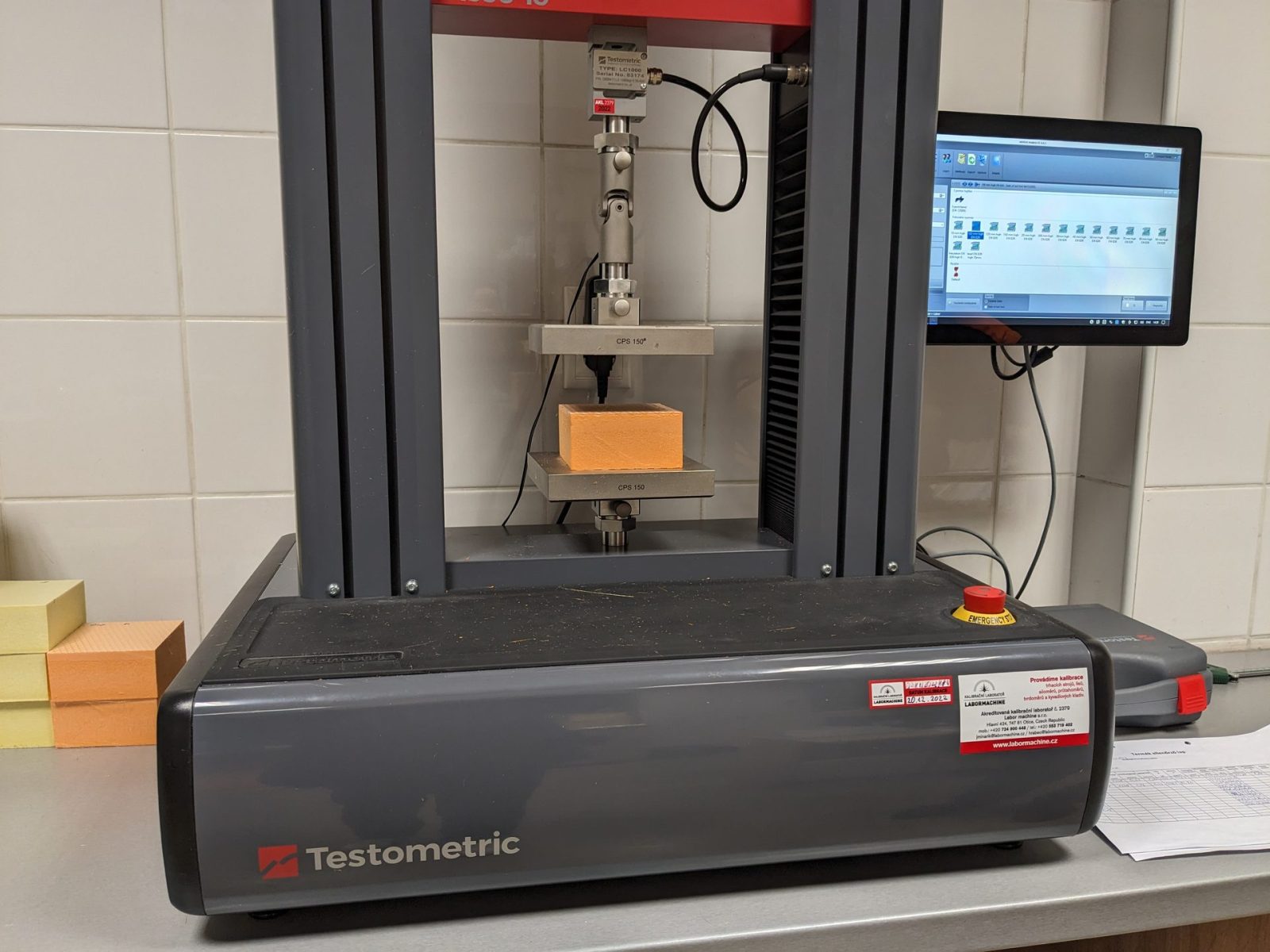
Choosing the Right Compressive Strength Grade
Because the boards must carry permanent loads from the structure above, compressive strength class is the primary selection criterion. The table below summarises the grades relevant to below-ground and under-slab use.
ProductCompressive strengthλD (W/m·K)WL(T)Freeze–thaw (FTCD)Typical applicationXPS 300300 kPa (>30 mm)0.034–0.035≤ 0.7 Vol.-%≤ 1 Vol.-%Foundation slabs, domestic floor slabsXPS 300 W300 kPa (>30 mm)0.034–0.035≤ 0.7 Vol.-%≤ 1 Vol.-%Foundation slabs where bonded overlay is requiredXPS 400400 kPa0.034≤ 0.7 Vol.-%see current TDSIndustrial floors, cold stores, car parksXPS 500500 kPa0.034–0.035≤ 0.7 Vol.-%≤ 1 Vol.-%Heavy industrial floors, inverted roofs under trafficXPS 700700 kPa0.034–0.035≤ 0.7 Vol.-%≤ 1 Vol.-%Civil engineering, extreme-load ground slabs, road construction
All grades listed conform to EN 13164:2012+A1:2015. Compressive creep class CC(2/1.5/50) is declared for XPS 300 (>30 mm: 130 kPa), XPS 500 (150 kPa) and XPS 700 (210 kPa); consult the relevant DoP and TDS for the full data set before specifying. A qualified structural designer must verify that the chosen grade is appropriate for the actual design load.
Horizontal Applications: Under Slabs and on Grade
Below are the main assembly types from the PNP XPS solutions catalogue:
Slab-on-grade floor — XPS laid on a compacted sand and gravel sub-base, separated from the soil by geotextile. A polyethylene film separates the XPS from the screed above. No mechanical fixing is required; the screed provides full restraint once hardened.
Floors on reinforced concrete base — XPS laid on a levelling screed with a vapour barrier above. Again, the cast screed provides restraint.
Floors of refrigerators (cold-store floors) — XPS is placed between a lower cement-sand screed (with heat-emitting pipes to prevent ground freezing) and the upper reinforced concrete slab with cooling system. The sandwich arrangement provides mutual restraint.
Foundation and shallow foundation slabs — XPS is positioned within the foundation zone, supported on coarse or medium-sized sand with a geotextile separation layer. The catalogue also shows an XPS insert detail for reducing thermal bridging through the foundation edge.
Heat-insulated Swedish slab foundation — XPS is laid under and around the foundation perimeter on a sand bed. Compacted fill provides the permanent restraint after concrete is poured.
In all horizontal configurations, board joints should be close-butted and staggered between layers when two layers are used. Specific layer thicknesses must be determined by a qualified designer based on thermal and structural calculations for the project.
Vertical Applications: Basement and Perimeter Walls
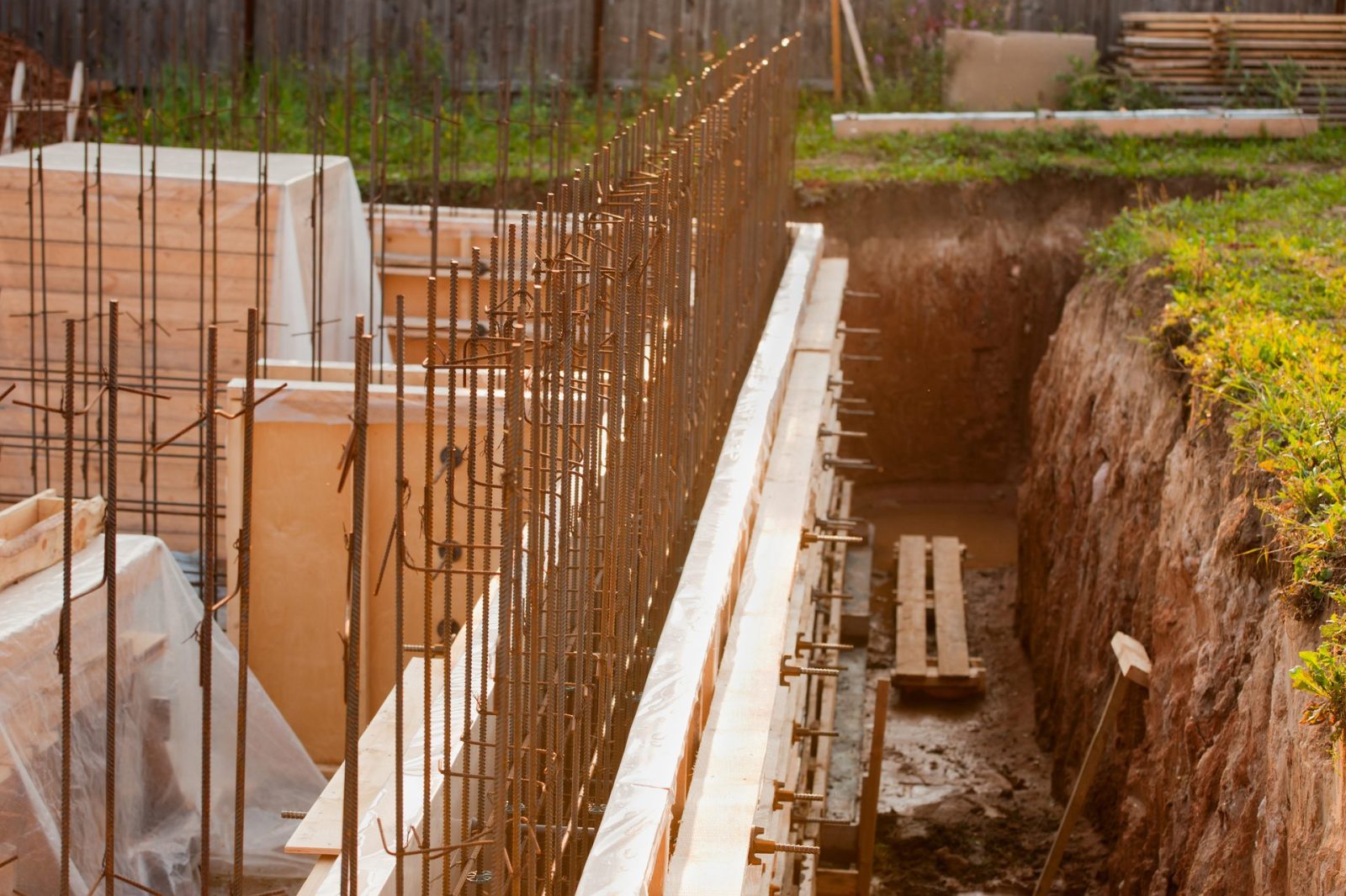
On vertical below-ground surfaces, temporary fixing is needed until permanent restraint from backfill is established. The PNP XPS solutions catalogue identifies PVC rondels as the connector element between the XPS board and the waterproofing PVC membrane on foundation and buried-structure walls.
Boards are placed with the insulation face against the waterproofing membrane; rondels hold the board in position during backfilling.
A drainage membrane is typically positioned on the outer (soil) face of the XPS to manage groundwater and protect the assembly.
The plinths and basements assembly sequence is: PNP XPS thermal insulation / basement wall / waterproofing PVC membrane / blind area / foundation / drainage system with a drainage membrane.
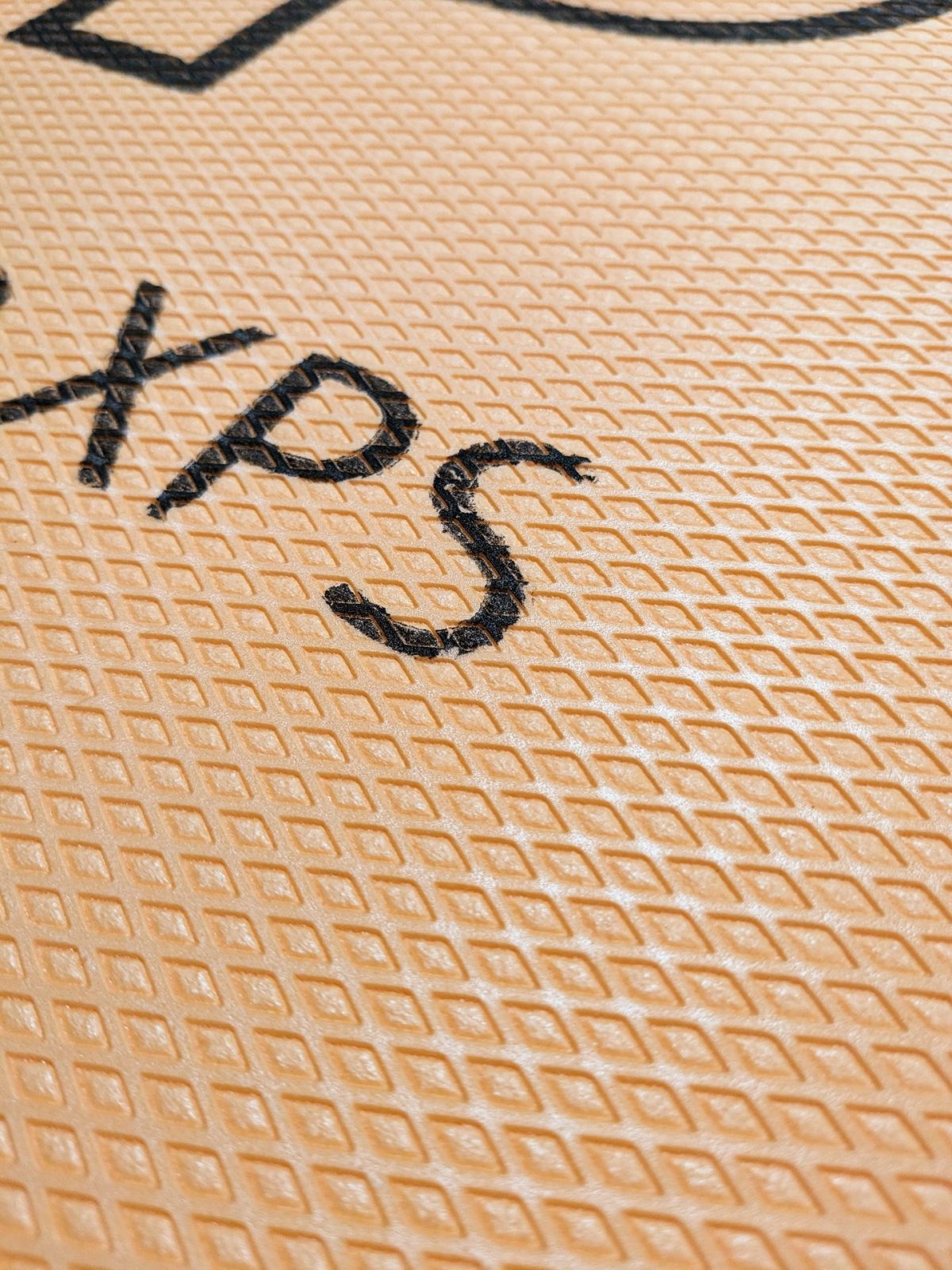
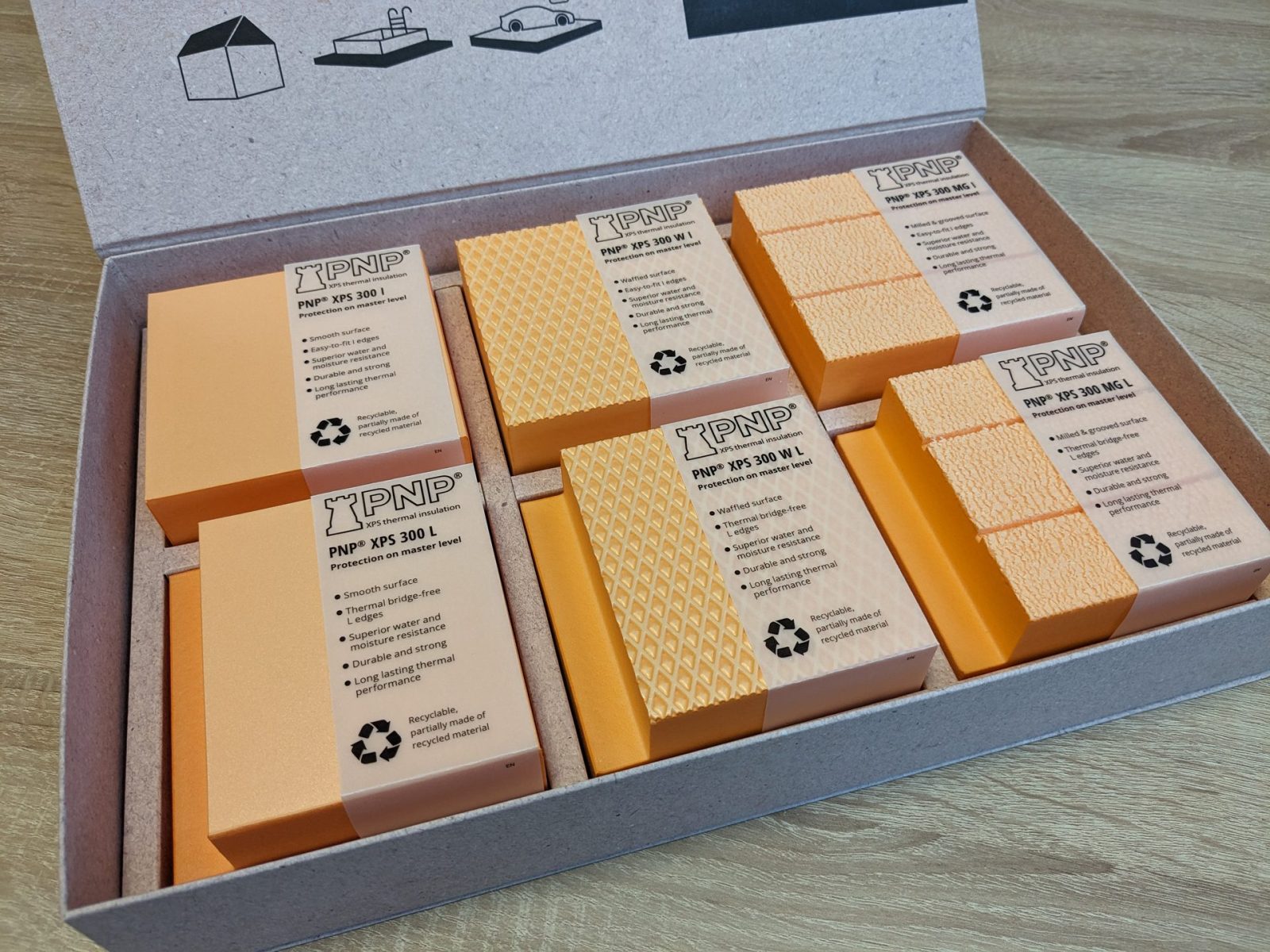
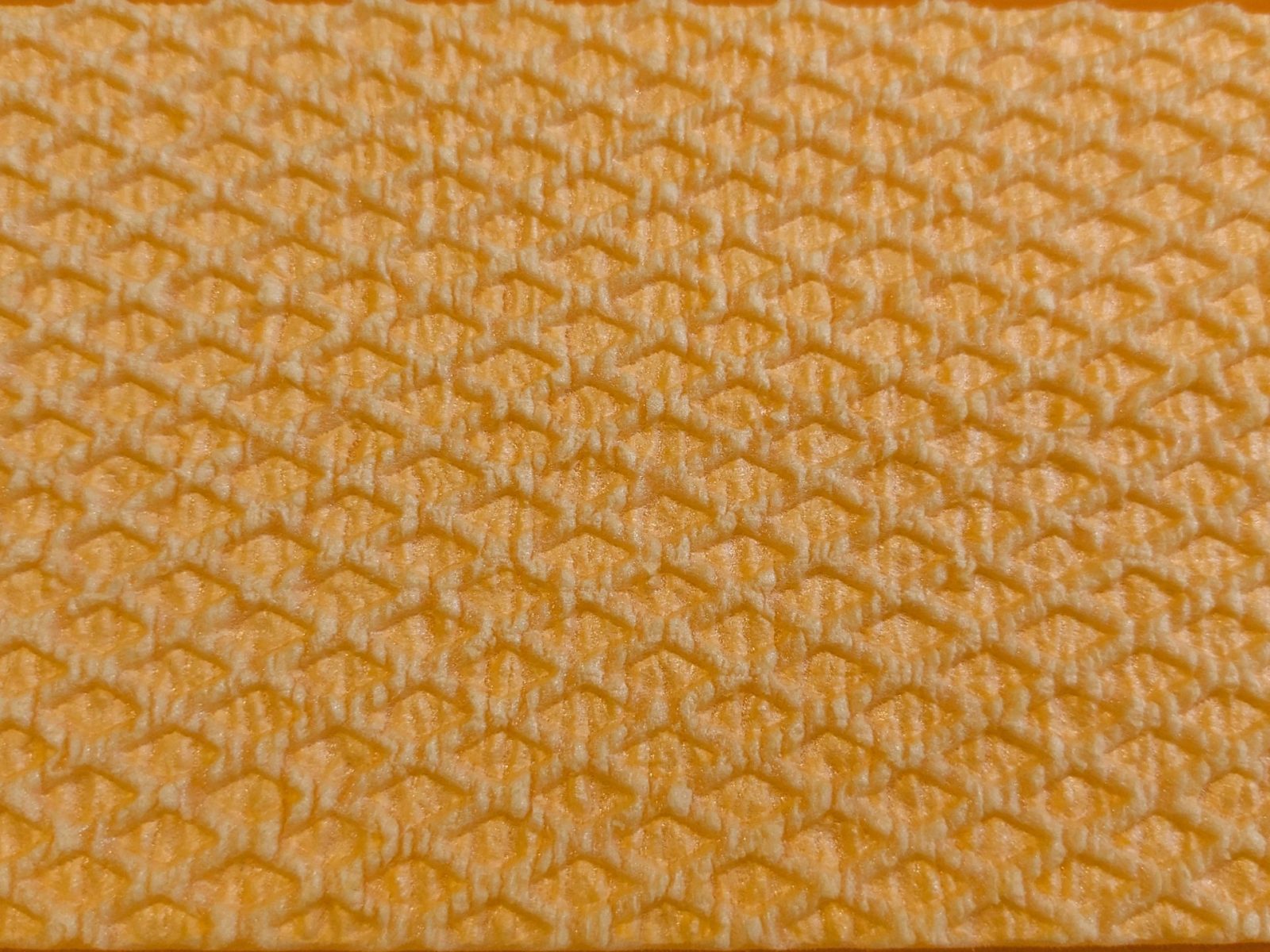
Smooth-surface grades (XPS 300, XPS 500, XPS 700) are appropriate for non-rendered below-ground walls. Waffled (W) or milled-and-grooved (MG) surface boards are specified when a render or adhesive is applied directly to the board face — consult the XPS 300 vs XPS 300 W article for surface selection guidance.
The suitability of any adhesive or primer in contact with XPS, the resistance of the waterproofing membrane, and the drainage design are matters for the system designer and must be verified against the applicable national standards and the manufacturers' system documentation.
Key Material Properties for Buried and Subgrade Conditions
All PNP XPS grades suitable for below-ground and under-slab use share the following characteristics relevant to permanently damp or wet ground conditions:
Long-term water absorption by immersion WL(T) ≤ 0.7 Vol.-% — declared for XPS 300, XPS 300 W, XPS 400, XPS 500 and XPS 700, confirming the closed-cell structure resists water uptake even in sustained contact with groundwater.
Water absorption by diffusion WD(V) ≤ 3.0 Vol.-% — declared for XPS 300, XPS 300 W, XPS 500 and XPS 700.
Freeze–thaw resistance FTCD ≤ 1 Vol.-% — declared for XPS 300, XPS 300 W, XPS 500 and XPS 700; relevant in seasonally frost-affected ground.
Dimensional stability DS(70,90) — all grades above maintain shape under sustained temperature and humidity cycling.
Operating temperature range −70 … +75 °C — covers all normal subgrade and cold-store conditions.
These properties are declared in the respective Declarations of Performance (DoP) under EN 13164:2012+A1:2015. Always verify values against the current DoP for the specific product and thickness before finalising a specification.
Sources
PNP XPS solutions catalogue — Foundations and buried structures, Shallow foundation, Heat-insulated Swedish slab foundation, Slab-on-grade floor, Floors on reinforced concrete base, Floors of refrigerators, Plinths and basements (layer sequences)
XPS 300 technical data sheet: pnp_xps300-300TB_600x1250_techcard_en(20.07.2026).pdf (updated 2026-07-22)
DoP PNP XPS 300 EMI_en (U).pdf (updated 2025-10-14)
XPS 300 W technical data sheet: pnp_xps300W-300WTB_600x1250_techcard_en(20.07.2026).pdf (updated 2026-07-22)
DoP PNP XPS 300 W EMI_en (U).pdf (updated 2025-10-13)
XPS 400 technical data sheet: pnp_xps400-400TB_600x1250_techcard_en(20.07.2026).pdf (updated 2026-07-22)
DoP PNP XPS 400_en (U).pdf (updated 2026-04-10)
XPS 500 technical data sheet: pnp_xps500-500TB_600x1250_techcard_en(20.07.2026).pdf (updated 2026-07-22)
DoP PNP XPS 500_en (U).pdf (updated 2025-07-22)
XPS 700 technical data sheet: pnp_xps700_600x1250_techcard_en (21.07.2023).pdf (updated 2025-03-17)
DoP PNP XPS 700_eng.pdf (updated 2025-03-17)
EN 13164:2012+A1:2015 — Thermal insulation products for buildings — Factory made products of extruded polystyrene foam (XPS)