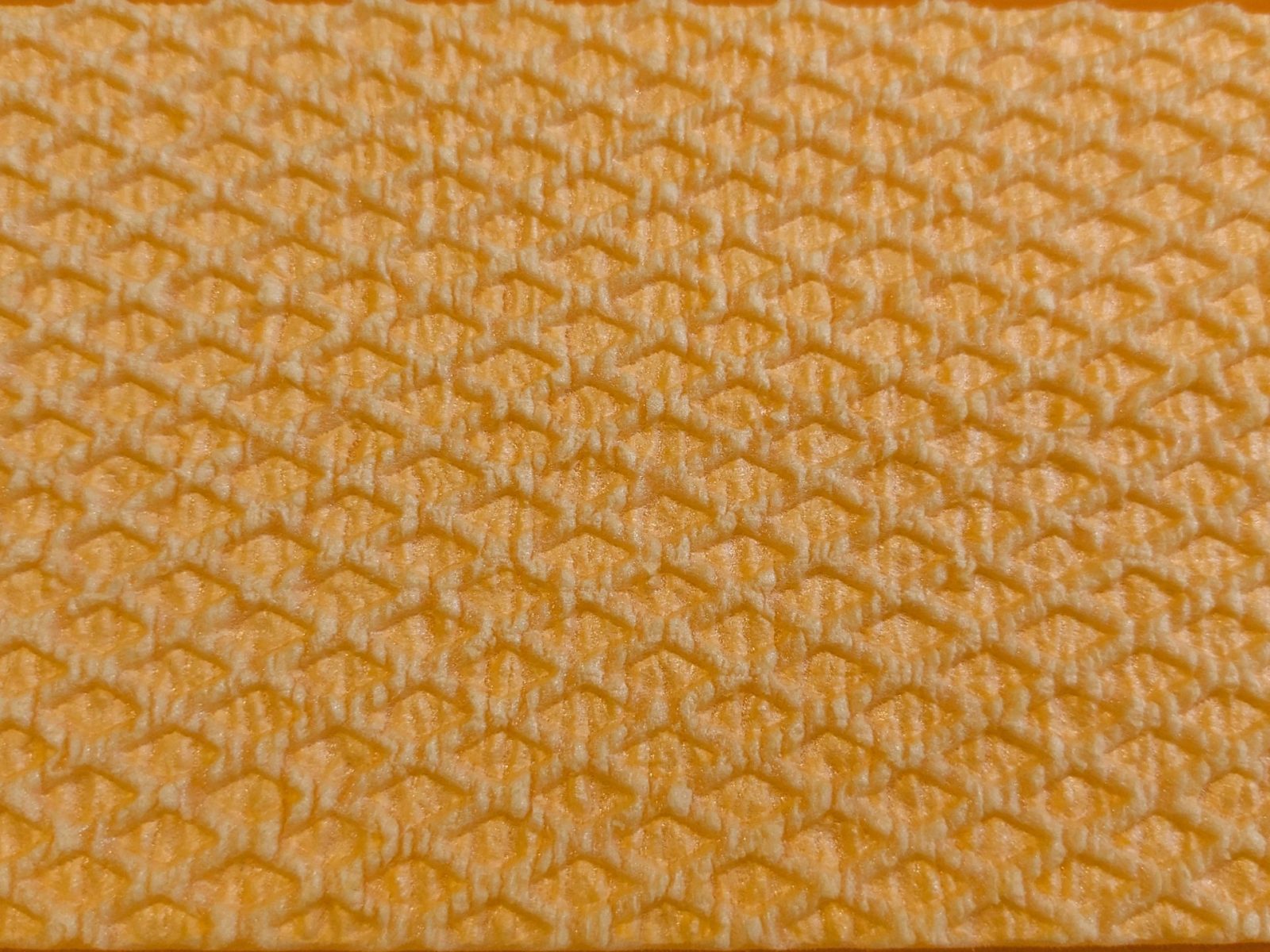
Why frost protection matters in civil infrastructure
In Central and Eastern European climates, subgrade soils — particularly fine-grained silts and clays — are susceptible to frost heave. When the freezing front penetrates below the pavement structure, pore water migrates upward, forms ice lenses, and causes differential heave that cracks road surfaces, distorts railway alignments, and undermines embankment stability. Thawing produces sudden loss of bearing capacity, accelerating pavement fatigue and increasing maintenance costs.
A continuous layer of XPS thermal insulation placed within the pavement structure raises the depth at which the design freezing isotherm is reached, effectively protecting the frost-susceptible subgrade without increasing structural depth. Because XPS retains its thermal and mechanical properties when wet, it continues to perform throughout repeated freeze–thaw cycles.
Recommended PNP XPS products
Two products in the PNP XPS range are purpose-built for civil engineering frost-protection applications. A third, XPS 300, covers lower-load situations such as pedestrian zones and lightly trafficked surfaces.
ProductCompressive strengthλD (W/m·K)WL(T)FTCDCC(2/1.5/50)Thickness range (mm)XPS 700CS(10\Y)700 ≥ 700 kPa0.034–0.035≤ 0.7 Vol.-%≤ 1 Vol.-%210 kPa20–150XPS 500CS(10\Y)500 ≥ 500 kPa0.034–0.035≤ 0.7 Vol.-%≤ 1 Vol.-%150 kPa40–120XPS 300CS(10\Y)300 ≥ 300 kPa0.034–0.035≤ 0.7 Vol.-%≤ 1 Vol.-%130 kPa20–150
XPS 700 — extreme-load roads and railways
XPS 700 is the primary choice under main carriageways, heavy-axle railway tracks, and bridge approach fills where static and dynamic loads are highest. Its compressive strength of 700 kPa and creep resistance of CC(2/1.5/50)210 ensure the insulation layer does not deform under sustained traffic loading, preserving the designed thermal resistance over the structure's service life.
XPS 500 — standard roads and medium civil loads
XPS 500 suits secondary roads, industrial access roads, parking structures, and other civil applications where compressive loads are significant but below the extreme levels requiring XPS 700. Its CC(2/1.5/50)150 creep class and FTCD 1 freeze–thaw rating make it reliable in permanently damp subgrade conditions.
XPS 300 — pedestrian zones and lightly loaded pavements
XPS 300 is appropriate for pedestrian zones, cycle paths, and lightly trafficked surfaces. It carries a creep class of CC(2/1.5/50)130 and the same freeze–thaw and water-absorption ratings as the higher-strength grades.
All three products comply with EN 13164:2012+A1:2015, carry a Declaration of Performance (DoP), and are produced at PNP Orange Kft.'s Várpalota plant.
Key material properties for civil engineering
The properties below are why XPS outperforms conventional granular anti-frost layers in space-constrained or thermally demanding situations:
Negligible water absorption: WL(T) ≤ 0.7 Vol.-% (long-term immersion) ensures λD does not increase when the board is permanently below the water table or in saturated fill.
Freeze–thaw resistance: FTCD 1 (≤ 1 Vol.-% volume change after freeze–thaw cycling following diffusion water absorption) — the test showed the boards maintain dimensional integrity through repeated seasonal cycles.
Water absorption by diffusion: WD(V) 3 (≤ 3.0 Vol.-%) for XPS 500 and XPS 700 — this supports confidence in long-term thermal performance in subgrade environments.
Compressive creep: CC(2/1.5/50) values of 130–210 kPa mean deformation under sustained load remains within the limits defined in EN 13164.
Dimensional stability: DS(70,90) — boards do not shrink or expand significantly across the temperature range encountered in civil applications.
Operating temperature range: −70 to +75 °C — fully compatible with Central and Eastern European frost conditions.
Indicative layer build-up — road on frost-susceptible subgrade
The following is a generic, indicative sequence for illustration only. Actual layer composition, thicknesses, and materials must be designed by a qualified geotechnical or pavement engineer in accordance with the applicable national standard and site conditions.
Fine asphalt concrete (wearing course)
Coarse asphalt concrete (binder course)
Crushed-stone base course
Sand bedding layer
PNP XPS thermal insulation (frost-protection layer — thickness to be determined by designer)
Sand blinding layer
Geotextile separation layer
Undisturbed or compacted subgrade soil
This sequence corresponds to the "Thermal insulation of road structures on heaving soils" build-up in the PNP XPS solutions catalogue. For embankments and lightweight fills, a profiled drainage membrane and geogrid may be added above and below the XPS layer; see the "Lightweight earth fills" solution for reference.
Indicative layer build-up — lightweight earth fill / embankment
Indicative only. Design by a qualified engineer is required.
Bituminous concrete surface
Crushed-stone sub-base
Geogrid reinforcement
Sand fill
Profiled drainage membrane
PNP XPS thermal insulation
Drainage layer
Undisturbed soil
Installation notes
Bedding surface: The bearing surface must be level, free of sharp stones, roots, and organic material that could puncture or unevenly load the boards. A sand blinding layer is standard practice.
Board placement: Lay boards with staggered joints in the direction of travel; avoid continuous cross-joints. Where two layers are used, offset upper and lower board joints by at least half a board length in both directions.
Geotextile separation: Place a geotextile separation layer beneath the XPS to prevent fines migration from the subgrade into the granular bedding, and above the XPS to protect the surface from aggregate indentation during compaction.
Compaction equipment: Do not use heavy vibratory rollers directly on the XPS layer. Compact granular fill above the boards in thin lifts, using light compaction plant until sufficient cover is achieved — consult the TDS and project specification for minimum cover depths before heavier equipment is used.
Water management: Ensure the XPS layer does not become a dam for groundwater. Incorporate lateral drainage or a drainage membrane where hydrostatic pressure is possible.
Board handling: XPS boards are dimensionally stable but can be damaged by point loads during storage. Store flat on a level surface, protected from prolonged UV exposure.
Multiple-layer assemblies: When the required total thickness exceeds the maximum available single-board thickness, stack boards with staggered joints. Consult the current TDS for guidance on laminated assemblies.
For any specific engineering decision — bearing capacity, frost-depth calculation, drainage design, or compliance with the national road or railway standard — consult the project's geotechnical designer and reference the current DoP and TDS documents.
Thickness guidance
Required insulation thickness in civil applications is a function of the local climate (design freezing index), subgrade frost susceptibility, pavement thermal resistance above the XPS, and the applicable national standard. PNP XPS does not provide prescriptive thickness tables for civil engineering; a qualified designer must perform the frost-depth calculation.
As a reference for procurement and logistics planning, the available standard thickness ranges are:
XPS 700: 20–150 mm (standard format, L-edge or straight edge)
XPS 500: 40–120 mm (standard format); TB format available — see current TDS for extended range
XPS 300: 20–150 mm (standard format); TB format available — see current TDS
Where the designed thickness exceeds the standard range, the TB (thick-board) format or multiple stacked layers may be used. Contact PNP XPS sales at sales@pnpinsulation.com or visit the contact page for project-specific enquiries.
See also: What Does '300 kPa' Compressive Strength Mean? and Which PNP XPS Should I Choose? Application Guide.
Applicable standards and documents
All PNP XPS boards used in civil engineering frost-protection applications are manufactured and CE-marked in accordance with:
EN 13164:2012+A1:2015 — Factory-made products of extruded polystyrene foam (XPS) — Specification
CPR 305/2011 — EU Construction Products Regulation, under which each product's Declaration of Performance (DoP) is issued
National road and railway design standards (e.g. country-specific pavement design codes, railway track-bed standards, or geotechnical frost-protection standards) govern required thermal resistance, frost-depth calculation method, and layer sequencing. Compliance with those national requirements is the responsibility of the project designer.
Documents available for download
XPS 700 TDS — pnp_xps700_600x1250_techcard_en (21.07.2023).pdf
XPS 700 DoP — DoP PNP XPS 700_eng.pdf
XPS 500 TDS — pnp_xps500-500TB_600x1250_techcard_en(20.07.2026).pdf
XPS 500 DoP — DoP PNP XPS 500_en (U).pdf
XPS 300 TDS — pnp_xps300-300TB_600x1250_techcard_en(20.07.2026).pdf
XPS 300 DoP — DoP PNP XPS 300 EMI_en (U).pdf
EPD — PNP XPS (Várpalota plant), updated 2025-03-19
BIM objects — PNP BIM Libraries, updated 2025-02-24
All documents are available at pnpinsulation.com/documentation/.
Sources
XPS 700 technical data sheet: pnp_xps700_600x1250_techcard_en (21.07.2023).pdf (updated 2025-03-17)
XPS 700 Declaration of Performance: DoP PNP XPS 700_eng.pdf (updated 2025-03-17)
XPS 500 technical data sheet: pnp_xps500-500TB_600x1250_techcard_en(20.07.2026).pdf (updated 2026-07-22)
XPS 500 Declaration of Performance: DoP PNP XPS 500_en (U).pdf (updated 2025-07-22)
XPS 300 technical data sheet: pnp_xps300-300TB_600x1250_techcard_en(20.07.2026).pdf (updated 2026-07-22)
XPS 300 Declaration of Performance: DoP PNP XPS 300 EMI_en (U).pdf (updated 2025-10-14)
EPD — PNP XPS (Várpalota plant), updated 2025-03-19
PNP BIM Libraries, updated 2025-02-24
EN 13164:2012+A1:2015 — Factory-made products of extruded polystyrene foam (XPS) — Specification
CPR 305/2011 — EU Construction Products Regulation
PNP XPS solutions catalogue: 'Thermal insulation of road structures on heaving soils', 'Lightweight earth fills', 'Pedestrian zones and pavements' build-ups