
XPS 150 X-Grip — Superior Adhesion, Lightweight Thermal Insulation

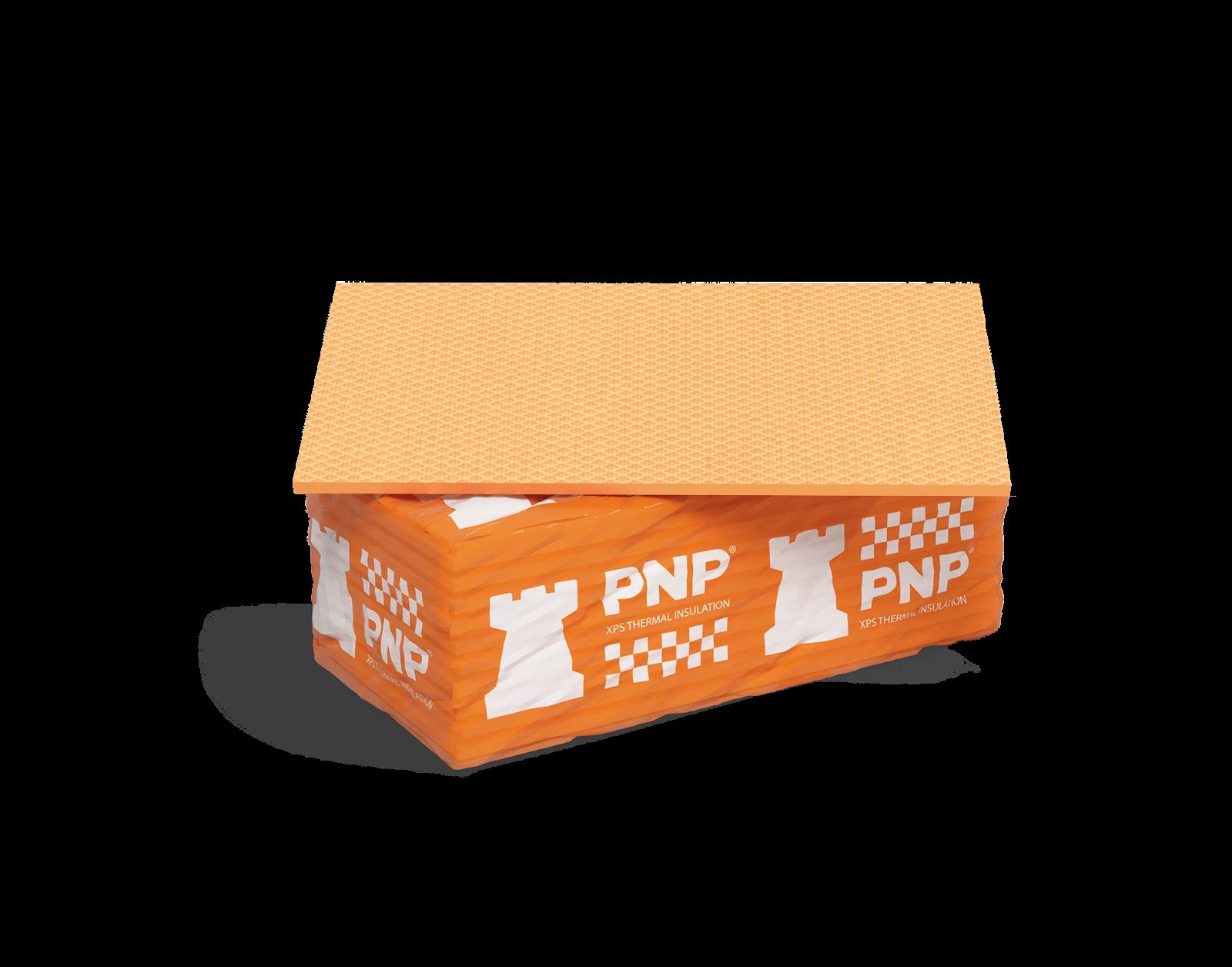
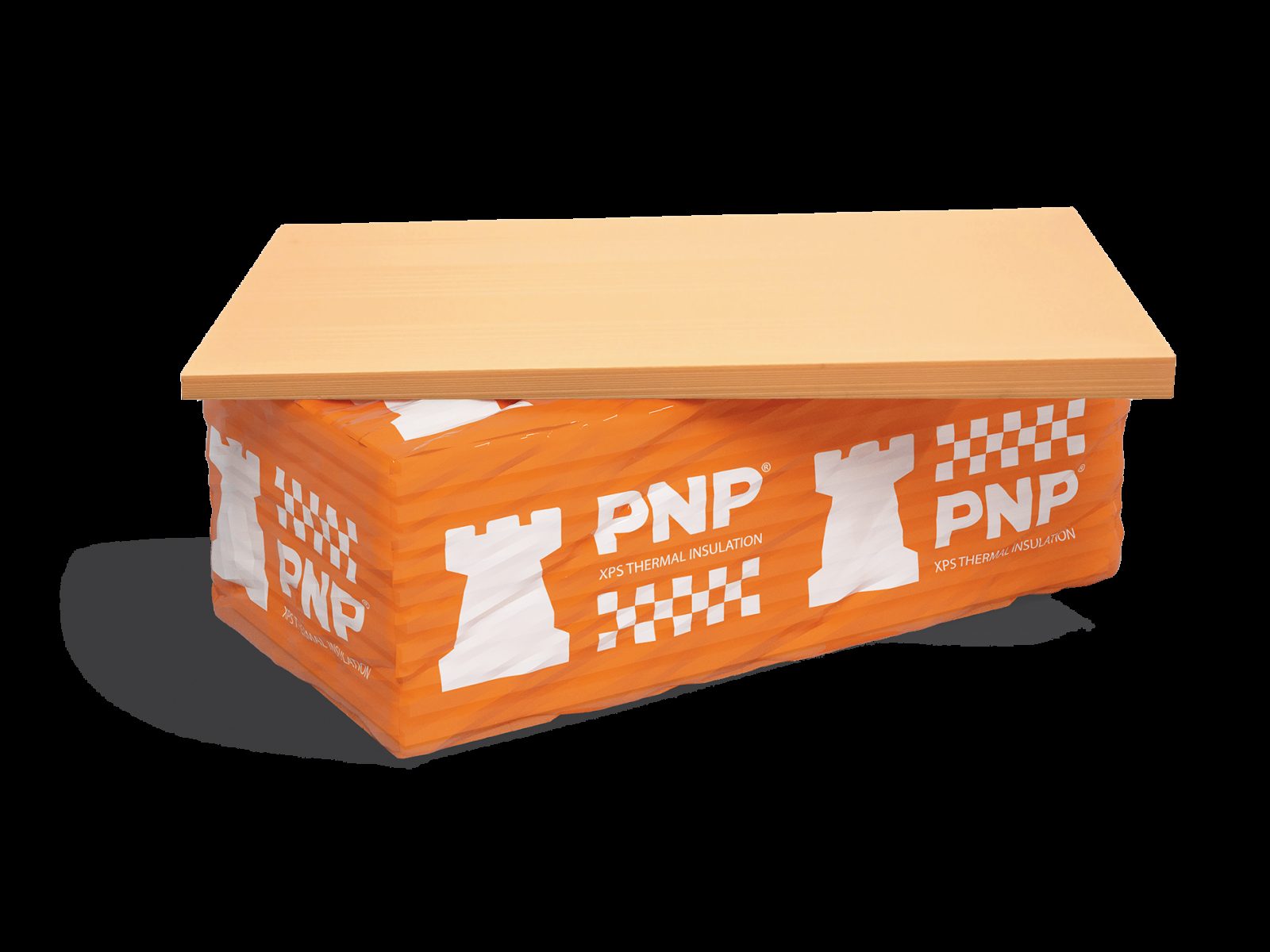
PNP XPS 150 X-Grip is a waffled-surface extruded polystyrene board engineered for superior adhesion of renders, tile adhesives and bonded ETICS systems — about 20 % less raw material than PNP XPS 300 W, lighter to handle and with a lower carbon footprint.

Compressive strength, kPa:
150
Declared thermal conductivity λD, W/(m·K):
0,033
Reaction to fire, class:
E
Board size (length × width), mm:
1250 × 600
Nominal thickness, mm:
40–100
Surface type:
Waffled
Edge type:
Straight edge (I) / L-shaped edge (L)
Product standard:
EN 13164:2012+A1:2015

Formerly known as: XPS 150 W X-Grip

PNP XPS 150 X-Grip is a waffled-surface extruded polystyrene board engineered for superior adhesion of renders, tile adhesives and bonded ETICS systems, delivering a compressive strength of ≥ 150 kPa across its full thickness range. Manufactured in Várpalota, Hungary, it uses about 20 % less raw material than PNP XPS 300 W, making it lighter to handle and lower in carbon footprint without compromising thermal performance.

Description

PNP XPS 150 X-Grip is a high-performance thermal insulation material (latest generation XPS) manufactured from general-purpose polystyrene. Its distinctive waffled X-Grip surface provides the mechanical key required for reliable adhesion of renders, tile adhesives and bonded ETICS systems. The board is available in nominal thicknesses from 40 to 100 mm (XPS 150 X-Grip) and in a thick-board variant, XPS 150 X-Grip TB, covering 100 to 200 mm, both sharing a declared thermal conductivity of 0.033 W/m·K and a declared thermal resistance ranging from 1.20 to 6.05 m²·K/W depending on thickness. Both variants comply with EN 13164:2012+A1:2015 and offer a compressive strength of ≥ 150 kPa (CS(10\Y) 150).

Applications

  • Thermal insulation of exterior and interior walls (vertical elements) with direct render or adhesive application
  • Bonded ETICS (external thermal composite insulation) façade systems
  • Floor insulation beneath screeds or tile-adhesive-bonded finishes
  • Horizontal building elements requiring a high-bond waffled substrate surface
  • Lightweight insulation solutions where reduced board weight and lower carbon footprint are priorities
  • Civil and residential construction projects demanding consistent long-term thermal performance

Advantages

  • Waffled X-Grip surface ensures strong mechanical adhesion of renders, tile adhesives and bonded ETICS systems
  • Low declared thermal conductivity of 0.033 W/m·K across all available thicknesses
  • Uses about 20 % less raw material than PNP XPS 300 W — lighter to handle and lower in carbon footprint
  • Virtually zero water absorption — long-term immersion ≤ 0.7 Vol.-% (WL(T)0.7)
  • Absolute biostability and proven durability across an operating temperature range of −70 °C to +75 °C
  • REACH-compliant: contains no SVHC substances and manufactured without ozone-depleting blowing agents
XPS 150 X-Grip — Superior Adhesion, Lightweight Thermal Insulation — Technical
PropertyThickness range / conditionDeclared value
Compressive strength / compressive stress at 10% deformation, CS(10\Y)CS(10\Y)150 (≥150 kPa)
Reaction to fire, classE
Declared thermal conductivity λD, W/(m·K)0,033
Long-term water absorption by total immersion, WL(T)WL(T)0,7 (≤0,7 [Vol.-%])
Tensile strength perpendicular to faces, TRTR 400
Dimensional stability under specified conditions, DSDS(70,90)
Thickness tolerance, classT1
Operating temperature, °C−70 … +75 °C
Surface typeWaffled
Edge typeI, l
Product standardEN 13164:2012+A1:2015

Values according to the current technical data sheet.

XPS 150 X-Grip — Superior Adhesion, Lightweight Thermal Insulation — Packaging
Nominal thickness, mmDeclared thermal resistance RD, m²·K/WBoards per pack, pcsPack area, m²Pack volume, m³
401,20107,500,3000
501,5086,000,3000
601,8064,500,2700
702,1053,750,2625
802,4053,750,3000
1003,0043,000,3000

Transport dimensions for boards with L-edge: 615 x 1265 mm

XPS 150 X-Grip — Superior Adhesion, Lightweight Thermal Insulation

Technical data sheet

pnp_xpsX-Grip_X-GripTB_600x1250_techcard_en(19.06.2026).pdf

PDF · EN

XPS 150 X-Grip — Superior Adhesion, Lightweight Thermal Insulation

Declaration of Performance

DoP PNP XPS X-Grip_en (U).pdf

PDF · EN

XPS 150 X-Grip — Superior Adhesion, Lightweight Thermal Insulation: is it the right board?

When to use it

  • You are installing a bonded ETICS façade system (render or tile-adhesive finish applied directly to the board) and need a waffled surface that maximises mechanical adhesion while keeping board weight low.
  • The thermal design calls for a declared thermal conductivity of 0.033 W/(m·K) — the lowest λD in the PNP XPS range — to minimise insulation thickness on wall or floor assemblies.
  • The project specifies a lightweight or resource-efficient specification, since XPS 150 X-Grip uses approximately 20 % less raw material than XPS 300 W for the same thickness and therefore has a lower carbon footprint.
  • Compressive loads on the insulation layer do not exceed 150 kPa, as confirmed by a qualified structural designer (CS(10\Y)150, ≥ 150 kPa across the full 40–100 mm thickness range).
  • Tensile strength perpendicular to faces is critical for pull-off resistance of the render or adhesive system, because the board is rated TR 400.
  • Floor insulation under screeds or tile-adhesive-bonded finishes is required in areas where 150 kPa compressive capacity is structurally sufficient and a high-bond waffled substrate is specified.
  • The project targets Euroclass E reaction-to-fire classification, which XPS 150 X-Grip achieves (confirmed by the Fire Retardance Test Certificate).

When not to use it

  • Compressive loads exceed 150 kPa — for example under heavy floor slabs, accessible roofs with vehicle traffic, industrial floors, or road construction — because the board's CS(10\Y)150 rating is insufficient for these applications.
  • A smooth, unbroken surface is required for below-ground or inverted-roof assemblies where the waffled texture would compromise contact with waterproofing membranes or drainage layers.
  • Factory-tapered drainage falls must be built into a flat roof or terrace in a single insulation layer, because XPS 150 X-Grip is not available in a slope format.
  • Thicknesses below 40 mm or above 100 mm (standard format) are required, as XPS 150 X-Grip is produced in 40–100 mm only (the TB variant extends to 200 mm — verify availability with PNP).
  • A milled-and-grooved surface profile is mandated by the ETICS system specification or the render manufacturer's approval, because XPS 150 X-Grip has a waffled surface, not an MG profile.

Choose instead

  • Loads exceed 150 kPa (structural floors, accessible roofs, podium decks): choose XPS 300 W (300 kPa, waffled) or XPS 300 (300 kPa, smooth) — see the XPS 150 W X-Grip vs XPS 300 W comparison article.
  • Smooth surface needed for below-ground walls, inverted roofs, or expansion joints: choose XPS 300 or XPS 500 depending on the required compressive class.
  • Factory-tapered drainage fall required on a flat roof: combine with XPS 300 SLOPE or XPS 150 SLOPE.
  • Milled-and-grooved surface mandated by render system approval: choose XPS 300 MG (300 kPa) or XPS 150 MG (150 kPa) depending on compressive requirement.
  • Very high compressive loads (industrial floors, road construction, ≥ 500 kPa required): choose XPS 500 or XPS 700.

Why the X-Grip waffled surface matters — and when 150 kPa is enough

XPS 150 X-Grip is engineered around two linked design goals: maximum adhesion for bonded systems and the lowest declared thermal conductivity in the PNP XPS range. The waffled X-Grip surface creates a regular pattern of mechanical keys across both faces of the board. When a render, tile adhesive or ETICS bonding compound is pressed into these keys, the cured compound is locked mechanically — not only by chemical bond — raising pull-off resistance. The board's tensile strength perpendicular to faces is rated TR 400, the same class as XPS 300 and XPS 500, which supports reliable performance under the peel forces that act on a rendered or tiled façade over its service life.

The declared thermal conductivity of 0.033 W/(m·K) is lower than the 0.034 W/(m·K) common to the rest of the PNP XPS range in standard thicknesses. This allows a designer either to achieve a given thermal resistance with a slightly thinner board, or to gain additional thermal margin within a fixed cavity depth — a practical advantage in renovation projects where wall build-up is constrained.

The 150 kPa compressive class (CS(10\Y)150) is appropriate for wall insulation and floor insulation under domestic or light-commercial screeds, where the sustained compressive stress on the insulation layer is modest. It is not appropriate where the insulation must carry structural floor loads, vehicle loads or the weight of saturated soil above an inverted roof. A qualified structural or civil engineer must confirm that 150 kPa is adequate for the specific load case — the TDS and DoP give the declared values; the load analysis is a design responsibility.

Finally, because XPS 150 X-Grip uses approximately 20 % less raw material per board than XPS 300 W, it is lighter to handle on site and carries a lower embodied carbon per unit area. Where the structural load case and adhesion requirements are both satisfied by the 150 kPa class, this makes XPS 150 X-Grip the resource-efficient first choice over a higher-density waffled board. See the XPS 150 W X-Grip vs XPS 300 W comparison article and the PNP XPS EPD summary for further detail.

XPS 150 X-Grip — Superior Adhesion, Lightweight Thermal Insulation — frequently asked questions

What is the declared thermal conductivity of XPS 150 X-Grip, and how does it compare with other PNP XPS boards?

XPS 150 X-Grip has a declared thermal conductivity (λD) of 0.033 W/(m·K) across all standard thicknesses (40–100 mm), which is lower than the 0.034 W/(m·K) declared for most other PNP XPS products in their standard thickness ranges. This supports marginally thinner insulation layers for the same thermal resistance target — see the current TDS for declared RD values at each thickness.

Can XPS 150 X-Grip be used as the insulation layer in a fully bonded ETICS system with render?

Yes — bonded ETICS with render or tile adhesive applied directly to the board is the primary application for XPS 150 X-Grip. The waffled surface provides the mechanical key required by render systems, and the tensile strength perpendicular to faces is rated TR 400. Always confirm compatibility with the specific ETICS system certificate and the render manufacturer's requirements.

What compressive load can XPS 150 X-Grip carry, and does it have a compressive creep rating?

XPS 150 X-Grip is rated CS(10\Y)150 (≥ 150 kPa at 10 % deformation or yield, per EN 826). No compressive creep (CC) value is listed in the current data for this product; see the current TDS and DoP for confirmed creep performance before specifying for long-term loaded floors.

Is XPS 150 X-Grip suitable for floor insulation under a cement-sand screed?

It can be used under screeds in applications where the sustained compressive stress remains within the 150 kPa class, such as domestic or light-commercial floors. For industrial floors, vehicle-trafficked areas or any application where design loads approach or exceed 150 kPa, a qualified structural engineer must confirm suitability; XPS 300 W or higher-strength grades are likely more appropriate.

Why does XPS 150 X-Grip use less raw material than XPS 300 W, and does this affect performance?

XPS 150 X-Grip is produced with approximately 20 % less raw material per board than XPS 300 W because it is formulated for a 150 kPa compressive class rather than 300 kPa, requiring lower density. Thermal conductivity is actually slightly better (0.033 vs 0.034 W/(m·K)), and tensile strength (TR 400) and water absorption (WL(T)0.7) are equivalent — the trade-off is compressive capacity, not thermal or adhesion performance.

What Euroclass reaction-to-fire classification does XPS 150 X-Grip carry?

XPS 150 X-Grip is classified Euroclass E under EN 13501-1, as confirmed by the PNP Fire Retardance Test Certificate. This is better than the Euroclass F classification of several other PNP XPS products in the 150 kPa compressive range. Always verify that Euroclass E meets the fire-performance requirements of the applicable national building regulation and the specific application.

What thicknesses are available, and can I order boards thicker than 100 mm?

The standard XPS 150 X-Grip range covers 40, 50, 60, 70, 80 and 100 mm. A thick-board variant (XPS 150 X-Grip TB) extends from 100 to 200 mm and shares the same λD of 0.033 W/(m·K); contact PNP at sales@pnpinsulation.com or see the current TDS to confirm TB availability and lead times.

How does the X-Grip waffled surface differ from the milled-and-grooved (MG) surface on XPS 150 MG or XPS 300 MG?

The X-Grip surface is an embossed waffle pattern formed during extrusion, providing mechanical keys across the full board face while retaining the closed-cell skin; WL(T) is ≤ 0.7 Vol.-%. The MG surface is post-process milled and grooved, giving a rougher open profile suited to systems that require deeper mechanical interlock, but at a higher WL(T) of ≤ 3.0 Vol.-%. The choice depends on the system certification and the render or adhesive manufacturer's specification.

See also

XPS 300 — Structural Foundation & Flooring Thermal Insulation

Smooth · 300 kPa

XPS 300 — Structural Foundation & Flooring Thermal Insulation

Use XPS 300 where heavy loads demand reliable thermal insulation, including foundations, floor slabs, and accessible roofs.

More details

XPS 300 W — High-Adhesion Structural Thermal Insulation

W (Waffle) · 300 kPa

XPS 300 W — High-Adhesion Structural Thermal Insulation

Use XPS 300 W on accessible roofs or podium decks where load-bearing performance and maximum adhesion for membranes or coatings are critical.

More details

XPS 500 — Industrial & High Compression Thermal Insulation

Smooth · 500 kPa

XPS 500 — Industrial & High Compression Thermal Insulation

Use XPS 500 where heavy static and dynamic loads demand maximum compression resistance, including industrial floors, parking decks, and road construction.

More details

XPS 700 — Extreme Loads & Civil Engineering Thermal Insulation

Smooth · 700 kPa

XPS 700 — Extreme Loads & Civil Engineering Thermal Insulation

Use XPS 700 where maximum compressive strength is critical, including heavy civil infrastructure, industrial foundations, and high-load road construction projects.

More details

XPS 300 SLOPE — Tapered Roof Drainage Thermal Insulation

Slope · 300 kPa

XPS 300 SLOPE — Tapered Roof Drainage Thermal Insulation

Use XPS 300 SLOPE on flat roofs, terraces and green roofs where a single-layer solution must create drainage fall and provide lasting thermal insulation.

More details
Go to catalogue
Write to us

Write to us

Leave your contact details and we will get back to you as soon as possible.

Write to us

Leave your contact details and we will get back to you as soon as possible.

Your request has been sent

We will contact you shortly