What Euroclass E and F Mean for XPS
Reaction to fire for construction products in the EU is classified under EN 13501-1. The scale runs from A1 (non-combustible) through A2, B, C, D, E, down to F. PNP XPS boards are declared as either Euroclass E or Euroclass F on their Declaration of Performance (DoP), issued under CPR 305/2011 and the harmonised standard EN 13164:2012+A1:2015.
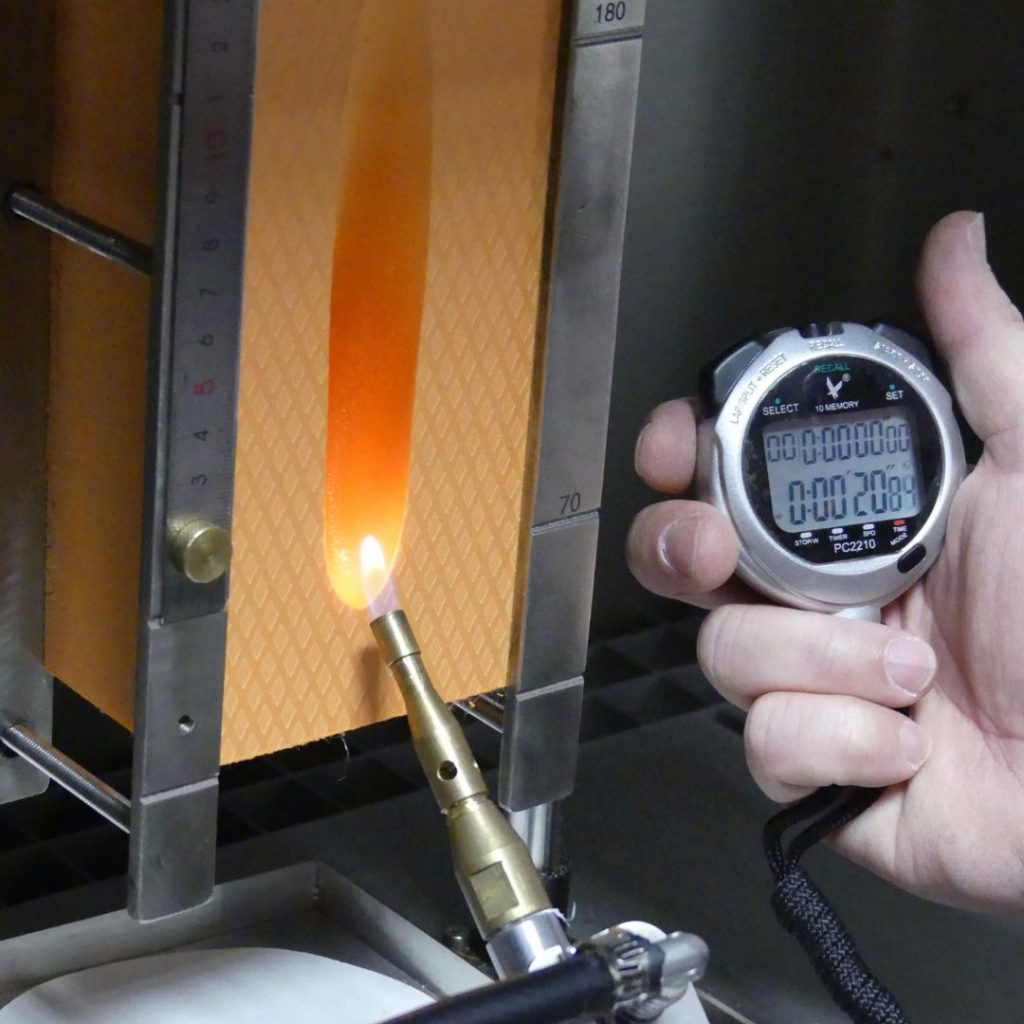
Euroclass E — the board passes a small-flame ignitability test (ENV 11925-2 / EN ISO 11925-2). The material ignites but does not spread flame rapidly in this controlled test condition.
Euroclass F — no reaction-to-fire performance has been determined, or the product does not achieve Euroclass E. In practice, for XPS boards it typically means the test was not performed or was not required for that product configuration, and the class defaults to F.
Neither class implies the board is suitable for exposure to fire in a finished building without additional protective layers. XPS is a combustible thermoplastic material; fire behaviour in a real assembly depends on the entire system, not the insulation board alone.
Which PNP XPS Products Carry Which Class
The fire class is thickness- and product-dependent and is stated on each DoP. The table below summarises the declared fire class for each PNP XPS product based on the data in their DoPs and technical data sheets (TDS).
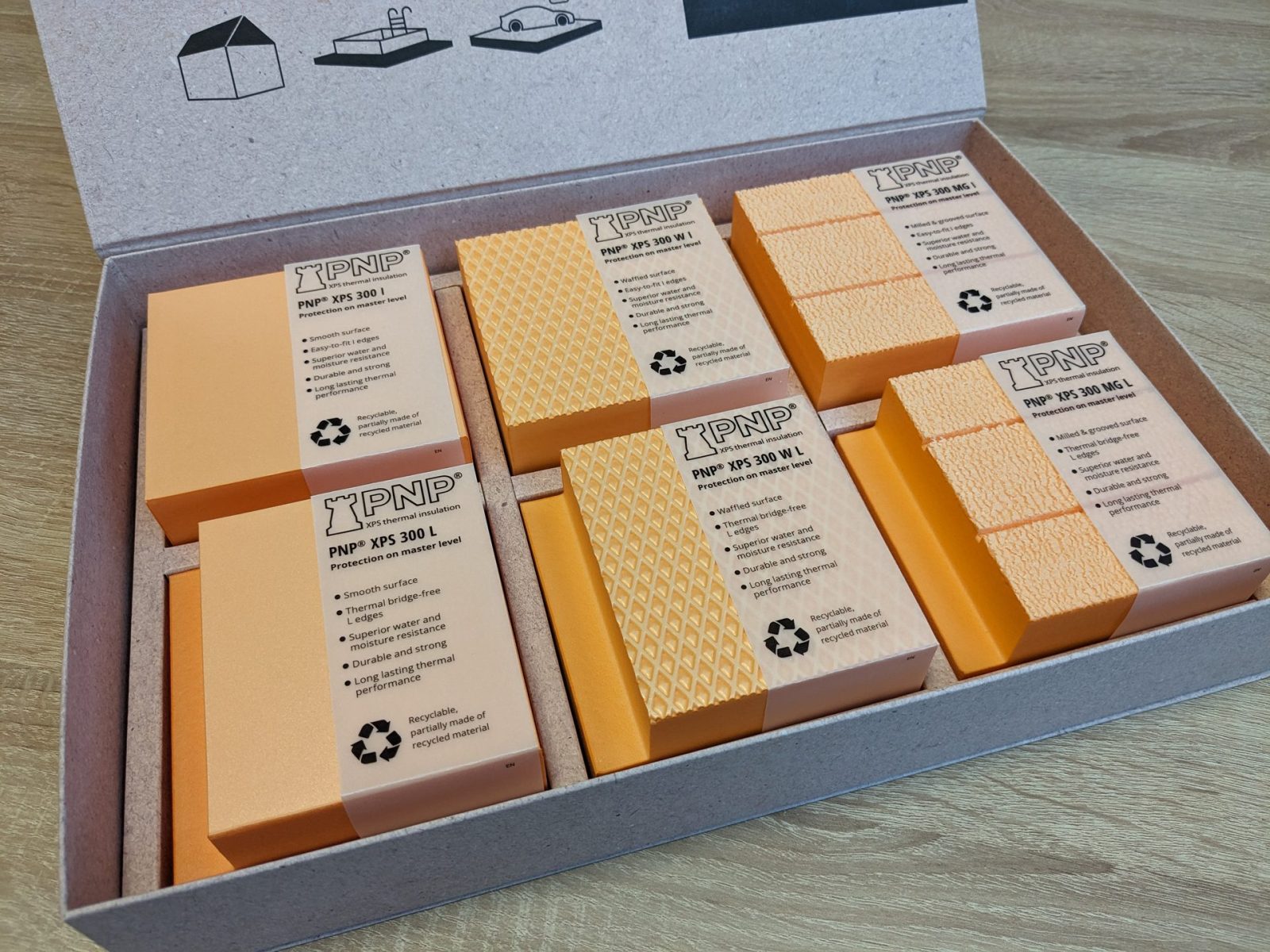
Product Compressive strength Fire class (DoP) XPS 150 150 kPa F XPS 150 MG 100–150 kPa F XPS 150 W X-Grip 150 kPa E XPS 200 200 kPa F XPS 200 MG 200 kPa F XPS 200 W 200 kPa F XPS 300 200–300 kPa E XPS 300 MG 300 kPa E XPS 300 W 200–300 kPa E XPS 400 400 kPa E XPS 500 500 kPa E XPS 700 700 kPa E XPS 300 SLOPE 300 kPa see current DoP XPS 150 SLOPE 150 kPa see current DoP
The fire class is a declared characteristic on the DoP; always verify against the current DoP for the specific product and thickness before specifying.
How the Euroclass System Works in Practice
The Euroclass system is a pan-European framework. It allows specifiers across all EU and associated markets to compare declared fire performance on a common basis. However, Euroclass alone does not authorise use in a specific application. What matters for building design is:
National building regulations — each country (HU, RO, DE, PL, CZ, SK and others in the PNP XPS supply area) translates Euroclasses into permitted uses by building type, occupancy, height, and element type.
System classification — a facade ETICS assembly, a flat-roof build-up, or a floor sandwich is tested and classified as a system. The system class can differ from the insulation board's class.
Protection layers — render, concrete screed, or other coverings over XPS significantly affect the fire behaviour of the finished construction.
A qualified fire engineer or structural designer must confirm compliance with applicable regulations. The current DoP and TDS for each product are available at pnpinsulation.com/documentation/.
Why Lower-Strength Boards are Class F and Higher-Strength Boards are Class E
The data show that PNP XPS boards with compressive strength of 150 kPa and 200 kPa carry Euroclass F, while boards of 300 kPa and above carry Euroclass E. This supports the inference that the higher-density boards, manufactured for structural load-bearing applications, were tested to and passed the EN ISO 11925-2 ignitability test, while the lower-density boards were not assessed to that level or did not pass it. However, this alone does not prove that higher-strength boards are inherently safer in a fire — the declared class reflects the test result for the board as supplied, not the behaviour of a complete building assembly. For detailed fire performance data, consult the relevant DoP and TDS.
Sources
EN 13164:2012+A1:2015 — Factory-made products of extruded polystyrene foam (XPS) — Specification
EN 13501-1 — Fire classification of construction products and building elements — Part 1: Classification using data from reaction to fire tests
DoP PNP XPS 150_en (U).pdf (updated 2025-10-14)
DoP PNP XPS 150 MG 20 mm_eng.pdf (updated 2025-03-17)
DoP PNP XPS 150 MG (30-150 mm)_eng.pdf (updated 2025-03-17)
DoP PNP XPS X-Grip_en (U).pdf (updated 2026-06-24)
DoP PNP XPS 150W_en (U).pdf (updated 2025-10-14)
DoP PNP XPS 200_en (U).pdf (updated 2025-08-14)
DoP PNP XPS 200 MG_eng.pdf (updated 2025-03-17)
DoP PNP XPS 200 W_en (U).pdf (updated 2025-08-14)
DoP PNP XPS 300 EMI_en (U).pdf (updated 2025-10-14)
DoP PNP XPS 300 MG_eng.pdf (updated 2025-03-17)
DoP PNP XPS 300 W EMI_en (U).pdf (updated 2025-10-13)
DoP PNP XPS 400_en (U).pdf (updated 2026-04-10)
DoP PNP XPS 500_en (U).pdf (updated 2025-07-22)
DoP PNP XPS 700_eng.pdf (updated 2025-03-17)
DoP PNP 300 SLOPE A2-B2_en.pdf (updated 2025-03-17)
DoP PNP 300 SLOPE A1-B1_en.pdf (updated 2025-03-17)
TDS pnp_xps300-300TB_600x1250_techcard_en (updated 2026-07-22)
TDS pnp_xps500-500TB_600x1250_techcard_en (updated 2026-07-22)
TDS pnp_xps700_600x1250_techcard_en (updated 2025-03-17)