The Direct Answer
All PNP XPS boards in the W (waffled) and MG (milled and grooved) ranges are textured on both faces. When installing these boards in an adhesive, plaster, or render system, the textured face that contacts the adhesive compound provides the mechanical key required for reliable bonding of the finish layer. The opposite textured face bears against the substrate (wall, structure, or backing layer).
On smooth-skin boards (XPS 300, XPS 500, XPS 700, etc.) there is no specially prepared adhesion face. The PNP XPS solutions catalogue does not list these products for ETICS or direct render systems. Consult the current TDS and a qualified designer before specifying them in any bonded application.
Why the Surface Texture Matters
Standard XPS boards are manufactured with a dense, continuous skin formed during extrusion. This skin is chemically inert and dimensionally stable — excellent for moisture resistance and load-bearing performance — but it offers very limited mechanical grip for adhesive compounds.
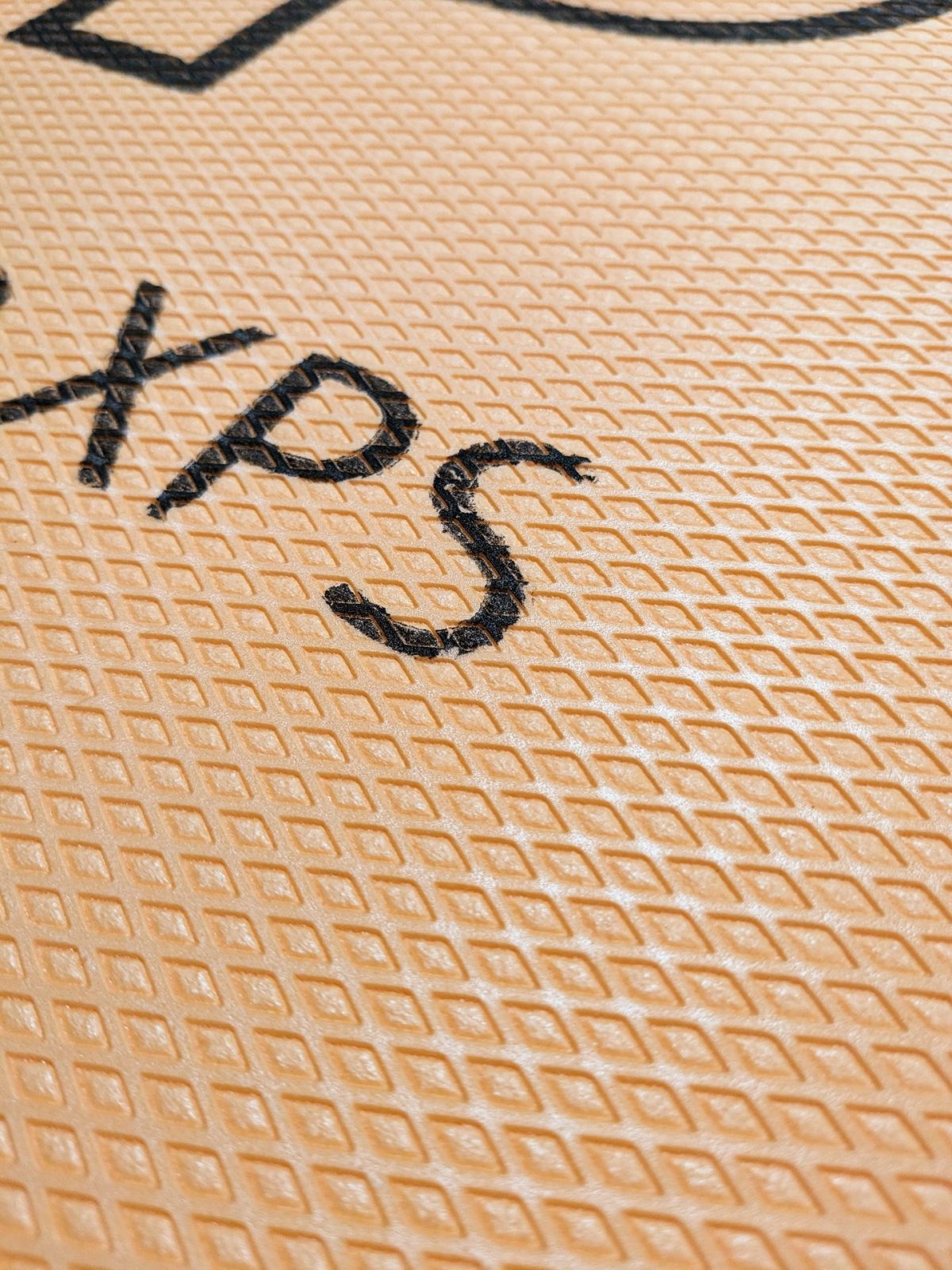
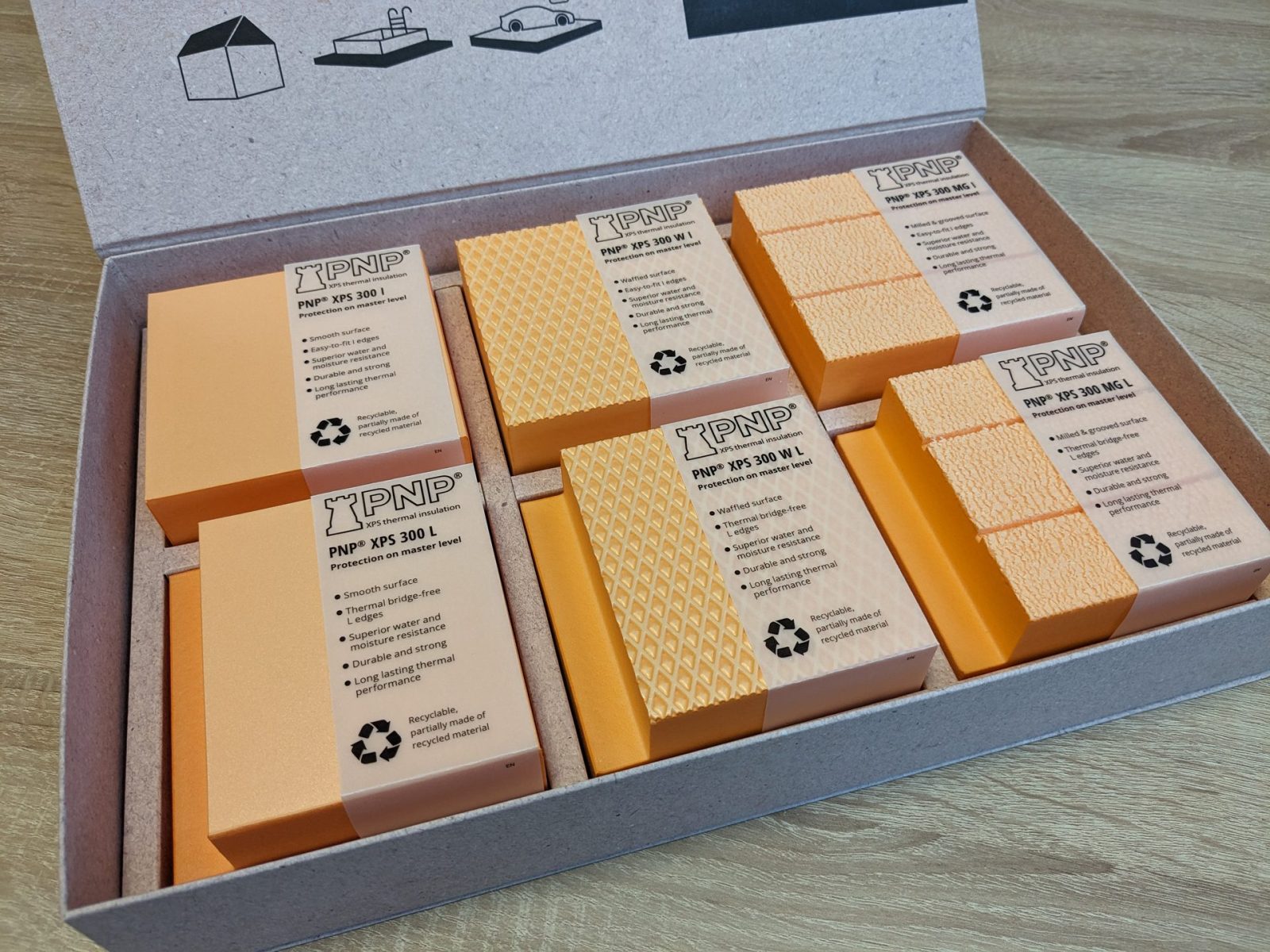
PNP XPS addresses this with two distinct surface treatments, both applied to both faces of the board:
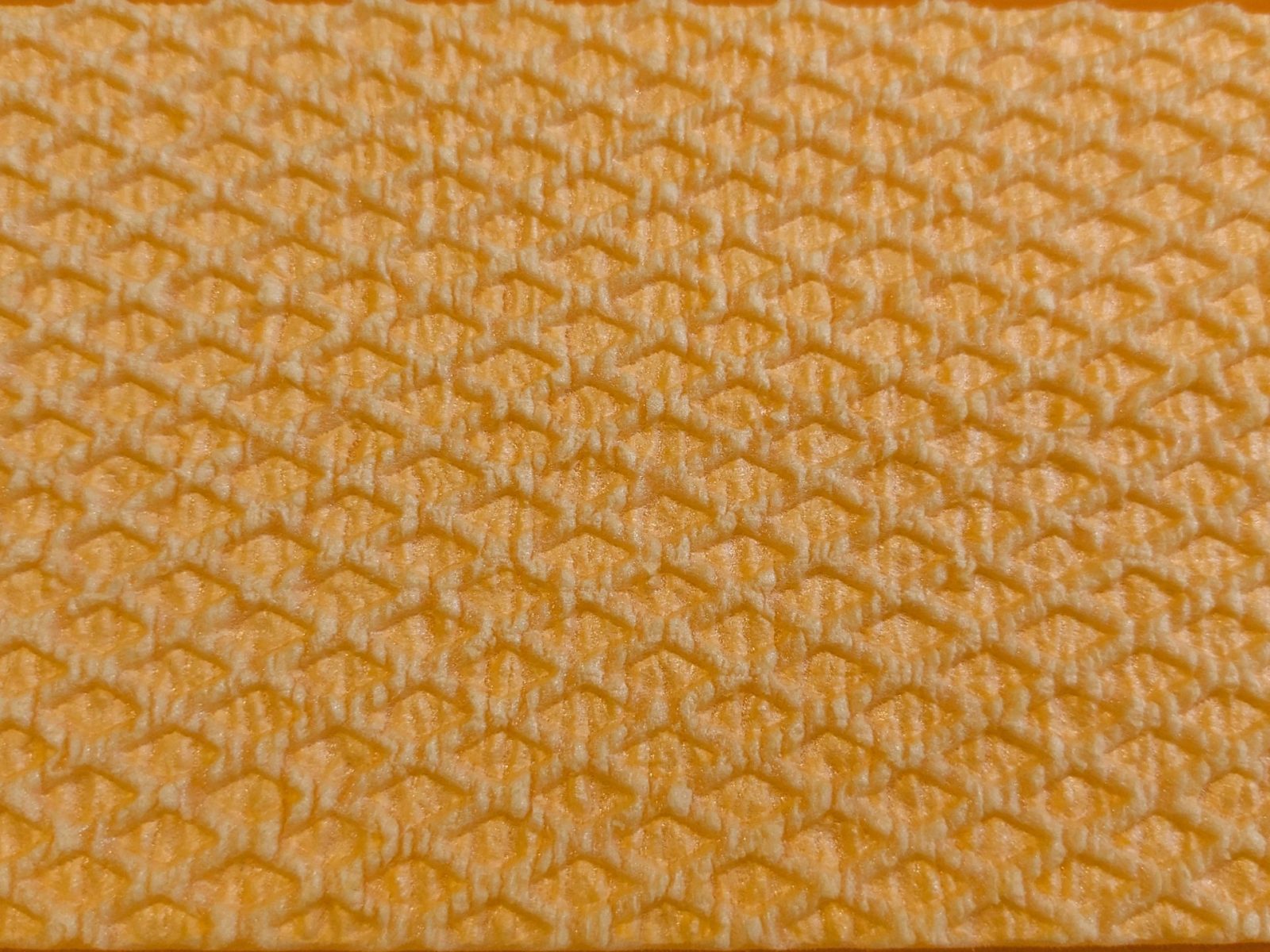
W (waffled / X-Grip): An embossed waffle pattern on both faces during production. Used on XPS 150 W X-Grip, XPS 200 W, and XPS 300 W.
MG (milled and grooved): The extrusion skin is mechanically milled away and grooves are cut into both faces. Used on XPS 150 MG, XPS 200 MG, and XPS 300 MG.
Both treatments increase the contact area and create surface relief that adhesive and render compounds can key into. The product descriptions state that the waffled and milled-and-grooved surfaces "significantly improve the adhesion of plaster and adhesive compounds" and provide "the mechanical key required for reliable adhesion."
Surface Types at a Glance
ProductSurface typeBoth faces textured?Compressive strengthTypical bonded useXPS 150 W X-GripWaffledYes100–150 kPaETICS, renders, tile adhesive (light loads)XPS 200 WWaffledYes200 kPaFacades, floors under bonded finishesXPS 300 WWaffledYes200–300 kPaAccessible roofs, podium decks, facadesXPS 150 MGMilled and groovedYes100–150 kPaETICS, render, tile adhesive on facadesXPS 200 MGMilled and groovedYes200 kPaHigh-key ETICS, tile systemsXPS 300 MGMilled and groovedYes300 kPaStructural facades, high-load render systemsXPS 300 / XPS 500 / XPS 700SmoothNo200–700 kPaFoundations, floors, roads (unbonded)
W vs MG: Is One Better for Adhesion?
Both the W and MG surfaces are specified for plaster, render, and tile-adhesive systems in the PNP XPS solutions catalogue (ETICS plaster systems, facade clinker tile systems). The choice between them depends on other project criteria:
Long-term water absorption: W boards carry WL(T) 0.7 (≤ 0.7 Vol.-%), while MG boards carry WL(T) 3 (≤ 3.0 Vol.-%), because milling through the extrusion skin exposes the cellular structure at the surface. This supports specifying W boards where moisture exposure is a concern, but this alone does not prove MG boards are unsuitable — consult the current TDS and a qualified designer for the specific detail.
Compressive strength range: Both W and MG variants are offered at 150, 200, and 300 kPa classes; select the class that matches the structural requirement.
System compatibility: Always verify that the board surface type is accepted by the adhesive or render system manufacturer's specification.
Smooth-Skin Boards in ETICS: What the Data Says
The PNP XPS solutions catalogue lists ETICS and facade clinker tile systems with "PNP XPS boards with Waffled or Milled & Grooved surface" — smooth boards are not listed for these assemblies. Using a smooth-skin board (XPS 300, XPS 500, XPS 700) in a bonded render system is outside the product's documented application scope. A qualified designer must assess bond pull-off values and system approval requirements before any such substitution.
Installation Checklist
Confirm you have a W or MG board — both faces will be visibly textured (embossed waffle pattern or milled grooves).
Orient the board so the textured face that will receive the adhesive, basecoat render, or tile-adhesive layer is positioned toward that layer.
Ensure the opposite textured face bears against the substrate or structural layer.
Follow the adhesive manufacturer's coverage and application instructions — brushing dust off the XPS face before applying adhesive may be required.
Confirm mechanical fastener requirements with the ETICS system designer; fasteners are typically required in addition to adhesive bonding in facade applications.
For any application involving fire performance, load-bearing design, or dew-point analysis, engage a qualified designer and refer to the current DoP and TDS.
Sources
XPS 150 W X-Grip product description and technical data (PNP XPS DATA, accessed 2026-09-21)
XPS 200 W product description and technical data (PNP XPS DATA, accessed 2026-09-21)
XPS 300 W product description and technical data (PNP XPS DATA, accessed 2026-09-21)
XPS 150 MG product description and technical data (PNP XPS DATA, accessed 2026-09-21)
XPS 200 MG product description and technical data (PNP XPS DATA, accessed 2026-09-21)
XPS 300 MG product description and technical data (PNP XPS DATA, accessed 2026-09-21)
XPS 300 product description and technical data (PNP XPS DATA, accessed 2026-09-21)
PNP XPS Solutions Catalogue — ETICS plaster systems, facade clinker tile system (PNP XPS DATA, accessed 2026-09-21)
EN 13164:2012+A1:2015 — Factory made products of extruded polystyrene foam (XPS)
TDS pnp_xpsX-Grip_X-GripTB_600x1250_techcard_en (updated 2026-07-22)
TDS pnp_xps150W-150WTB_600x1250_techcard_en (updated 2026-07-22)
TDS pnp_xps200W-200WTB_600x1250_techcard_en (updated 2026-07-22)
TDS pnp_xps300W-300WTB_600x1250_techcard_en (updated 2026-07-22)
TDS pnp_xps150MG_600x1250_techcard_en (updated 2025-03-17)
TDS pnp_xps200MG_600x1250_techcard_en (updated 2025-03-17)
TDS pnp_xps300MG_600x1250_techcard_en (updated 2025-03-17)