PNP verifies superior XPS product quality in collaboration with the University of Szeged

Independent product-quality verification in partnership with the University of Szeged.
PNP Orange Kft. verifies superior XPS product quality with independent study at the University of Szeged
New research conducted by the University of Szeged confirms that PNP XPS insulation features an exceptionally low open-cell ratio, guaranteeing stable, long-term thermal performance.
In the building materials industry, not all insulation is created equal. While R-value is the headline number, the accurate measure of an insulation's long-term effectiveness is its ability to resist environmental factors—chief among them, moisture. For extruded polystyrene (XPS) foam, the key to this resistance lies in its cellular structure.
PNP Orange Kft., as part of its rigorous and ongoing commitment to quality assurance, recently commissioned a multi-week study to validate the performance of its PNP XPS products. The research, conducted by the prestigious University of Szeged's Faculty of Natural Sciences and Informatics, Department of Applied and Environmental Chemistry, aimed to precisely quantify a critical quality metric: the ratio of open to closed cells.
Why Cell Structure is Critical
The cell structure of insulation is the frontline defense against moisture infiltration. Materials with a high percentage of closed cells form a tight, nearly impermeable barrier. In contrast, materials with a significant open-cell structure, or fibrous materials like rock wool and glass wool, can absorb or trap moisture from the environment.
When water infiltrates insulation, its thermal efficiency plummets, as water is an excellent conductor of heat. This means the building's stated R-value is compromised, resulting in higher energy costs and potential issues with dampness and mold.
The EN 13164 standard for factory-made XPS foam products sets a clear benchmark, specifying that the open-cell ratio must not exceed 5%. While meeting this standard is mandatory, PNP Orange Kft. Sought to prove its products don't just meet the standard—they significantly exceed it.
The Research: Advanced Micro-CT Analysis
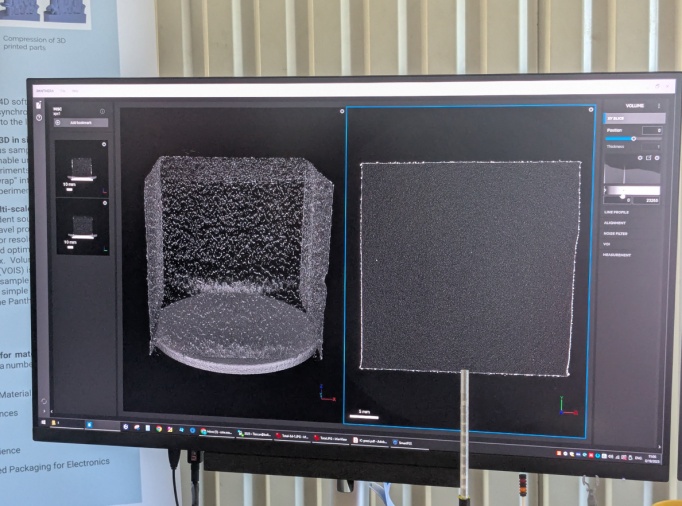
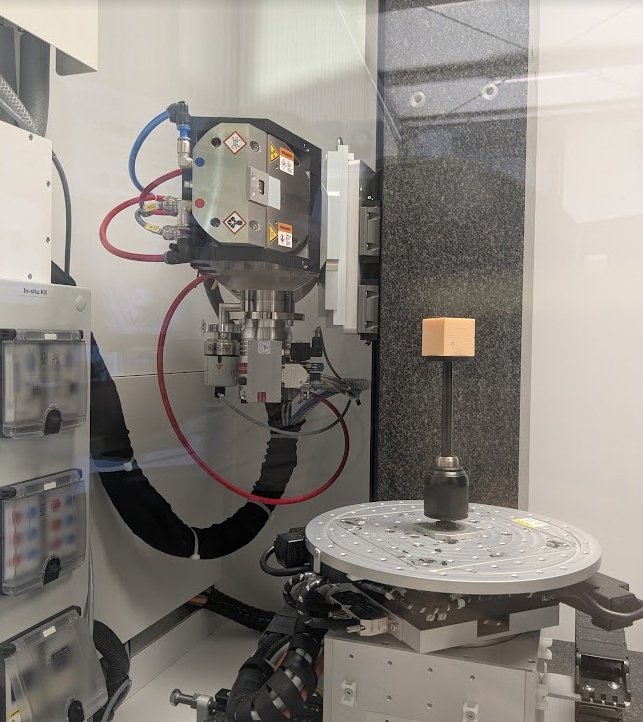
To get the most accurate data possible, the University of Szeged employed a state-of-the-art, non-destructive method: high-resolution micro-computed tomography (micro-CT).
This advanced technique, typically seen in materials science and medical research, provides a complete 3D reconstruction of the foam's internal structure at a microscopic level (a resolution of 3 µm). Unlike traditional gas-based methods, the micro-CT analysis digitally maps the entire pore system, identifying every open and closed cell within a sample volume.
The methodology adhered to the principles outlined in the MSZ EN ISO 4590:2017 standard, ensuring that the results are robust, repeatable, and directly comparable to industry requirements. Six random PNP XPS samples were selected for the analysis.
The Findings: A Benchmark in Quality
The results of the comprehensive analysis are a testament to the quality and consistency of PNP's manufacturing process.
All six tested samples passed the EN 13164 standard with exceptionally low open-cell percentages.
The final certified open porosity (ω₀) values for the six samples were between 0.60% and 2.25%, and the average open-cell ratio across all randomly selected samples was just 1.47%—more than three times better than the minimum requirement specified by the European standard. The summary from the University of Szeged confirmed that the findings were "typically 0.6-2.3%" and "meet preliminary expectations."
What This Means for Builders and Specifiers?
For architects, contractors, and building owners, this data provides definitive proof and peace of mind.
Guaranteed Long-Term R-Value: With an average of over 98.5% closed-cell content (calculated from), PNP XPS insulation provides a stable thermal resistance that will not degrade due to moisture absorption.
Superior Moisture Resistance: The product provides a reliable barrier against water and water vapor, making it an ideal choice for below-grade applications, roofs, and exterior walls.
Proven Product Quality: This independent, high-tech analysis verifies that PNP's commitment to quality is not just a claim, but a measurable and consistent fact.
We are immensely proud of these results, which scientifically validate what we have long known: the quality of PNP XPS products is unparalleled. This investment in advanced research underscores our commitment to delivering materials to the building industry that offer proven, reliable, and lasting performance.