Pereiti į pagrindinį turinį

XPS 500 — Pramoninė ir aukšto slėgio šiluminė izoliacija

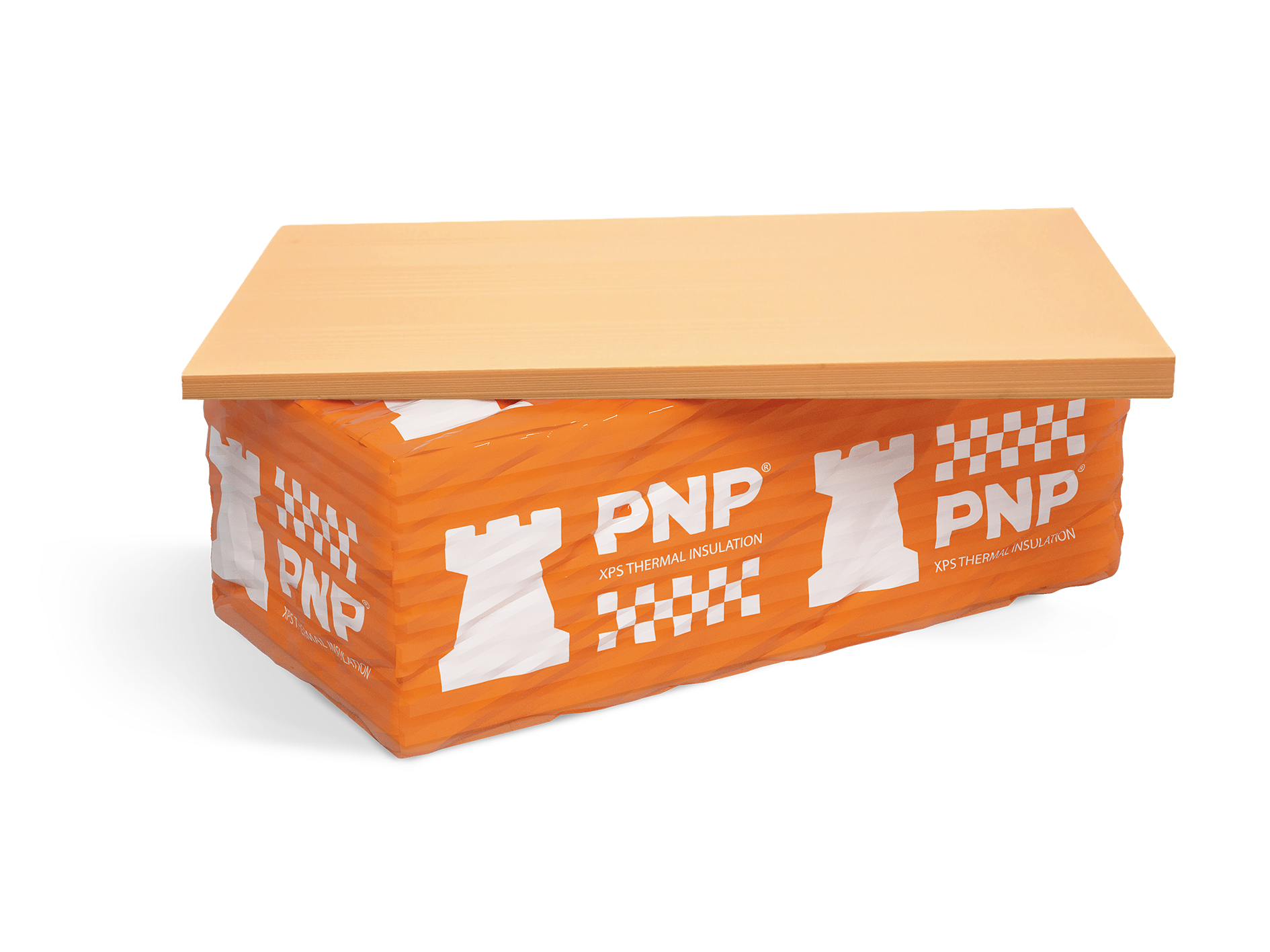
Naudokite XPS 500 ten, kur didelės statinės ir dinaminės apkrovos reikalauja maksimalaus atsparumo gniuždymui – pramoninėse grindyse, automobilių stovėjimo aikštelių dangose ir kelių tiesyboje.

Gniuždymo stipris, kPa:
500
Deklaruojamas šiluminio laidumo koeficientas λD, W/(m·K):
0,034–0,035
Atsparumas ugniai, klasė:
E
Plokštės dydis (ilgis × plotis), mm:
1250 × 600
Nominali storis, mm:
40–120
Paviršiaus tipas:
Lygus
Krašto tipas:
Tiesus kraštas (I) / L formos kraštas (L)
Produkto standartas:
EN 13164:2012+A1:2015

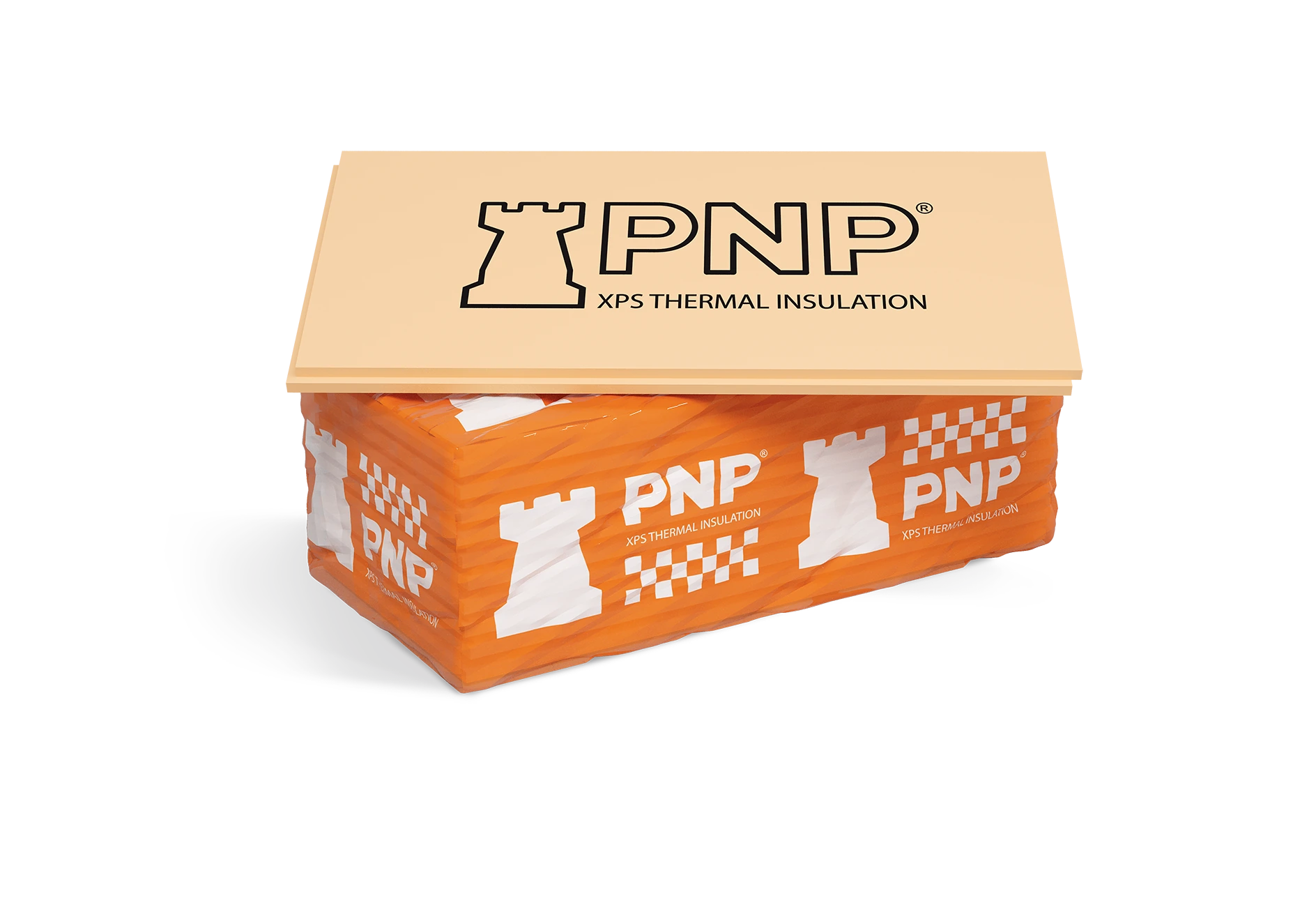
Sunkiasvorė standžioji ekstruduoto polistireno plokštė, skirta šiluminei izoliacijai konstrukcijose, kuriose veikia ypač didelės gniuždomosios apkrovos – pramoninėse grindyse ir kelių tiesyboje. PNP XPS 500 gaminama 40–200 mm storio (ir didesnio – užsakius TB formato plokštes), užtikrina nuolat žemą šiluminį laidumą ir gniuždomąjį stiprį ≥ 500 kPa.

Aprašymas

PNP XPS 500 – tai aukštos kokybės šiluminės izoliacijos medžiaga (naujausios kartos XPS), pagaminta iš bendrojo naudojimo polistireno. Plokštė turi lygų paviršių ir vienalytę uždarų akučių struktūrą. Deklaruotasis šiluminis laidumas (λD): 0,034 W/m·K plokštėms nuo 40 iki 100 mm storio ir 0,035 W/m·K – 120 mm storio (standartinis formatas); TB varianto λD – 0,034 W/m·K (100–200 mm) ir 0,035 W/m·K (210–290 mm ir 330–360 mm). Gniuždomasis stipris atitinka CS(10\Y) 500 (≥ 500 kPa), tempiamasis stipris statmenai paviršiui – TR 400, o ilgalaikė vandens sugertis visiškai panardinant – WL(T) 0,7 (≤ 0,7 tūrio %). Plokštės atitinka EN 13164:2012+A1:2015 reikalavimus ir visiškai laikosi REACH reglamento – neturi HBCDD ar kitų ypač pavojingų medžiagų.

Taikymas

  • Pramoninės grindys ir sunkiai apkrautos grindų plokštės, kurioms reikalingas didelis atsparumas gniuždymui
  • Kelių ir infrastruktūros statyba, kur keliami padidinti apkrovos reikalavimai
  • Plokščiųjų stogų ir apversto stogo izoliacija, veikiant eismo ar įrenginių apkrovoms
  • Šaldymo sandėlių ir šaldymo įrenginių grindys bei sienos
  • Pamatų ir rūsių perimetro izoliacija, veikiant dideliam grunto slėgiui

Privalumai

  • Išskirtinis gniuždomasis stipris — CS(10\Y) ≥ 500 kPa, tinkamas reikliausiems konstrukciniams sprendimams
  • Nuolat žemas šiluminis laidumas (λD 0,034–0,035 W/m·K) visuose gamybiniuose storiuose
  • Praktiškai nulinė vandens sugertis — vienalytė sandari uždarų akučių struktūra (WL(T) ≤ 0,7 tūrio %)
  • Absoliuti biostabilumas ir įrodytas ilgaamžiškumas
  • Atitinka REACH reglamentą ir yra aplinkai draugiška — gamyboje nenaudojami ozono sluoksnį ardantys pūtimo agentai
  • Platus eksploatacinių temperatūrų diapazonas: nuo −70 °C iki +75 °C
XPS 500 — Pramoninė ir aukšto slėgio šiluminė izoliacija — Techninis
NuosavybėStorio diapazonas / būklėDeklaruojama vertė
Gniuždymo stipris / gniuždomosios įtempės esant 10 % deformacijai, CS(10\Y)CS(10\Y)500 (≥500 kPa)
Atsparumas ugniai, klasėE
Deklaruojamas šiluminio laidumo koeficientas λD, W/(m·K)40–100 mm0,034 W/m·K
Deklaruojamas šiluminio laidumo koeficientas λD, W/(m·K)120 mm0,035 W/m·K
Ilgalaikė vandens absorbcija visiškai panardinant, WL(T)WL(T)0,7 (≤ 0,7 [Vol.-%])
Ilgalaikė vandens sugertis difuzijos būdu, WD(V)WD(V)3 (≤ 3,0 [Vol-%])
Matmenų stabilumas nurodytomis sąlygomis, DSDS(70,90)
Gniuždomasis valkšnumas, GVCC(2/1,5/50)150
Tempiamasis stipris, statmenas plokštumoms, TRTR 400
Atsparumas šalčio ir atšilimo ciklams, FTCDFTCD1 (≤1 [Vol-%])
Deformation under specified compressive load and temperature conditionsDLT(2)5
Storio tolerancija, klasėT1
Darbinė temperatūra, °C−70 … +75 °C
Paviršiaus tipasLygus
Krašto tipasL-edge
Produkto standartasEN 13164:2012+A1:2015

Vertės pagal galiojantį techninių duomenų lapą.

XPS 500 — Pramoninė ir aukšto slėgio šiluminė izoliacija — Pakuotė
Nominali storis, mmDeklaruojamoji šiluminė varža RD, m²·K/WPlokščių pakuotėje, vnt.Pakuotės plotas, m²Pakuotės tūris, m³
401,15107,500,3000
501,4586,000,3000
601,7564,500,2700
802,3553,750,3000
1002,9043,000,3000
1203,4032,250,2700

Transport dimensions for boards with L-edge: 615×1265 mm.

XPS 500 — Pramoninė ir aukšto slėgio šiluminė izoliacija

Techninių duomenų lapas

pnp_xps500-500TB_600x1250_techcard_lt(20.07.2026).pdf

PDF · LT

XPS 500 — Pramoninė ir aukšto slėgio šiluminė izoliacija

Eksploatacinių savybių deklaracija

DoP PNP XPS 500_lt (U).pdf

PDF · LT

XPS 500 — Pramoninė ir aukšto slėgio šiluminė izoliacija: is it the right board?

When to use it

  • The floor slab or pavement must carry static or dynamic loads that require a certified compressive strength of 500 kPa (CS(10\Y)500), such as industrial production floors, logistics-hall slabs, or heavy-racking warehouse floors.
  • An inverted or warm flat roof will be trafficked by vehicles, service plant, or heavy access equipment, where 300 kPa boards would be under-specified.
  • Road or infrastructure construction requires thermally insulating the subgrade against frost heave on heavily loaded carriageways or access roads.
  • Cold-store and refrigeration facility floors must simultaneously resist high point loads from racking or forklift traffic and maintain thermal performance over the life of the facility.
  • A foundation slab or basement floor is subject to concentrated equipment loads or column reactions that exceed the capacity of XPS 300 or XPS 400.
  • Long-term creep deformation must be controlled to ≤ 2 % over 50 years at 1.5 % strain: the declared CC(2/1,5/50)150 value of XPS 500 supports this requirement (verify load versus creep limit with the TDS and a qualified structural engineer).
  • The project specification explicitly calls for EN 13164 class CS(10\Y)500 insulation board and the smooth surface and L-edge profile are compatible with the assembly detail.

When not to use it

  • The application is a standard residential or commercial floor slab where design loads do not justify CS(10\Y)500, because XPS 300 or XPS 400 already covers the structural requirement at lower cost.
  • The insulation board will be bonded or rendered directly (ETICS, plaster, tile adhesive), because XPS 500 has a smooth skin that does not provide the mechanical key required for adhesion systems.
  • A factory-formed roof drainage fall is needed, because XPS 500 is not available in a tapered SLOPE format.
  • The project requires boards thinner than 40 mm or in the 130–150 mm range in the standard format, as the published thickness range for XPS 500 is 40–120 mm (TB format available on request — see current TDS for exact range).
  • The budget or specification requires only Euroclass F reaction-to-fire, because XPS 500 is classified Euroclass E; if a lower fire class is acceptable, a lower-strength grade avoids potential over-specification.

Choose instead

  • For standard residential or light commercial floors where 500 kPa is not required, choose XPS 300 (300 kPa, Euroclass E) or XPS 400 (400 kPa, Euroclass E).
  • For ETICS, plaster, render or tile-adhesive facade and wall systems requiring a keyed surface, choose XPS 300 W (waffled, 300 kPa) or XPS 150 W X-Grip (waffled, 150 kPa) depending on the structural requirement.
  • For flat roofs or terraces where a built-in drainage fall is needed, choose XPS 300 SLOPE (factory-tapered, 300 kPa).
  • For applications needing boards below 40 mm or thicknesses outside the XPS 500 standard range, choose XPS 300 (available from 20 mm) or XPS 700 (available from 20 mm) if higher strength is required at thinner sections.
  • For extreme civil-engineering or infrastructure loads exceeding 500 kPa, choose XPS 700 (700 kPa, CC(2/1,5/50)210).

When do you really need 500 kPa?

XPS 500 sits between XPS 400 (400 kPa) and XPS 700 (700 kPa) in the PNP range. Its declared compressive strength of CS(10\Y)500 — meaning ≥ 500 kPa at 10 % deformation or yield per EN 826 — is certified under EN 13164:2012+A1:2015 and confirmed in the DoP. This figure represents the load at which the board deforms by 10 % of its thickness, not a safety working stress; the actual design value used in calculations depends on load duration, safety factors, and the applicable national standard. A qualified structural or geotechnical engineer must verify that XPS 500 is the appropriate grade for any specific assembly.

The key differentiator versus XPS 300 is the compressive creep class: XPS 500 is rated CC(2/1,5/50)150, meaning long-term creep deformation remains within 2 % over 50 years at a sustained stress of 150 kPa. This supports its use beneath industrial floor slabs and road sub-bases where decades of continuous load must not cause measurable settlement in the insulation layer. XPS 300 carries CC(2/1,5/50)130 — adequate for most building floors, but lower than XPS 500 in both short-term capacity and creep limit.

XPS 500 is produced with a smooth skin and L-edge profile, in thicknesses of 40–120 mm in the standard format (TB format for greater thicknesses — see current TDS). The smooth surface is well-suited to load-bearing assemblies where the board sits beneath a screed, concrete slab, or road base layer, but it is not intended for direct adhesive or render bonding. λD is 0.034 W/(m·K) for 40–100 mm and 0.035 W/(m·K) for 120 mm, so thermal performance is essentially identical to other PNP XPS grades — the selection criterion is structural, not thermal.

In practice, XPS 500 is most commonly specified for industrial logistics floors, vehicle-trafficked inverted roofs, cold-store floors under racking loads, and frost-protection layers in road construction. For loads beyond 500 kPa, XPS 700 is the next step in the PNP range. For any application where loads are at or just above the XPS 300 or XPS 400 threshold, confirm the governing design load, safety factor, and creep requirement with the project engineer before upgrading grades.

XPS 500 — Pramoninė ir aukšto slėgio šiluminė izoliacija — frequently asked questions

What does CS(10\Y)500 actually mean on the XPS 500 data sheet?

It means the board has a certified compressive strength of ≥ 500 kPa measured at 10 % deformation or at yield — whichever comes first — in accordance with EN 826. This is a characteristic value; the design stress used in structural calculations must be derived by a qualified engineer applying the appropriate partial factors and load-duration corrections for the project.

Can XPS 500 be used directly under a render or ETICS system?

No. XPS 500 has a smooth skin that does not provide the mechanical key required for plaster, render, or tile-adhesive systems. For bonded or rendered facades use a waffled-surface board such as XPS 300 W, or a milled-and-grooved board such as XPS 300 MG.

How does XPS 500 compare to XPS 700 for road insulation?

XPS 500 is rated CS(10\Y)500 with a creep class of CC(2/1,5/50)150, while XPS 700 is rated CS(10\Y)700 with CC(2/1,5/50)210. XPS 700 is appropriate where design loads or national road-construction specifications require the higher class; the choice between them must be confirmed by a qualified designer against the project-specific load model.

What thickness range is XPS 500 available in?

The standard format is available in 40, 50, 60, 80, 100, and 120 mm. A TB (thick-board) format extends the range further — see the current TDS for the exact TB thickness steps, as these are subject to production scheduling.

Is XPS 500 suitable for cold-store and freezer-room floors?

Yes — the data sheet lists cold-store and refrigeration facility floors and walls as a stated application. The closed-cell structure gives a long-term water absorption by immersion of WL(T)0,7 (≤ 0.7 Vol.-%), which supports durability in permanently cold and potentially damp conditions; thermal and structural design must be confirmed with the TDS and a specialist engineer.

What is the declared thermal conductivity of XPS 500?

λD is 0.034 W/(m·K) for boards in the 40–100 mm thickness range and 0.035 W/(m·K) for the 120 mm board (standard format). For TB-format thicknesses, consult the current TDS.

What reaction-to-fire class does XPS 500 carry, and does it meet project fire requirements?

XPS 500 is classified Euroclass E under EN 13164:2012+A1:2015. Whether this satisfies the fire requirements of a specific project depends on national building regulations, the application detail, and any system-level fire classification — this must be verified by a qualified fire or building-control specialist.

Where can I find the Declaration of Performance and full technical data for XPS 500?

The DoP (DoP PNP XPS 500_en (U), updated 2025-07-22) and TDS (pnp_xps500-500TB_600x1250_techcard_en, updated 2026-07-20) are available via the PNP documentation library at /documentation/. For project-specific queries contact sales@pnpinsulation.com.

Taip pat žiūrėkite

XPS 150 W X-Grip — Puikus sukibimas Šiluminė izoliacija

X-Grip · 150 kPa

XPS 150 W X-Grip — Puikus sukibimas Šiluminė izoliacija

Rinkitės XPS 150 W X-Grip, kai tepate sunkius tinko mišinius, plytelių klijus ar ETICS sistemas ant sienų, rūsių, grindų ar stogų, kur reikalingas ypatingai stiprus izoliacijos sukibimas.

Daugiau informacijos

XPS 300 — Konstrukcinis pamatas ir grindų šiluminė izoliacija

Smooth · 300 kPa

XPS 300 — Konstrukcinis pamatas ir grindų šiluminė izoliacija

Naudokite XPS 300 ten, kur didelės apkrovos reikalauja patikimos šiluminės izoliacijos – pamatuose, grindų plokštėse ir prieinamuose stogams.

Daugiau informacijos

XPS 300 W — Didelio sukibimo struktūrinis šiluminis izoliavimas

W (Waffle) · 300 kPa

XPS 300 W — Didelio sukibimo struktūrinis šiluminis izoliavimas

Naudokite XPS 300 W prieinamuose stogų dangose arba pakylose, kur apkrovos laikomoji galia ir maksimalus membranos ar dangų sukibimas yra kritiškai svarbūs.

Daugiau informacijos

XPS 700 — Ekstremalių apkrovų ir civilinės inžinerijos šiluminė izoliacija

Smooth · 700 kPa

XPS 700 — Ekstremalių apkrovų ir civilinės inžinerijos šiluminė izoliacija

Naudokite XPS 700 ten, kur ypač svarbus didžiausias gniuždymo stipris – sunkiosios civilinės infrastruktūros, pramoninių pamatų ir didelės apkrovos kelių tiesimo projektuose.

Daugiau informacijos

XPS 300 SLOPE — Nuožulnaus stogo drenažo šiluminė izoliacija

Slope · 300 kPa

XPS 300 SLOPE — Nuožulnaus stogo drenažo šiluminė izoliacija

Naudokite XPS 300 SLOPE plokščiuose stogose, terasose ir žaliuosiuose stogose, kur viensluoksnis sprendimas turi užtikrinti nuotėkio nuolydį ir ilgalaikę šiluminę izoliaciją.

Daugiau informacijos
Eiti į katalogą
Susisiekite su mumis

Susisiekite su mumis

Palikite savo kontaktinius duomenis ir mes susisieksime su jumis kuo greičiau.

Susisiekite su mumis

Palikite savo kontaktinius duomenis ir mes susisieksime su jumis kuo greičiau.

Jūsų užklausa išsiųsta

Netrukus su jumis susisieksime