Pereiti į pagrindinį turinį

XPS 300 — Konstrukcinis pamatas ir grindų šiluminė izoliacija

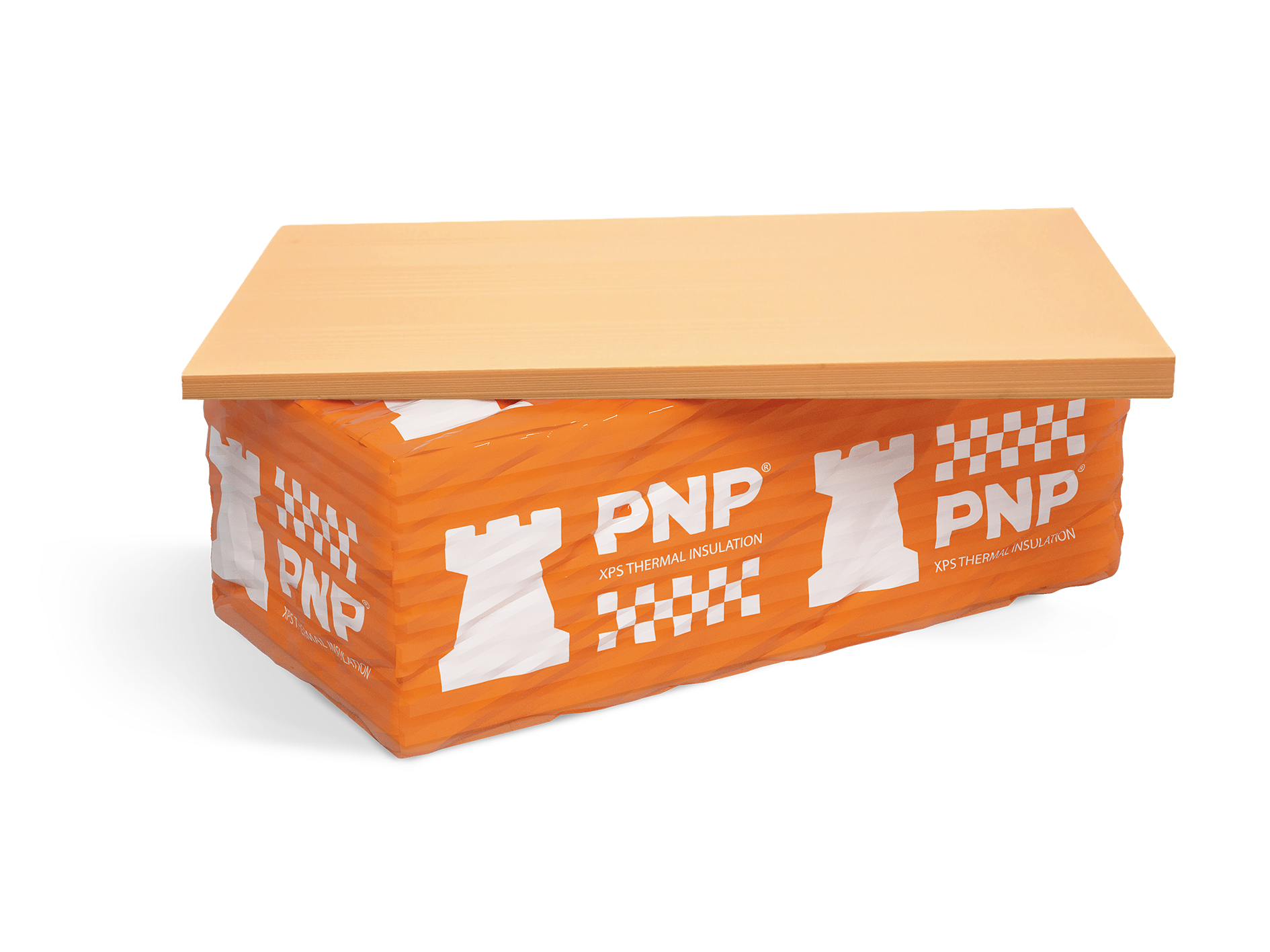
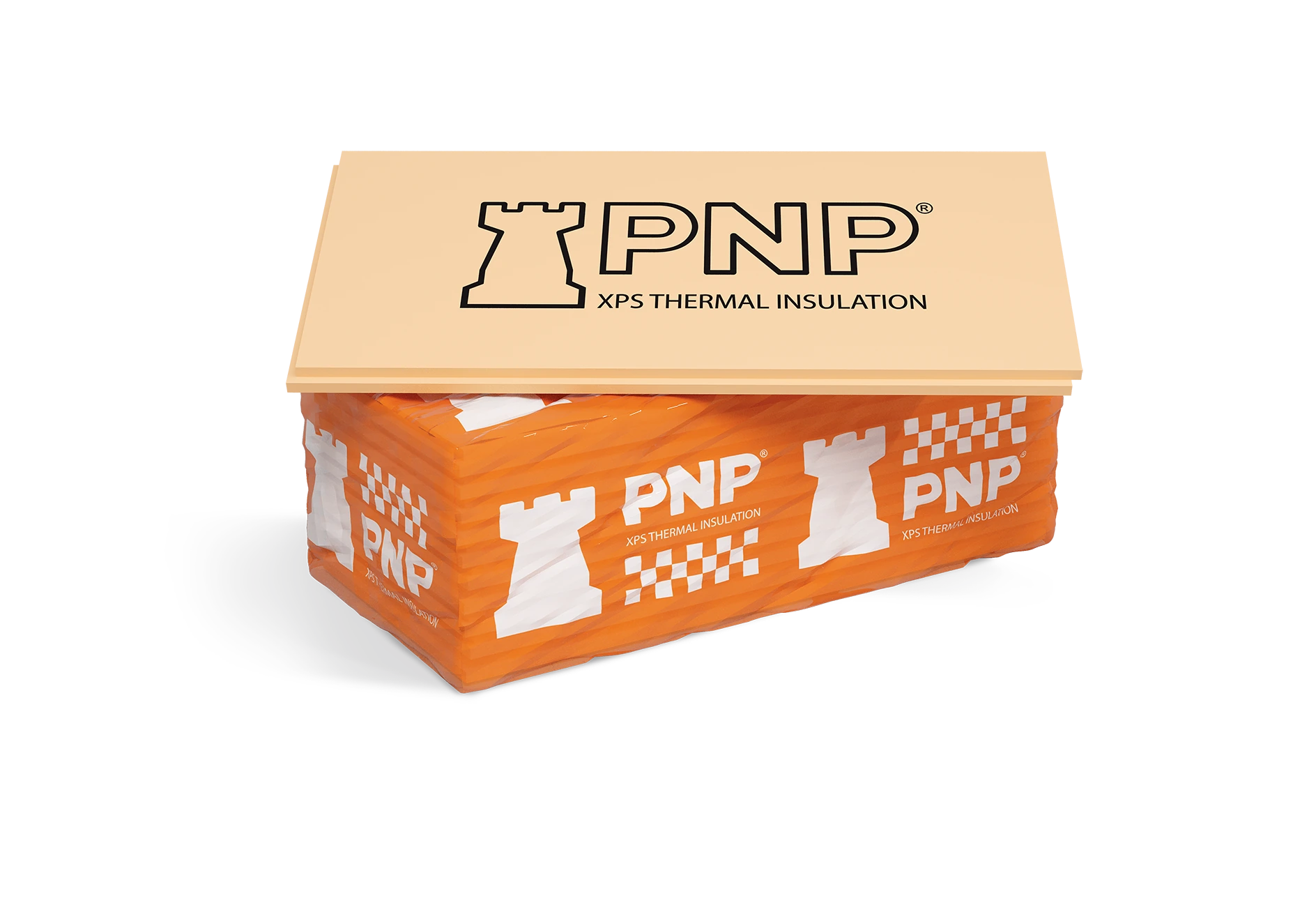
Naudokite XPS 300 ten, kur didelės apkrovos reikalauja patikimos šiluminės izoliacijos – pamatuose, grindų plokštėse ir prieinamuose stogams.

Gniuždymo stipris, kPa:
200–300
Deklaruojamas šiluminio laidumo koeficientas λD, W/(m·K):
0,034–0,035
Atsparumas ugniai, klasė:
E
Plokštės dydis (ilgis × plotis), mm:
1250 × 600
Nominali storis, mm:
20–150
Paviršiaus tipas:
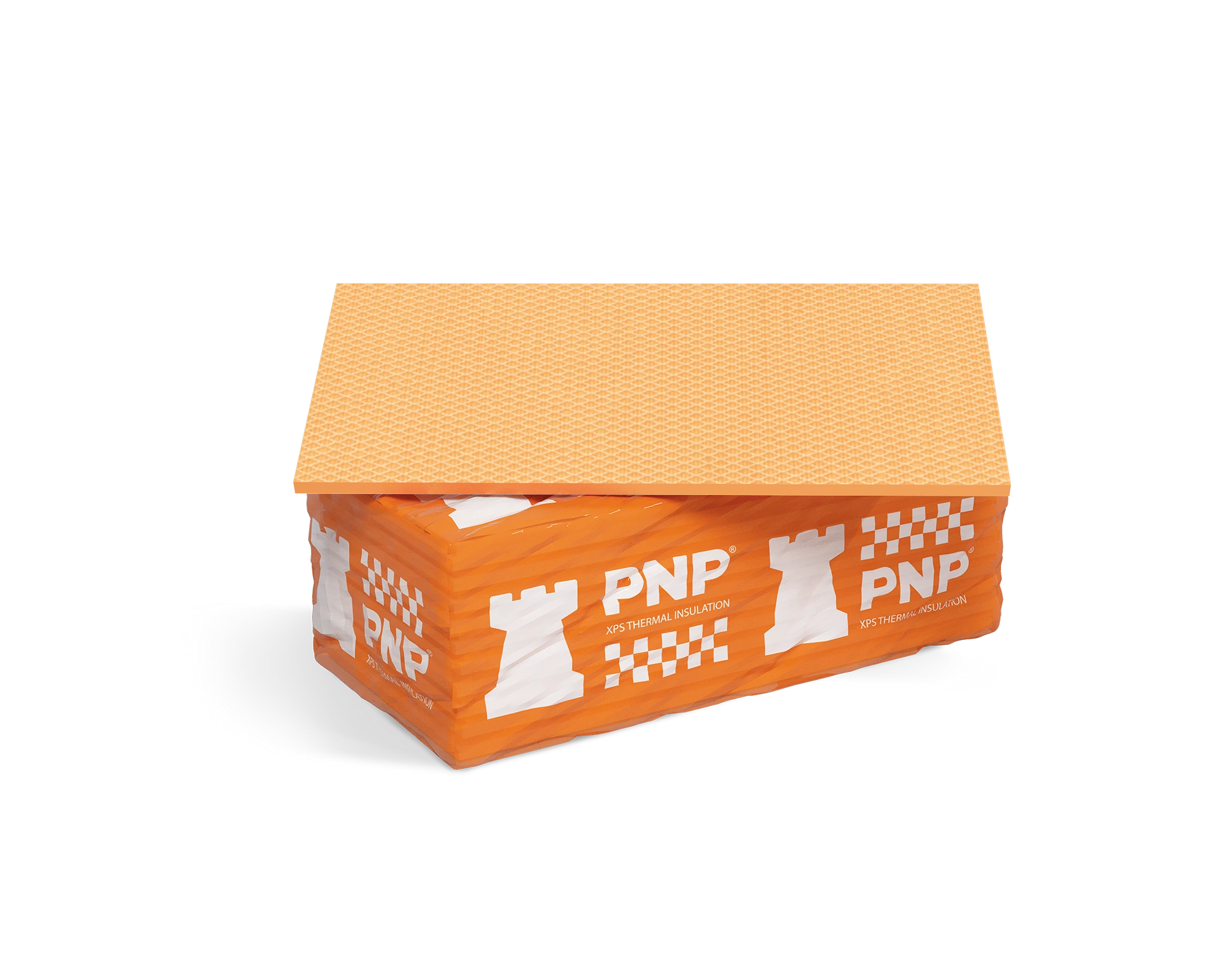
Lygus
Krašto tipas:
Tiesus kraštas (I) / L formos kraštas (L)
Produkto standartas:
EN 13164:2012+A1:2015

Patikima standžioji ekstruduoto polistireno plokštė, sukurta šiluminei izoliacijai didelės apkrovos konstrukcinėse sistemose – XPS 300 užtikrina išskirtines gniuždymo charakteristikas pamatams, grindims ir eksploatuojamiems stogams. Gaminama 20–200 mm (ir didesnio pagal užsakymą) storio, PNP XPS 300 jungia stabilų žemą šilumos laidumą su aukštomis mechaninėmis savybėmis.

Aprašymas

PNP XPS 300 – tai aukštos kokybės šiluminės izoliacijos medžiaga (naujausios kartos XPS), pagaminta iš bendrojo naudojimo polistireno, pasižyminti lygia paviršiaus apdaila ir vienalyte uždarų porų struktūra. Deklaruotasis šilumos laidumo koeficientas (λD) – 0,034 W/m·K plokštėms, kurių storis 20–100 mm, ir 0,035 W/m·K – 120–150 mm storio plokštėms. Gniuždymo stipris įvertintas CS(10\Y) 300 (≥ 300 kPa) plokštėms, storesnėms nei 30 mm, ir CS(10\Y) 200 (≥ 200 kPa) – 20–30 mm storio plokštėms. Ilgalaikė vandens sugertis visiškai panardinus įvertinta WL(T) 0,7 (≤ 0,7 tūrio %). Plokštės atitinka EN 13164:2012+A1:2015 standartą ir visiškai atitinka REACH reikalavimus – jose nėra HBCDD ar kitų itin pavojingų medžiagų.

Taikymas

  • Pamatų ir pamatų plokščių šiluminė izoliacija
  • Grindų ir grindų pogrindžio izoliacija apkrovas laikančiose konstrukcijose
  • Stilobatai ir eksploatuojami stogai
  • Grindinio dangos sistemos ir aplinkos tvarkymas
  • Izoliacija po sunkiasvorėmis dangomis ir eismo zonose

Privalumai

  • Stabilus žemas šilumos laidumas (λD 0,034–0,035 W/m·K)
  • Išskirtinis gniuždymo stipris – CS(10\Y) ≥ 300 kPa plokštėms, storesnėms nei 30 mm
  • Praktiškai nulinė vandens sugertis – vienalytė uždarų porų struktūra (WL(T) ≤ 0,7 tūrio %)
  • Absoliuti biostabilumas ir patvirtintas ilgalaikis patvarumas
  • Atitinka REACH reikalavimus ir yra aplinkai atsakingas – gamyboje nenaudojami ozono sluoksnį ardantys putokšliai
  • Platus darbinių temperatūrų diapazonas: nuo −70 °C iki +75 °C
XPS 300 — Konstrukcinis pamatas ir grindų šiluminė izoliacija — Techninis
NuosavybėStorio diapazonas / būklėDeklaruojama vertė
Gniuždymo stipris / gniuždomosios įtempės esant 10 % deformacijai, CS(10\Y)20–30 mmCS(10\Y) 200 (≥200 kPa)
Gniuždymo stipris / gniuždomosios įtempės esant 10 % deformacijai, CS(10\Y)>30 mmCS(10\Y) 300 (≥300 kPa)
Atsparumas ugniai, klasėE
Deklaruojamas šiluminio laidumo koeficientas λD, W/(m·K)20–100 mm0,034
Deklaruojamas šiluminio laidumo koeficientas λD, W/(m·K)120–150 mm0,035
Ilgalaikė vandens absorbcija visiškai panardinant, WL(T)WL(T)0,7 (≤ 0,7 [Vol.-%])
Ilgalaikė vandens sugertis difuzijos būdu, WD(V)WD(V) 3 (≤ 3,0 [Vol-%])
Matmenų stabilumas nurodytomis sąlygomis, DSDS(70,90)
Gniuždomasis valkšnumas, GV>30 mmCC(2/1,5/50)130
Tempiamasis stipris, statmenas plokštumoms, TRTR 400
Atsparumas šalčio ir atšilimo ciklams, FTCDFTCD 1 (≤1 [Vol-%])
Storio tolerancija, klasėT1
Darbinė temperatūra, °C−70 … +75 °C
Deformation under specified compressive load and temperature conditionsDL T(2)5
Paviršiaus tipasLygus
Produkto standartasEN 13164:2012+A1:2015

Vertės pagal galiojantį techninių duomenų lapą.

XPS 300 — Konstrukcinis pamatas ir grindų šiluminė izoliacija — Pakuotė
Nominali storis, mmDeklaruojamoji šiluminė varža RD, m²·K/WPlokščių pakuotėje, vnt.Pakuotės plotas, m²Pakuotės tūris, m³
200,552015,000,3000
300,85139,750,2925
401,15107,500,3000
501,4586,000,3000
601,7564,500,2700
802,3553,750,3000
1002,9043,000,3000
1203,4032,250,2700
1504,2521,500,2250

Transport dimensions for boards with L-edge: 615×1265 mm

XPS 300 — Konstrukcinis pamatas ir grindų šiluminė izoliacija

Techninių duomenų lapas

pnp_xps300-300TB_600x1250_techcard_lt(20.07.2026).pdf

PDF · LT

XPS 300 — Konstrukcinis pamatas ir grindų šiluminė izoliacija

Eksploatacinių savybių deklaracija

DoP PNP XPS 300 EMI_lt (U).pdf

PDF · LT

XPS 300 — Konstrukcinis pamatas ir grindų šiluminė izoliacija: is it the right board?

When to use it

  • Insulating foundation slabs and strip footings where boards thicker than 30 mm must carry ≥ 300 kPa compressive load (CS(10\Y)300).
  • Floor insulation beneath cement-sand screeds in residential or commercial buildings with standard occupancy loads.
  • Slab-on-grade construction where the board lies directly on compacted granular fill and must resist permanent ground pressure.
  • Accessible flat roofs, terraces, and stylobates with pedestrian traffic and a smooth surface finish is acceptable.
  • Paving systems and landscaped podiums where a smooth, dimensionally stable board is placed under paving slabs or crushed-stone bedding.
  • Thermal-insulating inserts in reinforced concrete lintels and slab edges where a compact, high-strength board is required to bridge cold-bridge details.
  • Expansion-joint filler applications where a rigid, dimensionally stable XPS board is needed between connected structure sections.

When not to use it

  • Do not use XPS 300 in ETICS plaster or render systems, because its smooth skin does not provide the mechanical key required for adhesive compounds to bond reliably.
  • Do not use XPS 300 where the design compressive load exceeds 300 kPa (for boards >30 mm) or 200 kPa (for 20–30 mm boards), because the declared strength class will be exceeded.
  • Do not use XPS 300 on flat roofs, terraces, or green roofs where drainage fall must be created within the insulation layer, because the boards are parallel-faced and provide no slope.
  • Do not use XPS 300 on facades, clinker-tile systems, or any application where plaster, render, or tile adhesive is applied directly to the board face, because the smooth surface lacks the texture needed for adhesion.
  • Do not use XPS 300 where the project fire specification requires Euroclass E or better and only XPS 300 qualifies, but do verify: for applications where Euroclass F is the lower limit, note that XPS 300 is already rated Euroclass E — a higher classification — so it meets that requirement; however, always confirm local fire regulations with a qualified designer.
  • Do not use XPS 300 under industrial floors, vehicle-access roofs, or road pavements where the design load demands ≥ 400 kPa, because a higher-grade board is required.

Choose instead

  • For ETICS plaster/render facades (smooth surface unsuitable): choose XPS 300 W (waffled surface, same 300 kPa strength) or XPS 300 MG (milled and grooved surface, 300 kPa).
  • For loads exceeding 300 kPa (industrial floors, heavily trafficked areas): choose XPS 400 (400 kPa) or XPS 500 (500 kPa) or XPS 700 (700 kPa) depending on the design requirement.
  • For flat roofs or terraces requiring a built-in drainage fall: choose XPS 300 SLOPE (factory-tapered boards, 300 kPa).
  • For facades or bonded systems where plaster or tile adhesive is applied directly to the board: choose XPS 300 W (waffled) or XPS 300 MG (milled and grooved).
  • For vehicle-access roofs or road pavements exceeding 300 kPa: choose XPS 500 or XPS 700.

When does XPS 300 deliver the right balance of strength and simplicity?

XPS 300 is the standard structural-grade board in the PNP XPS range, carrying a declared compressive strength of 300 kPa at 10 % deformation or yield (CS(10\Y)300) for thicknesses above 30 mm, and 200 kPa for the 20–30 mm thickness range. This makes it the appropriate choice for the majority of load-bearing insulation positions in conventional construction: foundation slabs, slab-on-grade floors, accessible roof terraces with pedestrian use, and paving beds — applications where the insulation must carry real structural load without deforming over time.

The board also carries a compressive creep classification of CC(2/1.5/50)130 for thicknesses above 30 mm, meaning it is tested for long-term deformation under sustained load — a critical property beneath screeds and ground slabs where the insulation remains permanently compressed. Its tensile strength perpendicular to faces is TR 400, freeze–thaw resistance is FTCD1, and long-term water absorption by total immersion is WL(T)0.7 (≤ 0.7 Vol.-%), confirming suitability for below-ground and inverted-roof positions subject to moisture.

What XPS 300 does not provide is a prepared adhesion surface. Its smooth skin is optimised for load distribution and direct contact with concrete or granular fill, not for bonding renders or adhesive compounds. Where a finish layer must be applied directly to the board face, the waffled XPS 300 W or milled-and-grooved XPS 300 MG variants are the correct substitutes — they share the same strength class while offering the surface texture that adhesive systems require.

Finally, XPS 300 is parallel-faced. On flat roofs where drainage fall must be created within the insulation layer itself, XPS 300 SLOPE (factory-tapered boards with the same 300 kPa strength) eliminates the need for a separate slope screed. A qualified designer should confirm the appropriate product, thickness, and compressive-load class for any specific project — refer to the current TDS and DoP for all declared values.

XPS 300 — Konstrukcinis pamatas ir grindų šiluminė izoliacija — frequently asked questions

What is the compressive strength of XPS 300, and does it apply across all thicknesses?

For boards thicker than 30 mm, XPS 300 is rated CS(10\Y)300, meaning ≥ 300 kPa at 10 % deformation or yield (EN 826). For 20–30 mm boards the declared class is CS(10\Y)200 (≥ 200 kPa). Always verify the applicable thickness range with the current TDS before specifying.

Can XPS 300 be used under a cement-sand screed in a residential floor?

Yes — floor insulation beneath cement-sand screeds in load-bearing assemblies is one of the primary applications of XPS 300. The board's 300 kPa compressive strength and CC(2/1.5/50)130 creep classification (for thicknesses above 30 mm) support this use, but the designer should confirm the required thickness and load class for the specific project.

Is XPS 300 suitable for ETICS or plastered facade systems?

No. XPS 300 has a smooth skin that does not provide the mechanical key needed for plaster, render, or tile adhesive. For bonded facade systems, choose XPS 300 W (waffled surface) or XPS 300 MG (milled and grooved surface) instead.

What fire classification does XPS 300 carry?

XPS 300 is classified Euroclass E for reaction to fire under EN 13164:2012+A1:2015. This is a higher classification than Euroclass F but does not satisfy requirements for Euroclass D or above. Always confirm the fire performance requirement for your application with a qualified designer and the local building regulations.

How does XPS 300 perform in permanently wet or below-ground conditions?

Long-term water absorption by total immersion is WL(T)0.7 (≤ 0.7 Vol.-%), and freeze–thaw resistance is FTCD1 (≤ 1 Vol.-%), confirming that the board's thermal and mechanical properties remain stable in below-ground and moisture-exposed positions. See the current TDS and DoP for full declared values.

Can XPS 300 create a drainage fall on a flat roof?

No — XPS 300 boards are parallel-faced and cannot form a slope. For flat roofs, terraces, or green roofs where drainage fall must be built into the insulation layer, use XPS 300 SLOPE (factory-tapered boards, 300 kPa compressive strength) as a top layer, but you can reach the effective thickness of thermal insulation by combining XPS 300 and XPS 300 Slope boards.

What should I choose if my design loads exceed 300 kPa?

XPS 300 should not be used where the design compressive load exceeds its declared class. PNP XPS offers XPS 400 (400 kPa), XPS 500 (500 kPa), and XPS 700 (700 kPa) for higher-load applications such as industrial floors, vehicle-access decks, and road construction. A structural engineer should determine the required class.

What thicknesses are available for XPS 300?

Standard packaged thicknesses are 20, 30, 40, 50, 60, 80, 100, 120, and 150 mm; thicker boards (TB format) are available — see the current TDS for details. Boards are 1250 × 600 mm nominally, available with straight (I) or L-edge profiles.

Taip pat žiūrėkite

XPS 150 W X-Grip — Puikus sukibimas Šiluminė izoliacija

X-Grip · 150 kPa

XPS 150 W X-Grip — Puikus sukibimas Šiluminė izoliacija

Rinkitės XPS 150 W X-Grip, kai tepate sunkius tinko mišinius, plytelių klijus ar ETICS sistemas ant sienų, rūsių, grindų ar stogų, kur reikalingas ypatingai stiprus izoliacijos sukibimas.

Daugiau informacijos

XPS 300 W — Didelio sukibimo struktūrinis šiluminis izoliavimas

W (Waffle) · 300 kPa

XPS 300 W — Didelio sukibimo struktūrinis šiluminis izoliavimas

Naudokite XPS 300 W prieinamuose stogų dangose arba pakylose, kur apkrovos laikomoji galia ir maksimalus membranos ar dangų sukibimas yra kritiškai svarbūs.

Daugiau informacijos

XPS 500 — Pramoninė ir aukšto slėgio šiluminė izoliacija

Smooth · 500 kPa

XPS 500 — Pramoninė ir aukšto slėgio šiluminė izoliacija

Naudokite XPS 500 ten, kur didelės statinės ir dinaminės apkrovos reikalauja maksimalaus atsparumo gniuždymui – pramoninėse grindyse, automobilių stovėjimo aikštelių dangose ir kelių tiesyboje.

Daugiau informacijos

XPS 700 — Ekstremalių apkrovų ir civilinės inžinerijos šiluminė izoliacija

Smooth · 700 kPa

XPS 700 — Ekstremalių apkrovų ir civilinės inžinerijos šiluminė izoliacija

Naudokite XPS 700 ten, kur ypač svarbus didžiausias gniuždymo stipris – sunkiosios civilinės infrastruktūros, pramoninių pamatų ir didelės apkrovos kelių tiesimo projektuose.

Daugiau informacijos

XPS 300 SLOPE — Nuožulnaus stogo drenažo šiluminė izoliacija

Slope · 300 kPa

XPS 300 SLOPE — Nuožulnaus stogo drenažo šiluminė izoliacija

Naudokite XPS 300 SLOPE plokščiuose stogose, terasose ir žaliuosiuose stogose, kur viensluoksnis sprendimas turi užtikrinti nuotėkio nuolydį ir ilgalaikę šiluminę izoliaciją.

Daugiau informacijos
Eiti į katalogą
Susisiekite su mumis

Susisiekite su mumis

Palikite savo kontaktinius duomenis ir mes susisieksime su jumis kuo greičiau.

Susisiekite su mumis

Palikite savo kontaktinius duomenis ir mes susisieksime su jumis kuo greičiau.

Jūsų užklausa išsiųsta

Netrukus su jumis susisieksime