Liigu põhisisu juurde

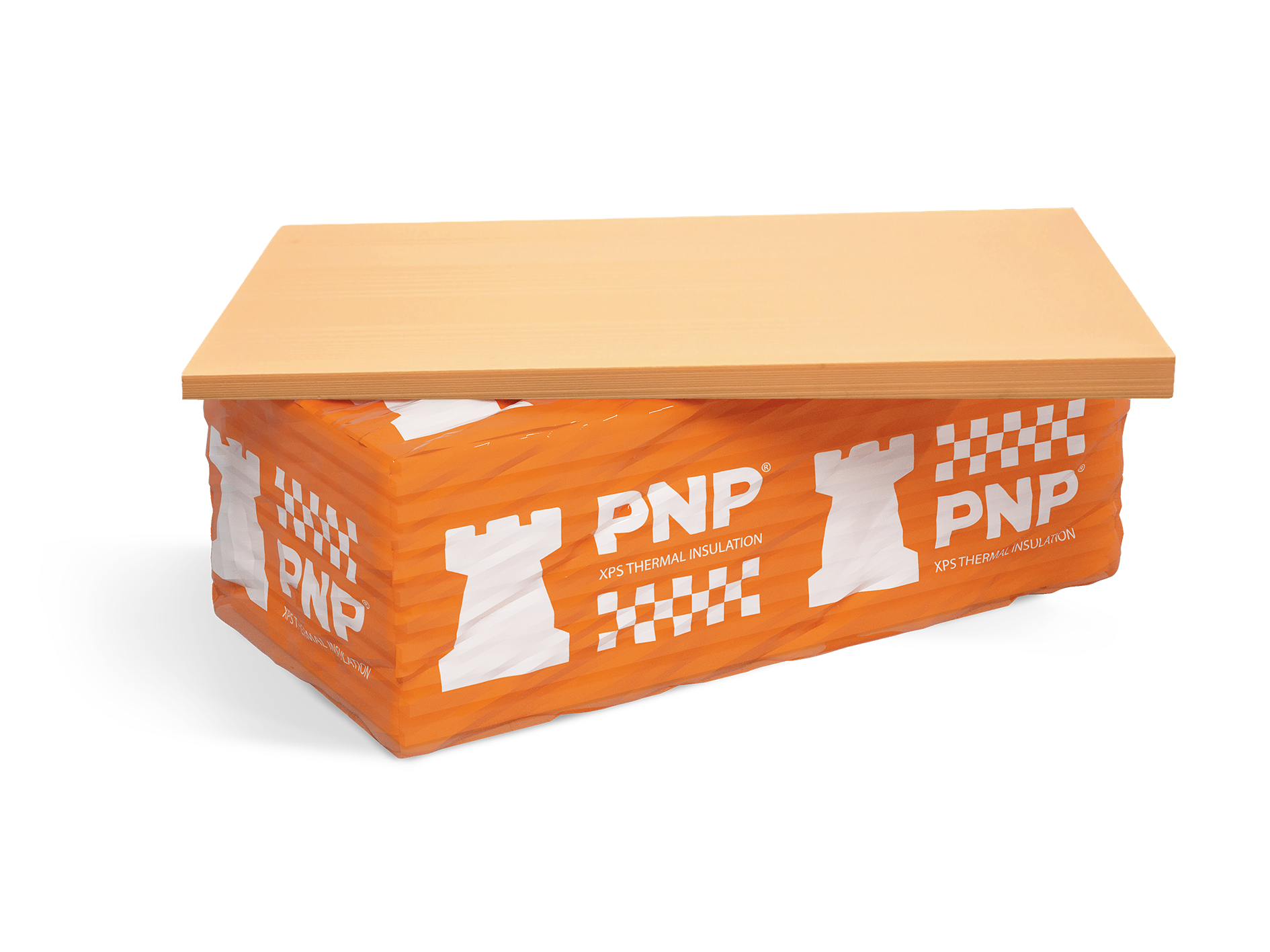
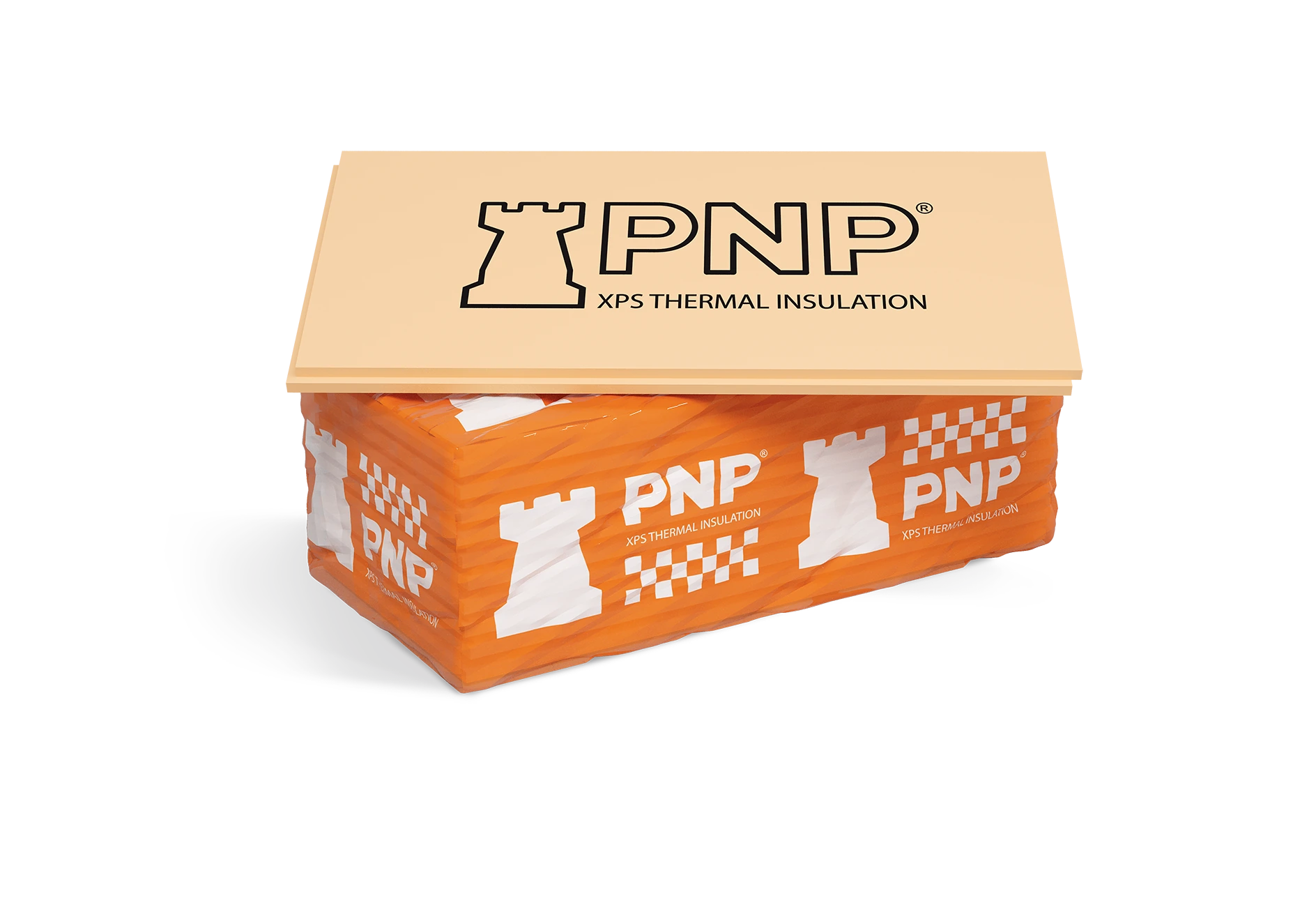
XPS 500 — Tööstuslik ja kõrge surve soojusisolatsioon

Kasutage XPS 500 seal, kus rasked staatilised ja dünaamilised koormused nõuavad maksimaalset survetugevust – tööstuspõrandatel, parkimiskorrustel ja teekonstruktsioonides.

Survetugevus, kPa:
500
Deklareeritud soojusjuhtivus λD, W/(m·K):
0,034–0,035
Tulekahju reaktsiooniklass:
E
Plaadi suurus (pikkus × laius), mm:
1250 × 600
Nimipaksus, mm:
40–120
Pinna tüüp:
Sile
Serva tüüp:
Sirge serv (I) / L-kujuline serv (L)
Tootestandard:
EN 13164:2012+A1:2015

Tugev jäik ekstrudeeritud polüstüreenvahvplaat, mis on projekteeritud soojusisolatsiooniks konstruktsioonides, mida koormavad erakordselt suured survekoormused, sealhulgas tööstuspõrandad ja teede ehitus. PNP XPS 500 on saadaval paksustes 40 mm kuni 200 mm (ja tellimuse alusel TB-formaadis ka paksemalt), tagades püsivalt madala soojusjuhtivuse koos survetugevusega ≥ 500 kPa.

Kirjeldus

PNP XPS 500 on kõrgetasemeline soojusisolatsioonimaterjal (uusima põlvkonna XPS), mis on valmistatud üldotstarbelistest polüstüreenist. Sellel on sile pind ja homogeenne suletud-raku struktuur. Deklareeritud soojusjuhtivus (λD) on 0,034 W/m·K paksuste 40–100 mm korral ja 0,035 W/m·K 120 mm korral (standardformaat); TB-variant säilitab λD 0,034 W/m·K paksuste 100–200 mm korral ning 0,035 W/m·K paksuste 210–290 mm ja 330–360 mm korral. Survetugevus vastab nõudele CS(10\Y) 500 (≥ 500 kPa), tõmbetugevus risti pindadega on TR 400 ja pikaajaline veeimavus täisimmutamisel on hinnatud WL(T) 0,7 (≤ 0,7 Vol.-%). Plaadid vastavad standardile EN 13164:2012+A1:2015 ning on täielikult REACH-nõuetekohased, sisaldamata HBCDD-d ega muid väga ohtlikke aineid.

Rakendused

  • Tööstuspõrandad ja tugevalt koormatud põrandaplaadid, mis nõuavad kõrget survetugevust
  • Tee- ja taristuehitus, kus on nõutud kõrge kandevõime
  • Lamekatuse ja ümberpööratud katuse soojustus liiklus- või seadmekoormate all
  • Külmhoone- ja külmutusrajatiste põrandad ja seinad
  • Vundamendi ja keldri ümbermõõduline soojustus suure pinnasurve tingimustes

Eelised

  • Erakordne survetugevus — CS(10\Y) ≥ 500 kPa, sobib kõige nõudlikumatele konstruktsioonirakendustele
  • Püsivalt madal soojusjuhtivus (λD 0,034–0,035 W/m·K) kogu paksuste vahemikus
  • Praktiliselt null veeimavust — homogeenne suletud-raku struktuur (WL(T) ≤ 0,7 Vol.-%)
  • Täielik biostbiilsus ja tõestatud pikaajaline vastupidavus
  • REACH-nõuetekohane ja keskkonnasõbralik — tootmisel ei kasutata osooni kahandavaid paisutusvahendeid
  • Lai töötemperatuuride vahemik: −70 °C kuni +75 °C
XPS 500 — Tööstuslik ja kõrge surve soojusisolatsioon — Tehniline
KinnistuPaksuse vahemik / seisundDeklareeritud väärtus
Survetugevus / survedeformatsioon 10% deformatsiooni korral, CS(10\Y)CS(10\Y)500 (≥500 kPa)
Tulekahju reaktsiooniklassE
Deklareeritud soojusjuhtivus λD, W/(m·K)40–100 mm0,034 W/m·K
Deklareeritud soojusjuhtivus λD, W/(m·K)120 mm0,035 W/m·K
Pikaajaline vee imendumine täieliku sukeldamise teel, WL(T)WL(T)0,7 (≤ 0,7 [Vol.-%])
Pikaajaline vee imendumine difusiooni teel, WD(V)WD(V)3 (≤ 3,0 [Vol-%])
Mõõtmete stabiilsus määratud tingimustel, DSDS(70,90)
Surveline kreepimine, CCCC(2/1,5/50)150
Tõmbetugevus pindadega risti, TRTR 400
Külmakindlus, FTCDFTCD1 (≤1 [Vol-%])
Deformation under specified compressive load and temperature conditionsDLT(2)5
Paksuse tolerants, klassT1
Töötemperatuur, °C−70 … +75 °C
Pinna tüüpSile
Serva tüüpL-edge
TootestandardEN 13164:2012+A1:2015

Väärtused vastavalt kehtivale tehnilisele andmelehele.

XPS 500 — Tööstuslik ja kõrge surve soojusisolatsioon — Pakend
Nimipaksus, mmDeklareeritud soojustakistus R<sub>D</sub>, m²·K/WPlaate pakis, tkPaki pindala, m²Paki maht, m³
401,15107,500,3000
501,4586,000,3000
601,7564,500,2700
802,3553,750,3000
1002,9043,000,3000
1203,4032,250,2700

Transport dimensions for boards with L-edge: 615×1265 mm.

Dokumendid ilmuvad automaatselt pärast PNP Motoris kinnitamist.
XPS 500 — Tööstuslik ja kõrge surve soojusisolatsioon: is it the right board?

When to use it

  • The floor slab or pavement must carry static or dynamic loads that require a certified compressive strength of 500 kPa (CS(10\Y)500), such as industrial production floors, logistics-hall slabs, or heavy-racking warehouse floors.
  • An inverted or warm flat roof will be trafficked by vehicles, service plant, or heavy access equipment, where 300 kPa boards would be under-specified.
  • Road or infrastructure construction requires thermally insulating the subgrade against frost heave on heavily loaded carriageways or access roads.
  • Cold-store and refrigeration facility floors must simultaneously resist high point loads from racking or forklift traffic and maintain thermal performance over the life of the facility.
  • A foundation slab or basement floor is subject to concentrated equipment loads or column reactions that exceed the capacity of XPS 300 or XPS 400.
  • Long-term creep deformation must be controlled to ≤ 2 % over 50 years at 1.5 % strain: the declared CC(2/1,5/50)150 value of XPS 500 supports this requirement (verify load versus creep limit with the TDS and a qualified structural engineer).
  • The project specification explicitly calls for EN 13164 class CS(10\Y)500 insulation board and the smooth surface and L-edge profile are compatible with the assembly detail.

When not to use it

  • The application is a standard residential or commercial floor slab where design loads do not justify CS(10\Y)500, because XPS 300 or XPS 400 already covers the structural requirement at lower cost.
  • The insulation board will be bonded or rendered directly (ETICS, plaster, tile adhesive), because XPS 500 has a smooth skin that does not provide the mechanical key required for adhesion systems.
  • A factory-formed roof drainage fall is needed, because XPS 500 is not available in a tapered SLOPE format.
  • The project requires boards thinner than 40 mm or in the 130–150 mm range in the standard format, as the published thickness range for XPS 500 is 40–120 mm (TB format available on request — see current TDS for exact range).
  • The budget or specification requires only Euroclass F reaction-to-fire, because XPS 500 is classified Euroclass E; if a lower fire class is acceptable, a lower-strength grade avoids potential over-specification.

Choose instead

  • For standard residential or light commercial floors where 500 kPa is not required, choose XPS 300 (300 kPa, Euroclass E) or XPS 400 (400 kPa, Euroclass E).
  • For ETICS, plaster, render or tile-adhesive facade and wall systems requiring a keyed surface, choose XPS 300 W (waffled, 300 kPa) or XPS 150 W X-Grip (waffled, 150 kPa) depending on the structural requirement.
  • For flat roofs or terraces where a built-in drainage fall is needed, choose XPS 300 SLOPE (factory-tapered, 300 kPa).
  • For applications needing boards below 40 mm or thicknesses outside the XPS 500 standard range, choose XPS 300 (available from 20 mm) or XPS 700 (available from 20 mm) if higher strength is required at thinner sections.
  • For extreme civil-engineering or infrastructure loads exceeding 500 kPa, choose XPS 700 (700 kPa, CC(2/1,5/50)210).

When do you really need 500 kPa?

XPS 500 sits between XPS 400 (400 kPa) and XPS 700 (700 kPa) in the PNP range. Its declared compressive strength of CS(10\Y)500 — meaning ≥ 500 kPa at 10 % deformation or yield per EN 826 — is certified under EN 13164:2012+A1:2015 and confirmed in the DoP. This figure represents the load at which the board deforms by 10 % of its thickness, not a safety working stress; the actual design value used in calculations depends on load duration, safety factors, and the applicable national standard. A qualified structural or geotechnical engineer must verify that XPS 500 is the appropriate grade for any specific assembly.

The key differentiator versus XPS 300 is the compressive creep class: XPS 500 is rated CC(2/1,5/50)150, meaning long-term creep deformation remains within 2 % over 50 years at a sustained stress of 150 kPa. This supports its use beneath industrial floor slabs and road sub-bases where decades of continuous load must not cause measurable settlement in the insulation layer. XPS 300 carries CC(2/1,5/50)130 — adequate for most building floors, but lower than XPS 500 in both short-term capacity and creep limit.

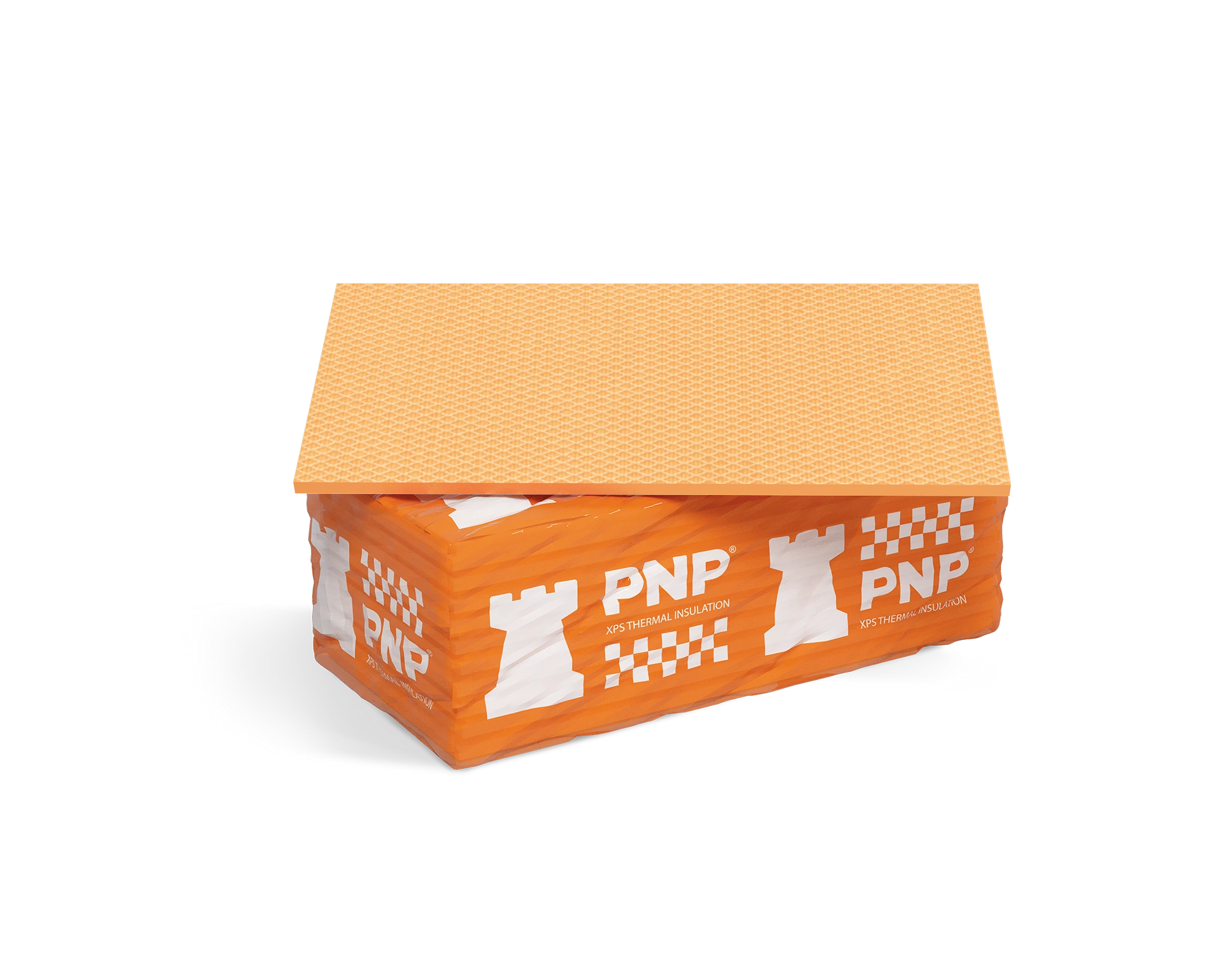
XPS 500 is produced with a smooth skin and L-edge profile, in thicknesses of 40–120 mm in the standard format (TB format for greater thicknesses — see current TDS). The smooth surface is well-suited to load-bearing assemblies where the board sits beneath a screed, concrete slab, or road base layer, but it is not intended for direct adhesive or render bonding. λD is 0.034 W/(m·K) for 40–100 mm and 0.035 W/(m·K) for 120 mm, so thermal performance is essentially identical to other PNP XPS grades — the selection criterion is structural, not thermal.

In practice, XPS 500 is most commonly specified for industrial logistics floors, vehicle-trafficked inverted roofs, cold-store floors under racking loads, and frost-protection layers in road construction. For loads beyond 500 kPa, XPS 700 is the next step in the PNP range. For any application where loads are at or just above the XPS 300 or XPS 400 threshold, confirm the governing design load, safety factor, and creep requirement with the project engineer before upgrading grades.

XPS 500 — Tööstuslik ja kõrge surve soojusisolatsioon — frequently asked questions

What does CS(10\Y)500 actually mean on the XPS 500 data sheet?

It means the board has a certified compressive strength of ≥ 500 kPa measured at 10 % deformation or at yield — whichever comes first — in accordance with EN 826. This is a characteristic value; the design stress used in structural calculations must be derived by a qualified engineer applying the appropriate partial factors and load-duration corrections for the project.

Can XPS 500 be used directly under a render or ETICS system?

No. XPS 500 has a smooth skin that does not provide the mechanical key required for plaster, render, or tile-adhesive systems. For bonded or rendered facades use a waffled-surface board such as XPS 300 W, or a milled-and-grooved board such as XPS 300 MG.

How does XPS 500 compare to XPS 700 for road insulation?

XPS 500 is rated CS(10\Y)500 with a creep class of CC(2/1,5/50)150, while XPS 700 is rated CS(10\Y)700 with CC(2/1,5/50)210. XPS 700 is appropriate where design loads or national road-construction specifications require the higher class; the choice between them must be confirmed by a qualified designer against the project-specific load model.

What thickness range is XPS 500 available in?

The standard format is available in 40, 50, 60, 80, 100, and 120 mm. A TB (thick-board) format extends the range further — see the current TDS for the exact TB thickness steps, as these are subject to production scheduling.

Is XPS 500 suitable for cold-store and freezer-room floors?

Yes — the data sheet lists cold-store and refrigeration facility floors and walls as a stated application. The closed-cell structure gives a long-term water absorption by immersion of WL(T)0,7 (≤ 0.7 Vol.-%), which supports durability in permanently cold and potentially damp conditions; thermal and structural design must be confirmed with the TDS and a specialist engineer.

What is the declared thermal conductivity of XPS 500?

λD is 0.034 W/(m·K) for boards in the 40–100 mm thickness range and 0.035 W/(m·K) for the 120 mm board (standard format). For TB-format thicknesses, consult the current TDS.

What reaction-to-fire class does XPS 500 carry, and does it meet project fire requirements?

XPS 500 is classified Euroclass E under EN 13164:2012+A1:2015. Whether this satisfies the fire requirements of a specific project depends on national building regulations, the application detail, and any system-level fire classification — this must be verified by a qualified fire or building-control specialist.

Where can I find the Declaration of Performance and full technical data for XPS 500?

The DoP (DoP PNP XPS 500_en (U), updated 2025-07-22) and TDS (pnp_xps500-500TB_600x1250_techcard_en, updated 2026-07-20) are available via the PNP documentation library at /documentation/. For project-specific queries contact sales@pnpinsulation.com.

Vaata ka

XPS 150 W X-Grip — Ülim Nakkuvus Soojusisolatsioon

X-Grip · 150 kPa

XPS 150 W X-Grip — Ülim Nakkuvus Soojusisolatsioon

Valige XPS 150 W X-Grip raskete krohvide, plaadiliimide või ETICS-süsteemide paigaldamisel seintele, keldritele, põrandatele või katustele, kus nõutakse erakordset soojustuse kleepuvust.

Loe lähemalt

XPS 300 — Konstruktsiooni alus- ja põrandakütte soojusisolatsioon

Smooth · 300 kPa

XPS 300 — Konstruktsiooni alus- ja põrandakütte soojusisolatsioon

Kasutage XPS 300 seal, kus suured koormused nõuavad usaldusväärset soojusisolatsiooni – vundamentides, põrandaplaatides ja ligipääsetavatel katustel.

Loe lähemalt

XPS 300 W — Kõrge adhesiivsusega struktuurne soojusisolatsioon

W (Waffle) · 300 kPa

XPS 300 W — Kõrge adhesiivsusega struktuurne soojusisolatsioon

Kasutage XPS 300 W-d ligipääsetavatel katustel või podiumplatvormidel, kus koormust kandev jõudlus ning membraanide või katete maksimaalne adhesioon on kriitilise tähtsusega.

Loe lähemalt

XPS 700 — Äärmuskoormused ja tsiviilehituse soojusisolatsioon

Smooth · 700 kPa

XPS 700 — Äärmuskoormused ja tsiviilehituse soojusisolatsioon

Kasutage XPS 700 seal, kus maksimaalne survetugevus on kriitilise tähtsusega – sealhulgas rasketaristu, tööstuslike vundamentide ja suure koormusega teehitusprojektide puhul.

Loe lähemalt

XPS 300 SLOPE — Kaldkatuse drenaaži soojustus

Slope · 300 kPa

XPS 300 SLOPE — Kaldkatuse drenaaži soojustus

Kasutage XPS 300 SLOPE'i lamekatustel, terrassidel ja haljaskatustel, kus ühe kihiga lahendus peab tagama drenaažikalde ja püsiva soojusisolatsiooni.

Loe lähemalt
Mine kataloogi
Võtke meiega ühendust

Võtke meiega ühendust

Jäta oma kontaktandmed ja võtame sinuga esimesel võimalusel ühendust.

Võtke meiega ühendust

Jäta oma kontaktandmed ja võtame sinuga esimesel võimalusel ühendust.

Teie päring on saadetud

Võtame teiega peagi ühendust