Pāriet uz galveno saturu

XPS 300 — Konstrukcijas pamatu un grīdas siltumizolācija

Izmantojiet XPS 300 vietās, kur lielas slodzes prasa uzticamu siltumizolāciju — pamatos, grīdas plātnēs un pieejamos jumtos.

Spiedes izturība, kPa:
200–300
Deklarētā siltumvadītspēja λD, W/(m·K):
0,034–0,035
Reakcija uz uguni, klase:
E
Plates izmērs (garums × platums), mm:
1250 × 600
Nominālais biezums, mm:
20–150
Virsmas veids:
Gluds
Malas tips:
Taisna mala (I) / L-veida mala (L)
Produkta standarts:
EN 13164:2012+A1:2015

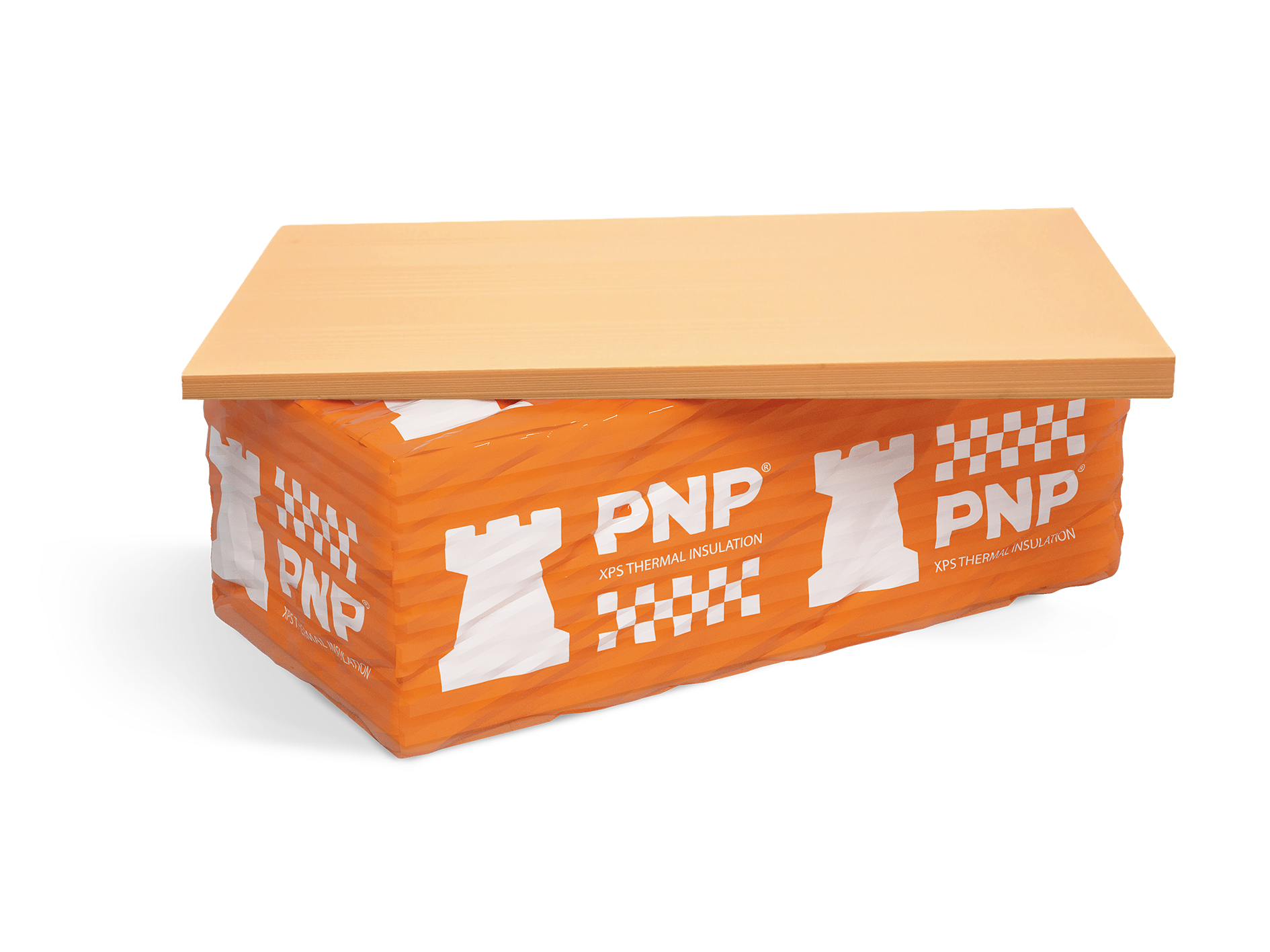
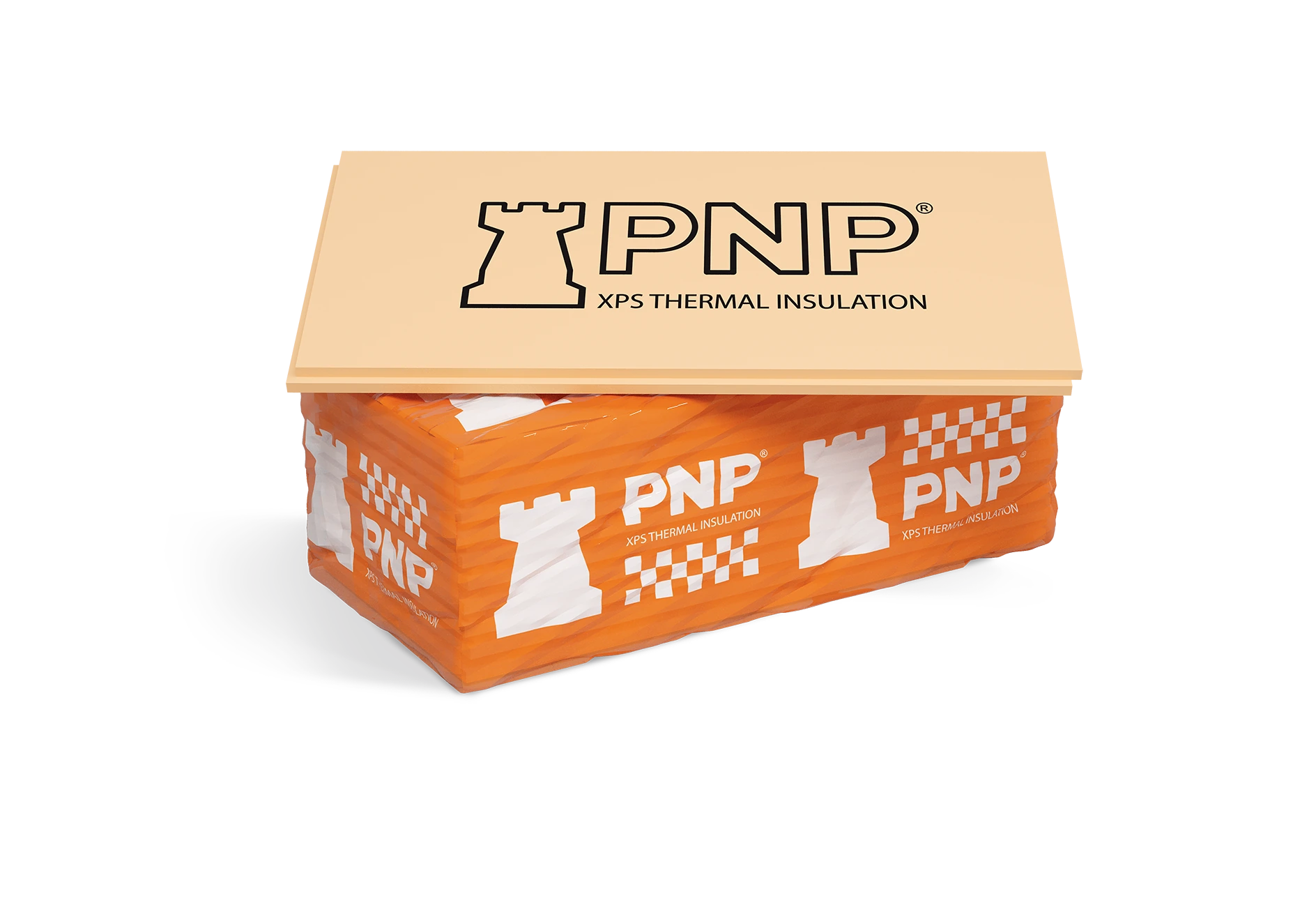
Izturīga, stingra ekstrudētā polistirola plāksne, kas izstrādāta termoizolācijai augstas slodzes nesošajās konstrukcijās — XPS 300 nodrošina izcilu drukājamo pretestību pamatiem, grīdām un pieejamiem jumtiem. Pieejama biezumos no 20 mm līdz 200 mm (un vairāk — pēc pieprasījuma), PNP XPS 300 apvieno stabili zemu siltumvadītspēju ar izcilu mehānisko izturību.

Apraksts

PNP XPS 300 ir augstveiktspējas termoizolācijas materiāls (jaunākās paaudzes XPS), ražots no vispārējas nozīmes polistirola ar gludu virsmu un viendabīgu slēgtu šūnu struktūru. Deklarētā siltumvadītspēja (λD) ir 0,034 W/m·K plātnēm ar biezumu 20–100 mm un 0,035 W/m·K plātnēm ar biezumu 120–150 mm. Drukājamā pretestība ir CS(10\Y) 300 (≥ 300 kPa) plātnēm, kas biezākas par 30 mm, un CS(10\Y) 200 (≥ 200 kPa) plātnēm ar biezumu 20–30 mm. Ilgtermiņa ūdens uzsūkšanās pilnā iegremdēšanā ir vērtēta WL(T) 0,7 (≤ 0,7 tilp.-%). Plāksnes atbilst EN 13164:2012+A1:2015 standartam un pilnībā atbilst REACH prasībām — nesatur HBCDD vai citas īpaši bīstamas vielas.

Pielietojums

  • Pamatu un pamatu plātņu termoizolācija
  • Grīdas un zemgrīdas izolācija nesošajās konstrukcijās
  • Stilobāti un pieejami jumti
  • Seguma sistēmas un labiekārtošana
  • Izolācija zem smagas virsmas apdares un intensīvas satiksmes zonām

Priekšrocības

  • Stabili zema siltumvadītspēja (λD 0,034–0,035 W/m·K)
  • Izcila drukājamā pretestība — CS(10\Y) ≥ 300 kPa plātnēm, kas biezākas par 30 mm
  • Praktiski nulle ūdens uzsūkšanās — viendabīga slēgtu šūnu struktūra (WL(T) ≤ 0,7 tilp.-%)
  • Absolūta biostabilitāte un pierādīta ilgtermiņa izturība
  • Atbilstība REACH prasībām un vides atbildība — ražošanā netiek izmantoti ozona slāni noārdoši pūšanas līdzekļi
  • Plašs darba temperatūras diapazons: −70 °C līdz +75 °C
XPS 300 — Konstrukcijas pamatu un grīdas siltumizolācija — Tehniski
ĪpašumsBiezuma diapazons / stāvoklisDeklarētā vērtība
Saspiešanas stiprība / saspiešanas spriegums pie 10% deformācijas, CS(10\Y)20–30 mmCS(10\Y) 200 (≥200 kPa)
Saspiešanas stiprība / saspiešanas spriegums pie 10% deformācijas, CS(10\Y)>30 mmCS(10\Y) 300 (≥300 kPa)
Reakcija uz uguni, klaseE
Deklarētā siltumvadītspēja λD, W/(m·K)20–100 mm0,034
Deklarētā siltumvadītspēja λD, W/(m·K)120–150 mm0,035
Ilgtermiņa ūdens uzsūkšanās pilnā iegremdēšanā, WL(T)WL(T)0,7 (≤ 0,7 [Vol.-%])
Ilgtermiņa ūdens absorbcija difūzijā, WD(V)WD(V) 3 (≤ 3,0 [Vol-%])
Izmēru stabilitāte noteiktos apstākļos, DSDS(70,90)
Saspiešanas ložņa, CC>30 mmCC(2/1,5/50)130
Stiepes izturība perpendikulāri virsmām, TRTR 400
Saldēšanas–atkausēšanas izturība, FTCDFTCD 1 (≤1 [Vol-%])
Biezuma tolerance, klaseT1
Darba temperatūra, °C−70 … +75 °C
Deformation under specified compressive load and temperature conditionsDL T(2)5
Virsmas veidsGluds
Produkta standartsEN 13164:2012+A1:2015

Vērtības saskaņā ar pašreizējo tehnisko datu lapu.

XPS 300 — Konstrukcijas pamatu un grīdas siltumizolācija — Iepakojums
Nominālais biezums, mmDeklarētā siltumpretestība RD, m²·K/WPlātnes iepakojumā, gab.Iepakojuma platība, m²Iepakojuma tilpums, m³
200,552015,000,3000
300,85139,750,2925
401,15107,500,3000
501,4586,000,3000
601,7564,500,2700
802,3553,750,3000
1002,9043,000,3000
1203,4032,250,2700
1504,2521,500,2250

Transport dimensions for boards with L-edge: 615×1265 mm

XPS 300 — Konstrukcijas pamatu un grīdas siltumizolācija

Tehnisko datu lapa

pnp_xps300-300TB_600x1250_techcard_lv(20.07.2026).pdf

PDF · LV

XPS 300 — Konstrukcijas pamatu un grīdas siltumizolācija

Ekspluatācijas īpašību deklarācija

DoP PNP XPS 300 EMI_lv (U).pdf

PDF · LV

XPS 300 — Konstrukcijas pamatu un grīdas siltumizolācija: is it the right board?

When to use it

  • Insulating foundation slabs and strip footings where boards thicker than 30 mm must carry ≥ 300 kPa compressive load (CS(10\Y)300).
  • Floor insulation beneath cement-sand screeds in residential or commercial buildings with standard occupancy loads.
  • Slab-on-grade construction where the board lies directly on compacted granular fill and must resist permanent ground pressure.
  • Accessible flat roofs, terraces, and stylobates with pedestrian traffic and a smooth surface finish is acceptable.
  • Paving systems and landscaped podiums where a smooth, dimensionally stable board is placed under paving slabs or crushed-stone bedding.
  • Thermal-insulating inserts in reinforced concrete lintels and slab edges where a compact, high-strength board is required to bridge cold-bridge details.
  • Expansion-joint filler applications where a rigid, dimensionally stable XPS board is needed between connected structure sections.

When not to use it

  • Do not use XPS 300 in ETICS plaster or render systems, because its smooth skin does not provide the mechanical key required for adhesive compounds to bond reliably.
  • Do not use XPS 300 where the design compressive load exceeds 300 kPa (for boards >30 mm) or 200 kPa (for 20–30 mm boards), because the declared strength class will be exceeded.
  • Do not use XPS 300 on flat roofs, terraces, or green roofs where drainage fall must be created within the insulation layer, because the boards are parallel-faced and provide no slope.
  • Do not use XPS 300 on facades, clinker-tile systems, or any application where plaster, render, or tile adhesive is applied directly to the board face, because the smooth surface lacks the texture needed for adhesion.
  • Do not use XPS 300 where the project fire specification requires Euroclass E or better and only XPS 300 qualifies, but do verify: for applications where Euroclass F is the lower limit, note that XPS 300 is already rated Euroclass E — a higher classification — so it meets that requirement; however, always confirm local fire regulations with a qualified designer.
  • Do not use XPS 300 under industrial floors, vehicle-access roofs, or road pavements where the design load demands ≥ 400 kPa, because a higher-grade board is required.

Choose instead

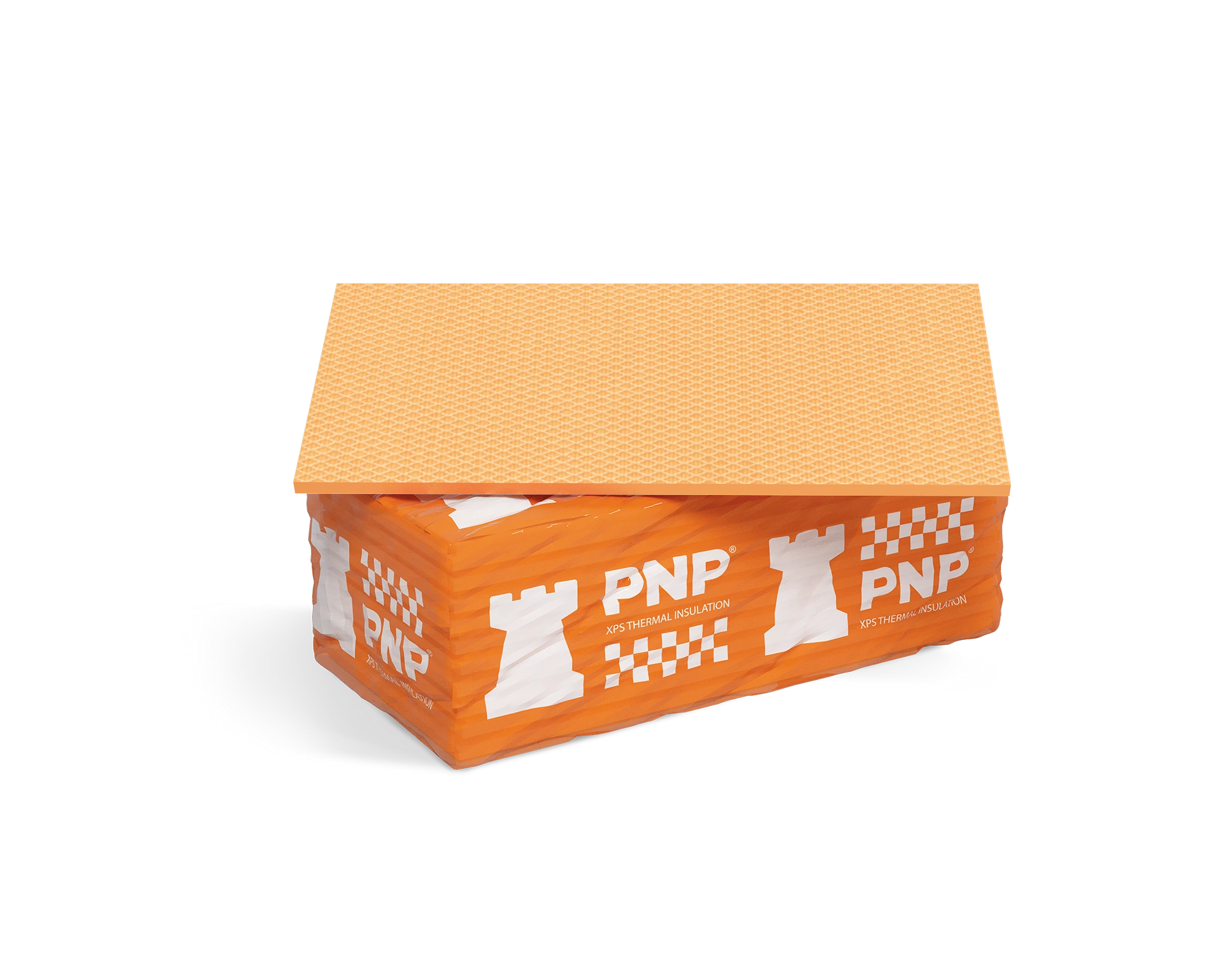
  • For ETICS plaster/render facades (smooth surface unsuitable): choose XPS 300 W (waffled surface, same 300 kPa strength) or XPS 300 MG (milled and grooved surface, 300 kPa).
  • For loads exceeding 300 kPa (industrial floors, heavily trafficked areas): choose XPS 400 (400 kPa) or XPS 500 (500 kPa) or XPS 700 (700 kPa) depending on the design requirement.
  • For flat roofs or terraces requiring a built-in drainage fall: choose XPS 300 SLOPE (factory-tapered boards, 300 kPa).
  • For facades or bonded systems where plaster or tile adhesive is applied directly to the board: choose XPS 300 W (waffled) or XPS 300 MG (milled and grooved).
  • For vehicle-access roofs or road pavements exceeding 300 kPa: choose XPS 500 or XPS 700.

When does XPS 300 deliver the right balance of strength and simplicity?

XPS 300 is the standard structural-grade board in the PNP XPS range, carrying a declared compressive strength of 300 kPa at 10 % deformation or yield (CS(10\Y)300) for thicknesses above 30 mm, and 200 kPa for the 20–30 mm thickness range. This makes it the appropriate choice for the majority of load-bearing insulation positions in conventional construction: foundation slabs, slab-on-grade floors, accessible roof terraces with pedestrian use, and paving beds — applications where the insulation must carry real structural load without deforming over time.

The board also carries a compressive creep classification of CC(2/1.5/50)130 for thicknesses above 30 mm, meaning it is tested for long-term deformation under sustained load — a critical property beneath screeds and ground slabs where the insulation remains permanently compressed. Its tensile strength perpendicular to faces is TR 400, freeze–thaw resistance is FTCD1, and long-term water absorption by total immersion is WL(T)0.7 (≤ 0.7 Vol.-%), confirming suitability for below-ground and inverted-roof positions subject to moisture.

What XPS 300 does not provide is a prepared adhesion surface. Its smooth skin is optimised for load distribution and direct contact with concrete or granular fill, not for bonding renders or adhesive compounds. Where a finish layer must be applied directly to the board face, the waffled XPS 300 W or milled-and-grooved XPS 300 MG variants are the correct substitutes — they share the same strength class while offering the surface texture that adhesive systems require.

Finally, XPS 300 is parallel-faced. On flat roofs where drainage fall must be created within the insulation layer itself, XPS 300 SLOPE (factory-tapered boards with the same 300 kPa strength) eliminates the need for a separate slope screed. A qualified designer should confirm the appropriate product, thickness, and compressive-load class for any specific project — refer to the current TDS and DoP for all declared values.

XPS 300 — Konstrukcijas pamatu un grīdas siltumizolācija — frequently asked questions

What is the compressive strength of XPS 300, and does it apply across all thicknesses?

For boards thicker than 30 mm, XPS 300 is rated CS(10\Y)300, meaning ≥ 300 kPa at 10 % deformation or yield (EN 826). For 20–30 mm boards the declared class is CS(10\Y)200 (≥ 200 kPa). Always verify the applicable thickness range with the current TDS before specifying.

Can XPS 300 be used under a cement-sand screed in a residential floor?

Yes — floor insulation beneath cement-sand screeds in load-bearing assemblies is one of the primary applications of XPS 300. The board's 300 kPa compressive strength and CC(2/1.5/50)130 creep classification (for thicknesses above 30 mm) support this use, but the designer should confirm the required thickness and load class for the specific project.

Is XPS 300 suitable for ETICS or plastered facade systems?

No. XPS 300 has a smooth skin that does not provide the mechanical key needed for plaster, render, or tile adhesive. For bonded facade systems, choose XPS 300 W (waffled surface) or XPS 300 MG (milled and grooved surface) instead.

What fire classification does XPS 300 carry?

XPS 300 is classified Euroclass E for reaction to fire under EN 13164:2012+A1:2015. This is a higher classification than Euroclass F but does not satisfy requirements for Euroclass D or above. Always confirm the fire performance requirement for your application with a qualified designer and the local building regulations.

How does XPS 300 perform in permanently wet or below-ground conditions?

Long-term water absorption by total immersion is WL(T)0.7 (≤ 0.7 Vol.-%), and freeze–thaw resistance is FTCD1 (≤ 1 Vol.-%), confirming that the board's thermal and mechanical properties remain stable in below-ground and moisture-exposed positions. See the current TDS and DoP for full declared values.

Can XPS 300 create a drainage fall on a flat roof?

No — XPS 300 boards are parallel-faced and cannot form a slope. For flat roofs, terraces, or green roofs where drainage fall must be built into the insulation layer, use XPS 300 SLOPE (factory-tapered boards, 300 kPa compressive strength) as a top layer, but you can reach the effective thickness of thermal insulation by combining XPS 300 and XPS 300 Slope boards.

What should I choose if my design loads exceed 300 kPa?

XPS 300 should not be used where the design compressive load exceeds its declared class. PNP XPS offers XPS 400 (400 kPa), XPS 500 (500 kPa), and XPS 700 (700 kPa) for higher-load applications such as industrial floors, vehicle-access decks, and road construction. A structural engineer should determine the required class.

What thicknesses are available for XPS 300?

Standard packaged thicknesses are 20, 30, 40, 50, 60, 80, 100, 120, and 150 mm; thicker boards (TB format) are available — see the current TDS for details. Boards are 1250 × 600 mm nominally, available with straight (I) or L-edge profiles.

Skatīt arī

XPS 150 W X-Grip — Izcila Adhēzija Siltumizolācija

X-Grip · 150 kPa

XPS 150 W X-Grip — Izcila Adhēzija Siltumizolācija

Izvēlieties XPS 150 W X-Grip smagas apmetuma, flīžu līmes vai ETICS sistēmu uzklāšanai uz sienām, pagrабiem, grīdām vai jumtiem, kur nepieciešama izcila siltumizolācijas savienojuma izturība.

Sīkāka informācija

XPS 300 W — Augstas Adhēzijas Strukturālā Siltumizolācija

W (Waffle) · 300 kPa

XPS 300 W — Augstas Adhēzijas Strukturālā Siltumizolācija

Izmantojiet XPS 300 W pieejamām jumta terasēm vai pjedestāla klājiem, kur nesošā slodze un maksimāla adhēzija membrānām vai pārklājumiem ir īpaši svarīga.

Sīkāka informācija

XPS 500 — Rūpnieciskā un augstspiediena siltumizolācija

Smooth · 500 kPa

XPS 500 — Rūpnieciskā un augstspiediena siltumizolācija

Izmantojiet XPS 500 tur, kur lielas statiskās un dinamiskās slodzes prasa maksimālu spiedes izturību — rūpniecības grīdās, autostāvvietu segumā un ceļu būvniecībā.

Sīkāka informācija

XPS 700 — Ārkārtas slodzes un civilās inženierijas siltumizolācija

Smooth · 700 kPa

XPS 700 — Ārkārtas slodzes un civilās inženierijas siltumizolācija

Izmantojiet XPS 700 tur, kur īpaši svarīga ir maksimālā spiedes izturība — smagās civilās infrastruktūras objektos, rūpniecisko ēku pamatos un augstu slodžu ceļu būvniecības projektos.

Sīkāka informācija

XPS 300 SLOPE — Konusveida jumta drenāžas siltumizolācija

Slope · 300 kPa

XPS 300 SLOPE — Konusveida jumta drenāžas siltumizolācija

Izmantojiet XPS 300 SLOPE uz līzenajiem jumtiem, terasēm un zaļajiem jumtiem, kur viena slāņa risinājumam jānodrošina drenāžas kritums un ilgstoša siltumizolācija.

Sīkāka informācija
Doties uz katalogu
Sazinieties ar mums

Sazinieties ar mums

Atstājiet savus kontaktdatus un mēs ar jums sazināsimies pēc iespējas ātrāk.

Sazinieties ar mums

Atstājiet savus kontaktdatus un mēs ar jums sazināsimies pēc iespējas ātrāk.

Jūsu pieprasījums ir nosūtīts

Mēs drīzumā ar jums sazināsimies