Vai al contenuto principale

XPS 700 — Carichi Estremi e Isolamento Termico per l'Ingegneria Civile

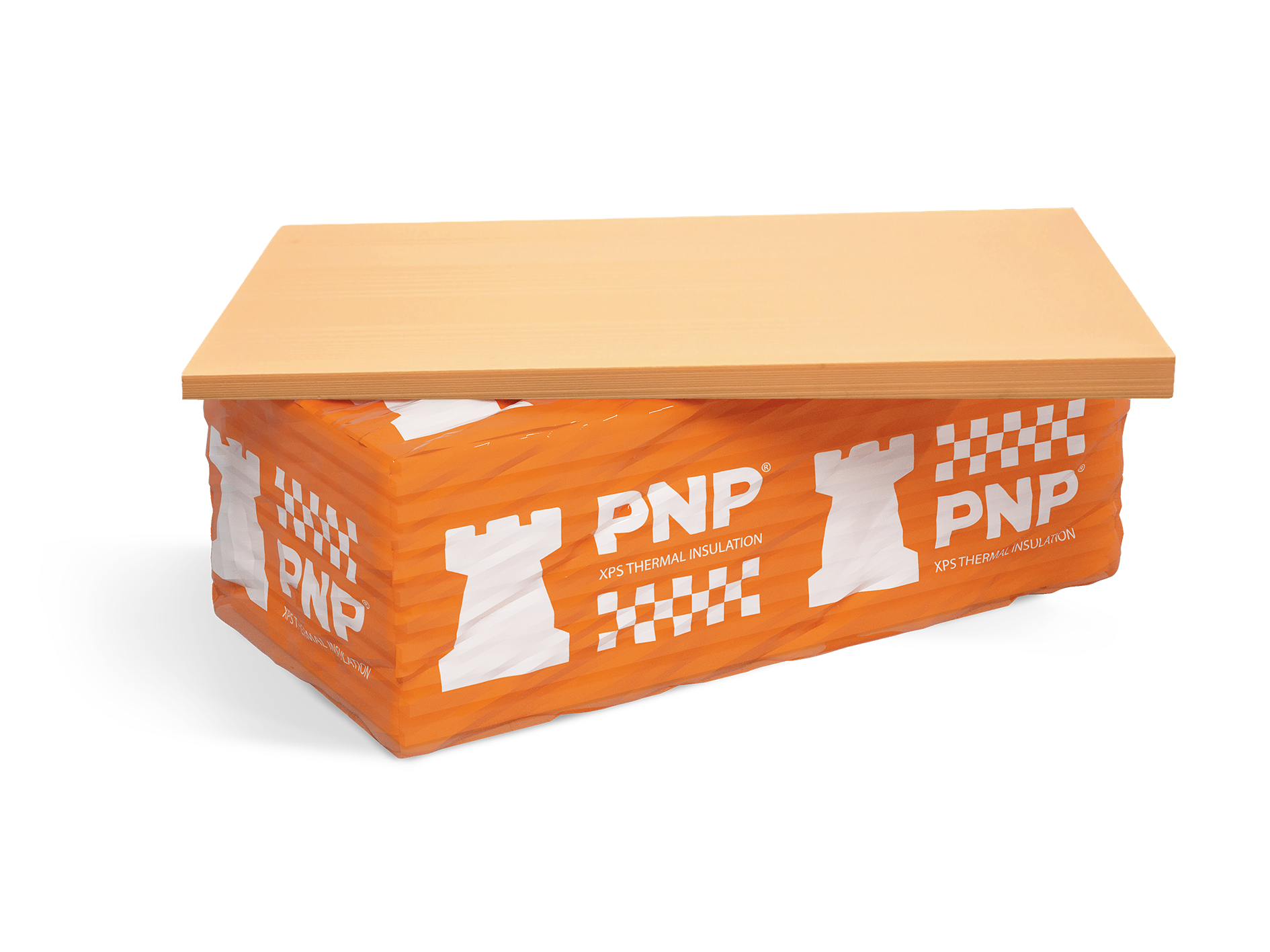
Utilizza XPS 700 dove la resistenza massima a compressione è fondamentale, tra cui infrastrutture civili pesanti, fondazioni industriali e progetti stradali ad alto carico.

Resistenza a compressione, kPa:
700
Conducibilità termica dichiarata λD, W/(m·K):
0,034–0,035
Reazione al fuoco, classe:
E
Dimensioni pannello (lunghezza × larghezza), mm:
1250 × 600
Spessore nominale, mm:
20–150
Tipo di superficie:
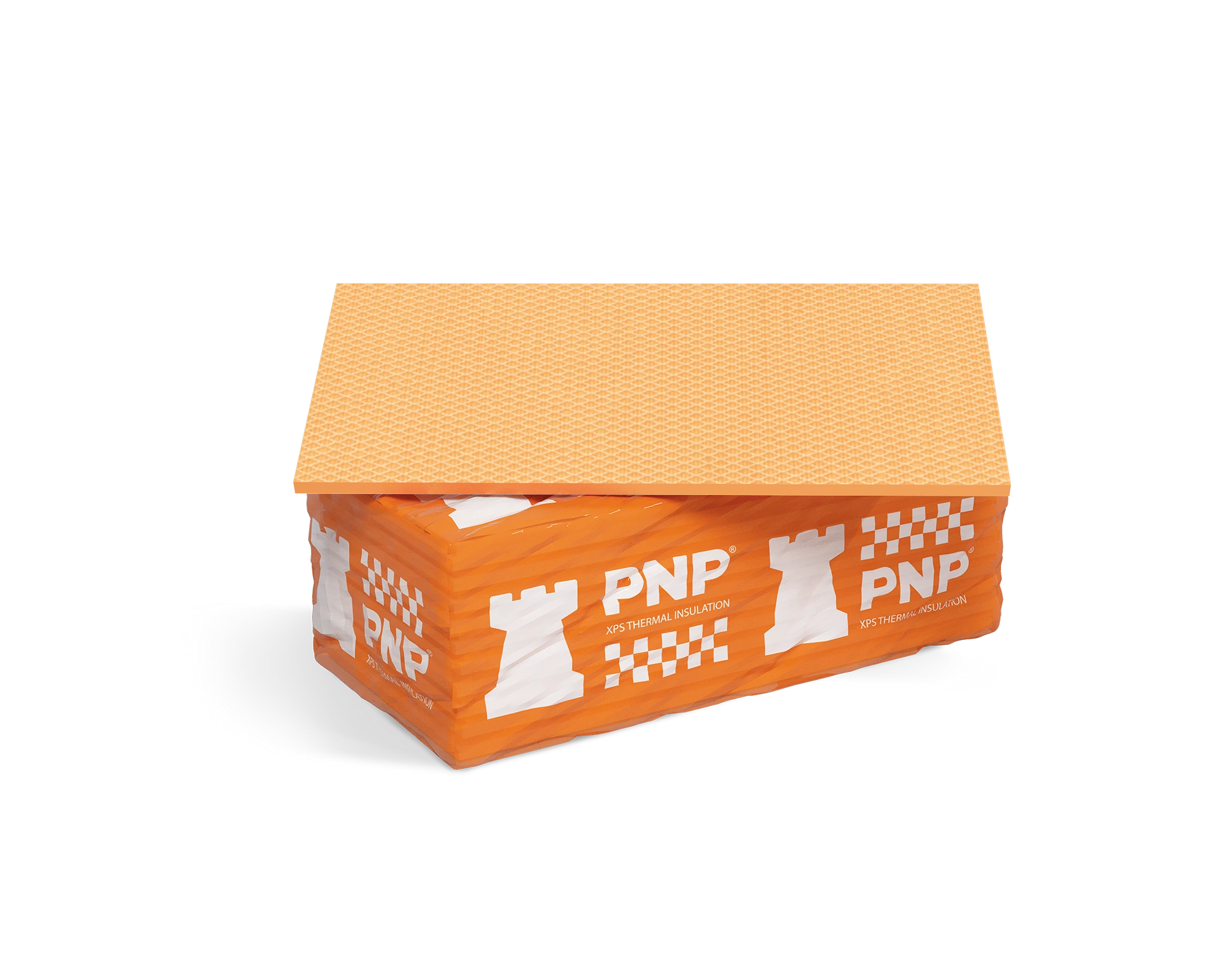
Liscio
Tipo di bordo:
Bordo dritto (I) / Bordo ad L (L)
Norma di prodotto:
EN 13164:2012+A1:2015

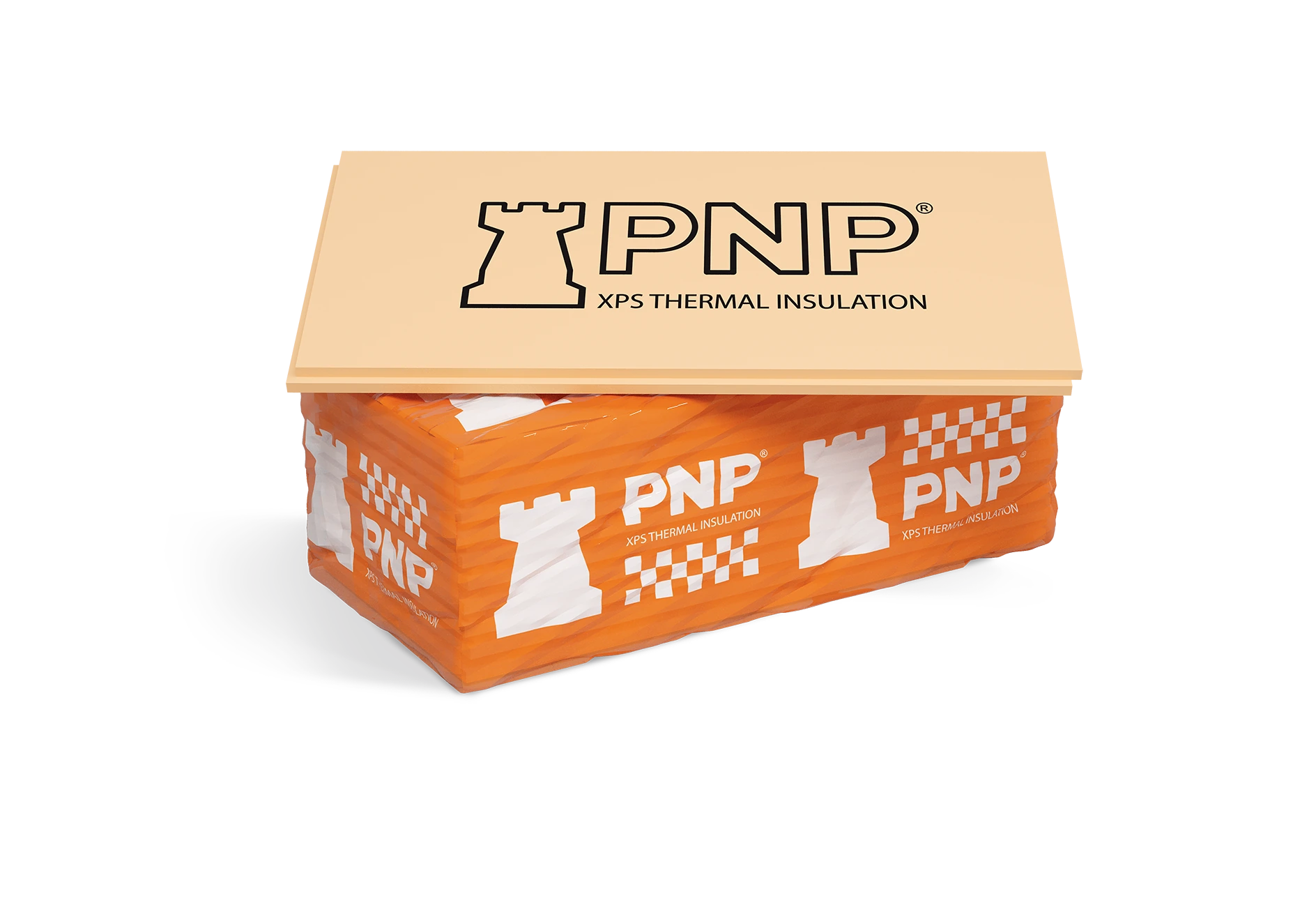
Pannello rigido in polistirene estruso ad alte prestazioni, progettato per l'isolamento termico di strutture soggette a carichi meccanici estremi e impegnative applicazioni di ingegneria civile. Disponibile in spessori da 20 mm a 150 mm, PNP XPS 700 garantisce una conducibilità termica costantemente bassa e un'eccezionale resistenza a compressione di ≥ 700 kPa.

Descrizione

PNP XPS 700 è un materiale isolante termico ad alte prestazioni (XPS di ultima generazione) prodotto in polistirene per uso generale. È caratterizzato da una superficie liscia e da una struttura omogenea a celle chiuse, con una conducibilità termica dichiarata (λD) di 0,034 W/m·K per spessori da 20 a 100 mm e di 0,035 W/m·K per spessori da 120 a 150 mm. La resistenza a compressione soddisfa il requisito CS(10\Y) 700 (≥ 700 kPa) e l'assorbimento d'acqua a lungo termine per immersione totale è classificato WL(T) 0,7 (≤ 0,7 Vol.-%). I pannelli sono conformi alla norma EN 13164:2012+A1:2015 e rispettano il regolamento REACH, non contenendo HBCDD né altre sostanze estremamente preoccupanti.

Applicazioni

  • Isolamento termico di infrastrutture stradali e opere di ingegneria civile
  • Pavimenti e solette a terra con carichi elevati e pavimentazioni industriali
  • Impalcati di ponti ed elementi infrastrutturali soggetti a intenso traffico
  • Isolamento di pavimenti in celle frigorifere e locali freezer
  • Fondazioni e isolamento del sottofondo in condizioni di carico estremo

Vantaggi

  • Resistenza a compressione eccezionalmente elevata — CS(10\Y) ≥ 700 kPa, progettata per strutture a carico estremo
  • Conducibilità termica costantemente bassa (λD 0,034–0,035 W/m·K)
  • Assorbimento d'acqua pressoché nullo — struttura omogenea a celle indipendenti sigillate (WL(T) ≤ 0,7 Vol.-%)
  • Biostabilità assoluta e comprovata durabilità nel tempo
  • Ampio intervallo di temperatura operativa: da −70 °C a +75 °C
  • Conforme al regolamento REACH e rispettoso dell'ambiente — nessun agente espandente che depleta l'ozono utilizzato nel processo produttivo
XPS 700 — Carichi Estremi e Isolamento Termico per l'Ingegneria Civile — Tecnico
ProprietàGamma di spessori / condizioneValore dichiarato
Resistenza a compressione / tensione di compressione al 10% di deformazione, CS(10\Y)CS(10\Y)700 (≥700 kPa)
Reazione al fuoco, classeE
Conducibilità termica dichiarata λD, W/(m·K)20–100 mm0,034
Conducibilità termica dichiarata λD, W/(m·K)120–150 mm0,035
Assorbimento d'acqua a lungo termine per immersione totale, WL(T)WL(T)0,7 (≤ 0,7 [Vol.-%])
Assorbimento d'acqua a lungo termine per diffusione, WD(V)WD(V)3 (≤3,0 [Vol-%])
Stabilità dimensionale in condizioni specificate, DSDS(70,90)
Tolleranza di spessore, classeT1
Scorrimento viscoso a compressione, CCCC(2/1,5/50)210
Resistenza a trazione perpendicolare alle facce, TRTR 200
Resistenza al gelo-disgelo, FTCDFTCD1 (≤1 [Vol-%])
Temperatura di esercizio, °C-70 … +75 °C
Tipo di superficieLiscio
Tipo di bordoI l
Deformation under specified compressive load and temperature conditionsDLT(2)5
Norma di prodottoEN 13164:2012+A1:2015

Valori secondo la scheda tecnica vigente.

XPS 700 — Carichi Estremi e Isolamento Termico per l'Ingegneria Civile — Imballaggio
Spessore nominale, mmResistenza termica dichiarata RD, m²·K/WPannelli per confezione, pzArea del pacco, m²Volume della confezione, m³
200,552015,000,3000
300,85139,750,2925
401,15107,500,3000
501,4586,000,3000
601,7575,250,3150
802,3553,750,3000
1002,9043,000,3000
1203,4032,250,2700
1504,2521,500,2250

Transport dimensions for boards with L-edge: 615x1265 mm

XPS 700 — Carichi Estremi e Isolamento Termico per l'Ingegneria Civile

Scheda tecnica

pnp_xps700_600x1250_techcard_it (21.07.2023).pdf

PDF · IT

XPS 700 — Carichi Estremi e Isolamento Termico per l'Ingegneria Civile

Dichiarazione di Prestazione

DoP PNP XPS 700_it.pdf

PDF · IT

XPS 700 — Carichi Estremi e Isolamento Termico per l'Ingegneria Civile: is it the right board?

When to use it

  • Road and infrastructure construction on frost-susceptible or heaving soils where compressive strength of ≥ 700 kPa is specified by the designer.
  • Bridge decks and civil engineering structures subject to high or repeated traffic loads that exceed the capacity of XPS 500.
  • Heavily loaded industrial ground slabs and pavements where point loads or concentrated stresses require the highest available compressive resistance in the PNP range.
  • Cold-store and freezer-room floor insulation under reinforced concrete slabs carrying heavy racking or forklift traffic.
  • Foundation and subgrade thermal insulation under extreme permanent load conditions in civil or industrial projects.
  • Lightweight earth fill and embankment applications on soft or compressible ground where the insulation layer must carry significant overburden.
  • Any application where the structural or geotechnical engineer has specified CS(10\Y)700 or an equivalent 700 kPa compressive strength class under EN 13164.

When not to use it

  • Standard residential floor slabs and foundation slabs with moderate loads, because 700 kPa compressive strength is unnecessary and a lower-grade product is more cost-effective.
  • Facade and ETICS plaster systems, because XPS 700 has a smooth surface that does not provide the mechanical key required for reliable adhesion of renders or adhesive compounds.
  • Flat-roof and inverted-roof assemblies where drainage falls are needed, because XPS 700 is not available in factory-tapered form.
  • Applications where a waffled or milled-and-grooved surface finish is required by the bonded layer system, since XPS 700 is produced with a smooth skin only.
  • Thin thermal-bridge inserts or cavity-wall applications where the high density and cost premium of 700 kPa boards offer no performance benefit over lighter grades.

Choose instead

  • Standard residential floors, accessible roofs, and foundation slabs with normal loads — choose XPS 300 (CS(10\Y)300, ≥ 300 kPa).
  • Facade and ETICS plaster or render systems requiring adhesion surface — choose XPS 300 W (waffled, CS(10\Y)300) or XPS 150 W X-Grip (waffled, CS(10\Y)150).
  • Flat roofs and terraces where drainage falls must be created in a single layer — choose XPS 300 SLOPE (factory-tapered, CS(10\Y)300).
  • Industrial floors and heavily loaded parking decks that do not reach 700 kPa requirements — choose XPS 500 (CS(10\Y)500, ≥ 500 kPa).
  • Thin thermal-bridge inserts, cavity walls, and lightly loaded assemblies — choose XPS 150 W X-Grip or XPS 300 as appropriate to the load and surface requirement.

When do you really need 700 kPa? Understanding XPS 700 compressive strength

XPS 700 is the highest compressive-strength board in the PNP XPS range, rated CS(10\Y)700 — meaning the test showed a compressive stress of ≥ 700 kPa at 10 % deformation or yield under EN 826. This supports its use wherever the structural or geotechnical engineer calculates that the insulation layer will be subjected to extreme static or dynamic loads: road sub-bases on frost-susceptible soils, bridge deck build-ups, heavily trafficked industrial pavements, and freezer-room floors under dense racking systems.

Despite its exceptional mechanical strength, XPS 700 shares the same declared thermal conductivity as the rest of the PNP range — λD 0.034 W/(m·K) for thicknesses of 20–100 mm and 0.035 W/(m·K) for 120–150 mm — and its closed-cell structure delivers long-term water absorption of WL(T) 0.7 (≤ 0.7 Vol.-%) and freeze–thaw resistance rated FTCD1. The compressive creep class is CC(2/1.5/50)210, the highest in the PNP range, which this alone does not eliminate the need for a qualified designer to verify long-term deformation under the project's specific load combination.

XPS 700 has a smooth surface skin and is produced in thicknesses from 20 mm to 150 mm in standard format (see the current TDS for any on-request thickness options). It is not available with a waffled or milled-and-grooved surface, so it cannot substitute for XPS 300 W or XPS 150 W X-Grip in bonded facade or ETICS systems. Where loads fall within the 300–500 kPa range, XPS 300 or XPS 500 will typically be the more appropriate and economical choice. Always confirm the required compressive strength class with a structural or geotechnical engineer before specifying XPS 700.

XPS 700 — Carichi Estremi e Isolamento Termico per l'Ingegneria Civile — frequently asked questions

What compressive strength does XPS 700 provide, and how is it classified?

XPS 700 is classified CS(10\Y)700 under EN 826, meaning it achieves a compressive stress of ≥ 700 kPa at 10 % deformation or yield. This is the highest compressive-strength class in the PNP XPS product range. Always have a structural or geotechnical engineer confirm whether this class is required for your specific application.

Does XPS 700 have the same thermal conductivity as lower-strength PNP boards?

Yes. XPS 700 has a declared thermal conductivity (λD) of 0.034 W/(m·K) for thicknesses of 20–100 mm and 0.035 W/(m·K) for 120–150 mm, identical to XPS 300 and XPS 500 in those thickness ranges. Higher compressive strength does not penalise thermal performance in this product.

Can XPS 700 be used under renders or adhesive-bonded facade systems?

No. XPS 700 is produced with a smooth surface skin only, which does not provide the mechanical key required for reliable adhesion of plasters, renders, or tile adhesives. For bonded facade and ETICS systems, choose XPS 300 W (waffled) or XPS 150 W X-Grip instead.

What thicknesses are available for XPS 700?

Standard packaging thicknesses are 20, 30, 40, 50, 60, 80, 100, 120, and 150 mm. For thicknesses outside this range, see the current TDS or contact PNP XPS at sales@pnpinsulation.com.

How does XPS 700 compare to XPS 500 for industrial floors?

Both products are engineered for high-load applications, but XPS 700 provides ≥ 700 kPa compressive strength versus ≥ 500 kPa for XPS 500, and its compressive creep class is CC(2/1.5/50)210 compared to CC(2/1.5/50)150 for XPS 500. XPS 700 is the appropriate choice only when the designer's load analysis requires the higher class; otherwise XPS 500 is typically sufficient and should be evaluated first.

Is XPS 700 suitable for road construction and frost protection layers?

Yes. Road construction, infrastructure on frost-susceptible or heaving soils, and bridge deck build-ups are among the primary intended applications for XPS 700. The board's CS(10\Y)700 rating, FTCD1 freeze–thaw resistance, and WL(T)0.7 long-term water absorption all support these uses; however, final specification must be confirmed by a qualified civil or geotechnical engineer in accordance with the applicable national road design standards.

What standard governs XPS 700, and is a Declaration of Performance available?

XPS 700 conforms to EN 13164:2012+A1:2015 and a Declaration of Performance (DoP) is available — see the document 'DoP PNP XPS 700_eng.pdf' (updated 2025-03-17) and the technical data sheet 'pnp_xps700_600x1250_techcard_en (21.07.2023).pdf' (updated 2025-03-17) via the PNP documentation page.

Does XPS 700 contain HBCDD or other substances of very high concern?

No. XPS 700 is REACH-compliant and contains no HBCDD or other substances of very high concern, consistent with all products in the PNP XPS range.

Vedi anche

XPS 150 W X-Grip — Isolamento Termico ad Aderenza Superiore

X-Grip · 150 kPa

XPS 150 W X-Grip — Isolamento Termico ad Aderenza Superiore

Scegli XPS 150 W X-Grip per l'applicazione di intonaci pesanti, adesivi per piastrelle o sistemi ETICS su pareti, basamenti, pavimenti o tetti che richiedono un'elevata resistenza al distacco dell'isolante.

Maggiori dettagli

XPS 300 — Isolamento Termico per Fondamenta Strutturali e Pavimentazioni

Smooth · 300 kPa

XPS 300 — Isolamento Termico per Fondamenta Strutturali e Pavimentazioni

Utilizza XPS 300 dove i carichi elevati richiedono un isolamento termico affidabile, inclusi fondazioni, solette a terra e coperture praticabili.

Maggiori dettagli

XPS 300 W — Isolamento Termico Strutturale ad Alta Adesione

W (Waffle) · 300 kPa

XPS 300 W — Isolamento Termico Strutturale ad Alta Adesione

Utilizzare XPS 300 W su tetti accessibili o solai pensili dove le prestazioni portanti e la massima adesione per membrane o rivestimenti sono fondamentali.

Maggiori dettagli

XPS 500 — Isolamento Termico Industriale ad Alta Compressione

Smooth · 500 kPa

XPS 500 — Isolamento Termico Industriale ad Alta Compressione

Utilizza XPS 500 dove carichi statici e dinamici elevati richiedono la massima resistenza alla compressione, inclusi pavimenti industriali, solai per parcheggi e costruzioni stradali.

Maggiori dettagli

XPS 300 SLOPE — Isolamento Termico per Tetti Inclinati con Drenaggio

Slope · 300 kPa

XPS 300 SLOPE — Isolamento Termico per Tetti Inclinati con Drenaggio

Utilizza XPS 300 SLOPE su tetti piani, terrazze e tetti verdi dove un'unica soluzione deve creare la pendenza di drenaggio e garantire un isolamento termico duraturo.

Maggiori dettagli
Vai al catalogo
Contattaci

Contattaci

Lascia i tuoi dati di contatto e ti ricontatteremo il prima possibile.

Contattaci

Lascia i tuoi dati di contatto e ti ricontatteremo il prima possibile.

La tua richiesta è stata inviata

Ti contatteremo a breve